







Groundhog Day: More than just a humorous celebration
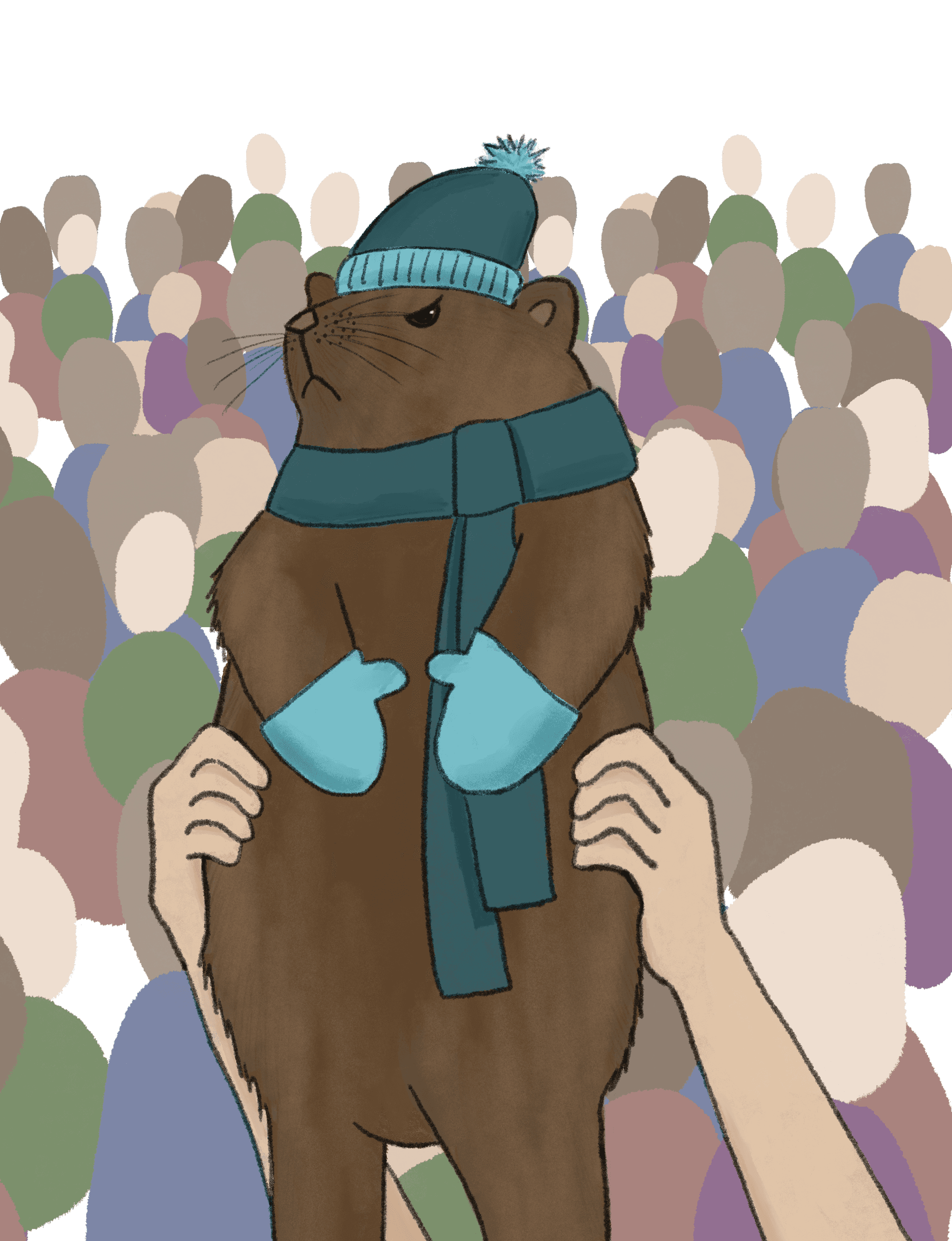
Experts weigh in on how the holiday influenced America’s historical and cultural landscape
By AMBER WARNKE — features@theaggie.org
Every Feb. 2, one of the strangest American holidays of the year takes place; people all across the country wait to be told by a groundhog what the weather will be in the coming weeks. Despite how unique this tradition is, however, many people have no idea where it comes from or why it is still celebrated today. This year, Punxsutawney Phil declared that we will be facing six more weeks of winter — the same prediction that he made last year.
The history of Groundhog Day is directly connected to the Pennsylvania Dutch, an ethnic group in America that immigrated from German-speaking areas of Europe in the 18th century. Patrick Donmoyer, the director of the Pennsylvania German Cultural Heritage Center at Kutztown University in Pennsylvania and the secretary of Groundhog Lodge Number 1, has researched the tradition and its cultural relevance in depth.
“The earliest known documentation of this tradition being observed among the Pennsylvania Dutch [was] the 1830s in Morgantown, Berks County, and it’s in a manuscript ledger where a local person basically says, ‘We all went out to see if we could find the groundhog, and what the groundhog did would predict about the weather,’” Donmoyer said.
This custom comes from an older folk practice the Pennsylvania Dutch brought with them from Europe, where instead of a groundhog, people would observe when badgers came out of hibernation to try to predict the beginning of spring. The Pennsylvania Dutch, not living in areas inhabited by badgers, turned to groundhogs: and so the tradition began.
A century later, the holiday transformed into a way to maintain cultural identity, according to William W Donner, a professor of Pennsylvania German studies at Kutztown University and author of “Serious Nonsense: Groundhog Lodges, Versammlinge, and Pennsylvania German Heritage.”
“Starting 1900, [the Pennsylvania Dutch] started assimilating; […] they wanted to mix in more with the general population,” Donner said. “So, in the early 1930s, some [Pennsylvania Dutch] got together and said, ‘We should preserve the language, our kids don’t know it as well, so we’ll have our events where we can only speak Pennsylvania Dutch,’ and they picked up on the groundhog as […] a reason to come together during Groundhog Day.”
Traditional Groundhog Day celebrations went far beyond simply looking to the rodent for weather predictions, and included a host of other activities aimed at preserving cultural identity.
“It would start off with a pledge of allegiance in Pennsylvania Dutch, then some prayers, maybe in Pennsylvania Dutch, and then there would be a meal which would have Pennsylvania Dutch food,” Donner said. “Somebody would talk in Pennsylvania Dutch, give a humorous talk, but also talk about the importance of Pennsylvanian German heritage […] and if you spoke English, each word of English, you were fined.”
This attempt to assert cultural identity was particularly relevant to the political climate at the time for the Pennsylvania Dutch, whose immigrant ancestors had come from regions that are now part of Germany, according to Donmoyer.
“In the 1930s, there were a lot of Pennsylvania Dutch people who were very concerned about what they were seeing happening with the rise of fascism in Germany, and they were not for it,” Donmoyer said. “[Groundhog Day] was designed to set themselves apart from what was happening in Europe, and also to assert the fact that they were part of the fabric of American society, even though they spoke a small minority language.”
However, Groundhog Day’s rich historical and cultural importance does not mean that it was ever designed to be taken too seriously — the holiday today is known for its ridiculous elements, such as the belief that Punxsutawney Phil, the most famous groundhog weather forecaster, is immortal. Legend says that Phil has been the same groundhog who has predicted the weather for all of the past 139 Punxsutawney Groundhog Days. He does this by speaking ‘Groundhogese’ to his inner circle of handlers, who are given the ability to interpret the language by using a special cane.
Donmoyer believes that this whimsy is foundational to any celebration of Groundhog Day, traditional or not.
“There’s the aspect of silliness to it, and Pennsylvania humor is largely based in this kind of self-deprecating humor,” Donmoyer said. “There’s this ceremoniality with the process of how they run Groundhog Day, where they act like they’re taking it very seriously, but they’re really not — like it’s serious business, and yet, at the same time, it’s just like it’s really absurdist.”
This irony is further highlighted by the fact that the Pennsylvania Dutch have strong cultural ties to agriculture, and thus actually viewed the groundhog as more of a hindrance in their daily lives.
“There’s been this kind of, on one hand, ceremonial reverence of the groundhog in folklore, and at the same time, this kind of abject dislike or disdain because the groundhogs are getting into your garden,” Donmoyer said.
As much as farmers may have become annoyed by groundhogs, however, the relationship may be mutual, according to Josh Clark, co-host of the globally famous “Stuff You Should Know” educational podcast — the first-ever podcast to surpass 1 billion downloads.
“We turned up in our research that groundhogs don’t actually like to be handled in front of crowds,” Clark said.
However, not all Groundhog Day celebrations include live groundhogs, as many Groundhog Lodges, the organizations that hold Groundhog Day celebrations, utilize taxidermied or statue versions of the creature, according to Donmoyer.
Ultimately, no matter how people celebrate Groundhog Day, the real value of the day may not be in the groundhog’s shadow, but in the celebration’s ability to shine whimsy into the shadow of turbulent times, according to Donner.
“There are these kinds of events that really have to do with civil society and with secular society that unite us,” Donner said. “It just serves as a kind of national event that brings some kind of solidarity. We’re all watching to find out what Punxsutawney Phil is going to do.”
Written by: Amber Warnke — features@theaggie.org