







Learn to live slowly
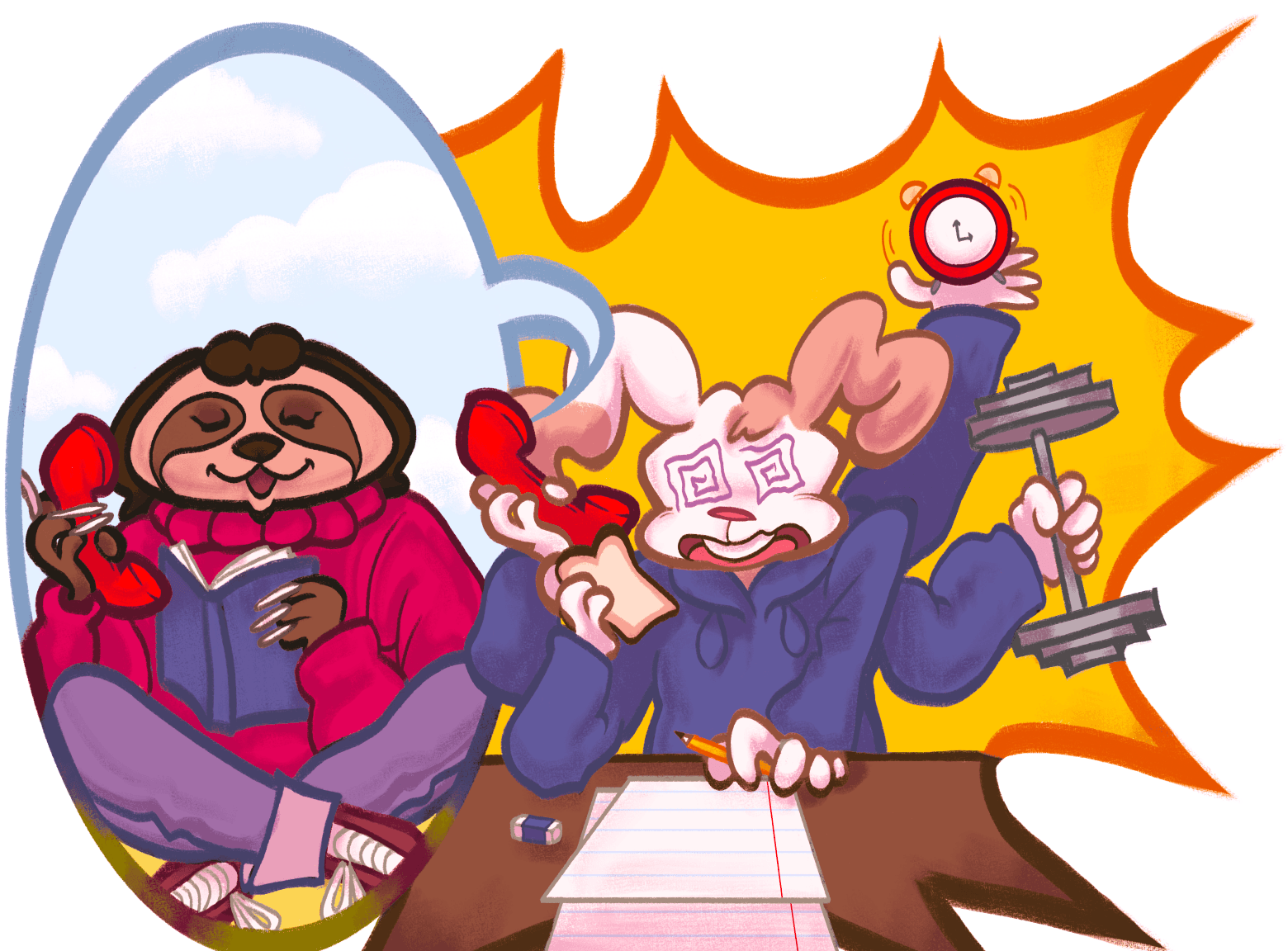
We speed down the highway and shovel food like its our last meal, racing to the next thing without truly getting through the last
By AMBER DUHS — alduhs@ucdavis.edu
We all seem to be in a constant race. No matter what we’re doing, we’re in it for the thrill of making the cut at the last millisecond — the rush of a perfect finish.
Unfortunately, I’m not describing some quasi-utopian (or dystopian) society where we’ve all become track stars; I’m describing the constant, everlasting and enduring battle of our inability to slow down.
It seems more and more that we’re all fighting this internal clock. I find myself scarfing down my food at the dinner table, even when it’s my own dinner table, where I’m all alone and not late for anything. I don’t have any outstanding deadlines, and maybe, for once in my life, I don’t have an assignment, essay or midterm hanging over me. Yet I eat with the same fervor and the same disposition of a child gnawing at their plate.
Alongside the growth of our quick and ever-changing society grows the incessant need for us to match that rapid speed within our everyday tasks.
I stand in the grocery store, at times, looking at the produce section in contemplation of which fruit I should choose. A somewhat humorous image, I know. The longer I stand, the more aware I become of those rushing around me, of customers almost running around the grocery store in fear of the time slipping away from them. The cashiers race to throw each item in the bag, in fear the customer may get impatient, impeding their ability to have a conversation or enjoy the small interpersonal interaction.
We cram all of these tasks into rigid time blocks, never truly finishing any of them and never allowing ourselves to relish in the moment. What good is a dinner that took four hours to cook if it’s eaten in 15 minutes? What good is a trip that took months to plan, if the entire time you’re rushing between each picturesque spot or activity? Even if we want our quickness to be isolated to solely our work or the seemingly mundane chores we want to get over with, it seeps into every aspect of our being.
The rush is sometimes minimal: it’s difficult to catch and difficult to train yourself out of. But ask yourself why you’re vacuuming as if there’s an inspector on the way. Why are you speed walking down the street when there are sights to take in? Tasks that were once meant to be restorative or calls for reflection become boxes on a to-do list and time slots on our calendars; a hurdle in the race toward the end of the day.
We’re all busy — trust me, I get it. There are arguments to be made regarding the necessity of quickness and no “wasted moments” in this world of rapid consumption. But beyond arguments like “I have three jobs and kids at home to feed” (which are extremely valid), are those of people who don’t have anything, per se, to rush toward.
A constant feeling of panic, of falling behind, seeps into our minds and into how we carry ourselves — along with an insurmountable amount of anxiety. We brush it off, simply saying “I have no idea why I’m so anxious,” but it’s because we’re constantly in fight-or-flight mode.
When we’ve convinced ourselves that everything we do is a response to stress, we start acting like it. Our ability to slow down and relish in the details dissolves, slowly morphing us into speed-obsessed people who can’t find a minute to take a breath. We remove the small acts of gratitude that accompany slowing down, disallowing ourselves to be grateful for a meal we can be present at or the opportunity to calmly clean the table that just hosted all of our friends.
Slowing down and learning to not treat life as a race doesn’t discount the value of productivity or efficiency; it’s a way to practice gratitude and presentness. It’s hard to “stop and smell the roses” when you’re walking so fast you didn’t even notice the roses were there.
Written by: Amber Duhs — alduhs@ucdavis.edu
Disclaimer: The views and opinions expressed by individual columnists belong to the columnists alone and do not necessarily indicate the views and opinions held by The California Aggie.