






Spinosaurus Mirabilis: a new dinosaur species
What the discovery of this new species means and how it questions our understanding of past findings
By EMILIA ROSE— science@theaggie.org
As many know, the dinosaur-filled “Jurassic Park” movies aren’t exactly known for their scientific accuracy. In fact, it is well understood that the ginormous, scaly creatures depicted in those films are missing quite a few feathers and some key traits that more realistic depictions of dinosaurs have today.
Among the dinosaurs that scientists have revised their understanding of, the Spinosaurus is one of the better-known examples. Even recently, new fossil evidence is shaping how we imagine this popular species.
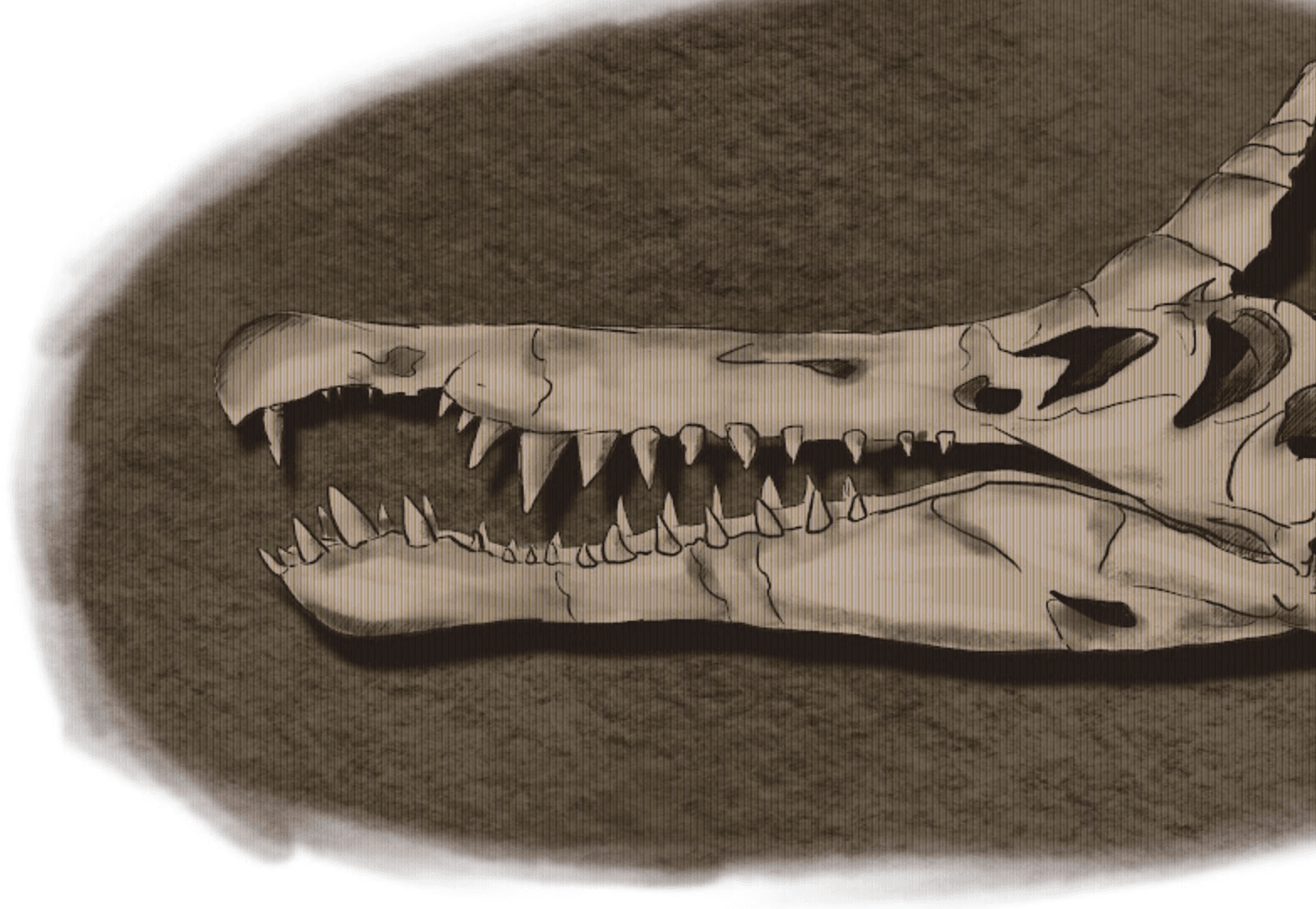
Far away from where scientists originally hypothesized the Spinosaurus to have lived, an excavation in modern-day Niger unearthed a new species of the creature — known as Spinosaurus mirabilis.
After its discovery, the large, curved crest atop its head caught the eye of scientists and the public alike. Covered in the same material that makes up our fingernails — keratin — this ornamental bone would have jutted out like a spike from the top of the Spinosaurus’ skull.
UC Davis Paleontologist Tracy Thomson shared a few ideas as to what the potential function for this crest could have been.
“The most common interpretation of paleontologists put forth for unusual structures like this [crest] is display, either to signal members of your own species or to [signal] other species, like for warning or scaring predators,” Thomson said.
The discovery of even a single crest is of major significance; scientists may use it to rethink not only body structure, but also behavior, communication and ecology of dinosaurs.
But here’s the thing: the Spinosaurus has been reconstructed over and over again. Evidence originally pointed paleontologists towards the idea of a semi-aquatic Spinosaurus that lived on the ancient Cretaceous coasts. With the new fossil evidence, scientists predicted that this related species may have also resembled a crested predator that lived in the rivers of ancient forests. This dinosaur and our concept of what it truly looked like has changed throughout the years.
Why does our image of these dinosaurs constantly shift? Will we ever know what they and their world truly looked like?
“I think one of the primary drivers of these different interpretations is the fact that the fossils are incomplete,” Thomson said. “Complete, articulated dinosaur skeletons are rarely found, and so a lot of what the animal would have looked like is based on what we know from other, closely related species.”
Each fossil discovery reshapes our understanding just a little bit. This dominoes into larger, more macro-shifts in scientific interpretations of behavior, ecology and lifestyle — not because the science is unreliable, but because researchers learn new things.
If scientific understanding of dinosaurs, such as the Spinosaurus, constantly changes, what does that say about how we reconstruct the past? We might never truly know the past, but we always have our best guesses. James Griesemer, professor in the UC Davis Department of Philosophy, expanded on the glimpses of history that science can provide.
“Science is always uncertain, and evidence is always ‘fragmented,’ though not always literally fragmented like the scattered and incomplete set of fossil bones of an extinct Spinosaurus,” Griesemer said. “Knowledge about anything — anything empirical, anyway — is never complete.”
The crest of Spinosaurus mirabilis might have little significance on its own, but its very presence in the context of what we once knew grants it a greater significance about our understanding of the past.
Written by: Emilia Rose— science@theaggie.org