






Davis City Council officially ends use of glyphosate, approves use of pre-emergent pesticides amid community’s concern
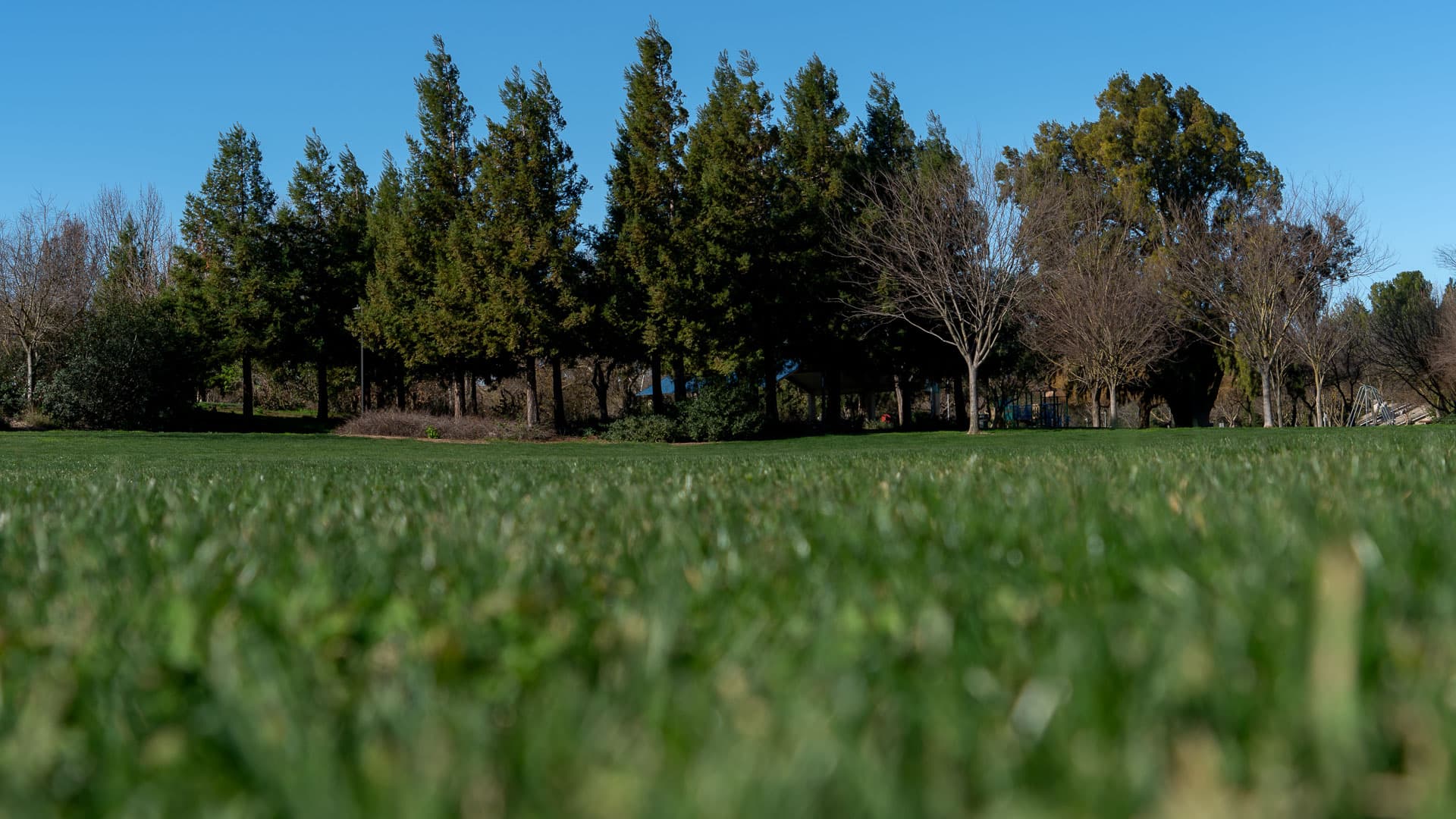
The grass is not always greener on the other side: Council members combat increasing invasive species due to toxic pesticides
The Davis City Council voted to officially end the use of pesticides containing glyphosate, the chemical found in RoundUp, after the city successfully reduced its use in public green spaces over the last few years. Council members also approved the use of pesticides with more moderate toxicity to combat the increase in invasive species.
This vote comes after a 2017 decision when the Davis City Council decided to phase out glyphosate pesticides in areas of high public exposure by 2020, such as parks, greenbelts and bike paths. At a previous meeting, the council made other decisions regarding pesticide use, including banning harmful neonicotinoid pesticides and developing the Integrated Pest Management Team.
Though the official three-year deadline was in November, city staff said that glyphosate use was already eliminated in high public exposure areas when the matter was reevaluated during a city council meeting on Jan. 28, 2020. The approval of the official ban means that glyphosate can still be used in city operations that are not highly accessible by the public, like at the wastewater treatment plant.
The reduction in glyphosate has led to a substantial rise in costs for maintenance of the green spaces, with more complaints from the community about the increase in weeds, according to a presentation given by city staff during the city council meeting.
City Councillor Dan Carson described how reducing the glyphosate impacted the aesthetic effect of the green space in a video of the meeting.
“I heard and talked to other people and saw for myself that particularly on the medians like Lake and Anderson and other places — it looked horrible,” Carson said. “I’m hoping we’re able to move ahead with a pre-emergent that seems to pose a pretty low risk.”
City officials then proposed using Tier 2 pre-emergent herbicides to counteract weed growth in green spaces that are overwhelmed with invasive species. The herbicides are moderately toxic, providing a compromise between manual labor and heavy chemical use.
Several community members voiced their disapproval of the use of new pesticides during public comments. Roberta Millstein, the chair of the Open Space and Habitat Commission, spoke for better transparency between city staff and city commissions to help regulate the use of pesticides.
“It is apparent that staff is not in any position to implement a new round of pesticide usage without a trained IPM specialist on board, and without first bringing this new usage of plan to the NRC [Natural Resources Commission], Recreation and Parks and Open Space and Habitat to explain exactly what they are doing and why,” Millstein said.
Councilmember Will Arnold voiced concerns similar to Millstein’s, questioning whether city staff can make an informed decision about pesticide use without the right avenues of review.
“We don’t have the IPM specialist — and we don’t have the TAC in place — so that’s our only resource at this point: these commissions,” Arnold said. “Skipping past them […] does give me a lot of discomfort.”
Despite objections from the public, four out of the five councilmembers, with Arnold dissenting, voted to allow the use of pre-emergent pesticide, thus passing the resolution.
With the Tier 2 pre-emergent herbicide approved, the areas that would be exposed to the new pesticide include streets such as Pole Line Road, Chiles Road, Mace Boulevard, Covell Boulevard, Anderson Road and Shasta Road, as well as some interior medians.
Some parks and larger green areas that are also subject to pesticide use include Cannery, Mace Ranch Park, John Baravetto Park, Arroyo Park, Northstar Park, Sandy Motley Park, Walnut Park and the El Macero Greenbelt.
In addition to using Tier 2 pre-emergent herbicides, city staff added future goals for pesticide use in the city, including the development of an Integrated Pest Management Technical Advisory Committee and added mapping of pesticide hazard and reduction mapping. Ultimately, the city staff is looking to respond to the public’s concerns with minimal use of pesticides.
Written by: Madeleine Payne — city@theaggie.org