





Notoriety, fame and the human touch of it all: The controversy of Tilly Norwood
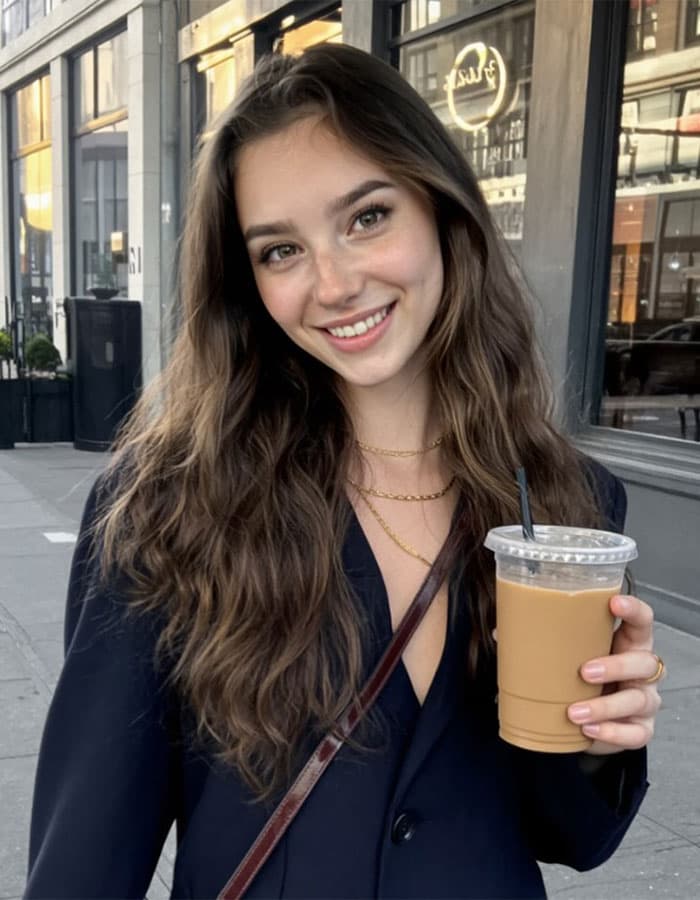
AI actress sparks conversation over the role of artificial intelligence in the entertainment industry
By IQRA AHMAD — arts@theaggie.org
As it continues to evolve, artificial intelligence (AI) has begun to redefine its role in many different industries — with the arts being no exception. The creation of Tilly Norwood, an AI-generated “actress” has sparked controversy across various social media platforms and within the entertainment industry since her debut in September.
Created by Eline Van der Velden, the Chief Executive Officer (CEO) of AI production company Particle 6 and founder of recently launched Xicoia, an AI talent studio, Norwood’s existence has called for questioning over the use of AI in entertainment spaces.
The AI actress comes complete with her own website and Instagram account. Norwood has not only been engineered as an actress, but as a digital celebrity with generated notoriety — one that’s currently searching for the opportunity to get signed to a talent agency.
As Norwood gains traction, there is prevailing concern in the entertainment industry over what her existence means for both real actors and the art of acting itself.
The human energy of acting
“Part of acting and the actor is being able to show up in person, to have the energy and presence that you’re bringing to space,” UC Davis Professor and Chair of Theatre and Dance Margaret Kemp said. “At this point in the capability of AI, they are not able to recreate the energy of [a real] person.”
Kemp also emphasized that acting is rooted in humanity’s imperfections and emotional depth, qualities that AI cannot necessarily replicate. Acting has been described as a tool to, “acquaint individuals with the strangeness of being human,” according to The New York Times.
“Mistakes turn out to be happy accidents, I see it all the time,” Kemp said. “Students are quick to say, ‘Oh no, I made a mistake,’ but I say to embrace the moment. There was something there that happened, it was special. That’s what really draws an audience in.”
In perspectives like Kemp’s, it is important to note that AI software and algorithms draw on various sources that are deemed valuable by recognizing patterns and information. However, these efforts create expectations around human behavior through AI models and actors like Norwood, according to Kemp.
“There is what I would call a ‘flattening out’ around a certain level,” Kemp said. “Whoever is guiding the [AI] machine [is creating it] around their own expectation of what behavior is like and what it should be like.”
This approach to how behaviors are represented in the media by AI is a topic of concern for those in the acting profession.
“I think the real tragedy of this is that a small group of people are making decisions on what human responses should be, how a human should behave, how a human should react, how a human should sound, so that when a real person does come into the space and is making choices based on experiences that a machine might not have, the real human is othered,” Kemp said.
As Kemp notes, AI lacks the peculiarities of human nature that make it endearing and authentic. AI actors not only lack unique lived experiences and knowledge, but have the potential to make that uniqueness in real human performers seem like a bad thing.
The ethics of AI performances
Visiting UC Davis Assistant Professor of Dance Doria Charlson shared another perspective about the potentially exploitative nature of AI models like Norwood.
“AI has the potential to allow for wealthy technocrats to reap extraordinary profit from workers whose words, ideas, voices, bodies, and images are being harvested and manipulated without adequate compensation or consent,” Charlson said via email.
The question of whether or not AI can authentically “act” is one of extreme interest to many scholars, especially in the current context of Norwood.
“There is a common theory of performance from the scholar Richard Schechner that describes performance as ‘twice-behaved behavior,’” Charlson said. “In other words, performance is inherently something that one has done before, but in a new context. Acting, when viewed through this lens, is the product of intensive training, rehearsal, and interaction between the actor and another entity (the audience, the camera, the environment, etc).”
Charlson also noted the idea that acting requires intention. An AI actor lacks the true essence of artistry and intention that is a cornerstone of expression to the human actor.
“I think that to discount the human, organic, and embodied component of acting as an art form is problematic,” Charlson said. “One wouldn’t say that a cartoon character, like Bugs Bunny or Mickey Mouse or Spongebob is a great actor. We would acknowledge the human labor and creativity behind the animation from the voice actor, the artists who draw the form, etc. But in this same vein, AI actors are not ‘acting,’ they’re following a set of programmatic parameters in response to an input of data without any emotion, knowledge, or sensibility.”
What’s at stake here?
For both Kemp and Charlson, the debate around Norwood isn’t just about the singular digital actress, it’s about what defines artistry.
Acting, they argue, is a profoundly human exchange, rooted in vulnerability, spontaneity and the ineffable connection between performer and audience.
“Actors learn to stay present,” Kemp said. “Another word for ‘present’ is to engage in deep and full-body listening. What distinguishes us is actually what binds us together.”
While Norwood’s creator Van der Velden took to Instagram on Sept. 28 to explain that the AI actress is not a replacement for human work, but a creative tool, she also stated that she wants Norwood to become “the next Scarlett Johansson or Natalie Portman,” according to Today. How can both of these things be true at once?
As AI continues to make its way into creative spaces, Norwood stands as both a technical marvel and a mirror. This creation forces us to question: if machines can imitate emotion, what becomes of artistic authenticity?
Written by: Iqra Ahmad — arts@theaggie.org