






The United States men’s ice hockey ends 46-year gold drought
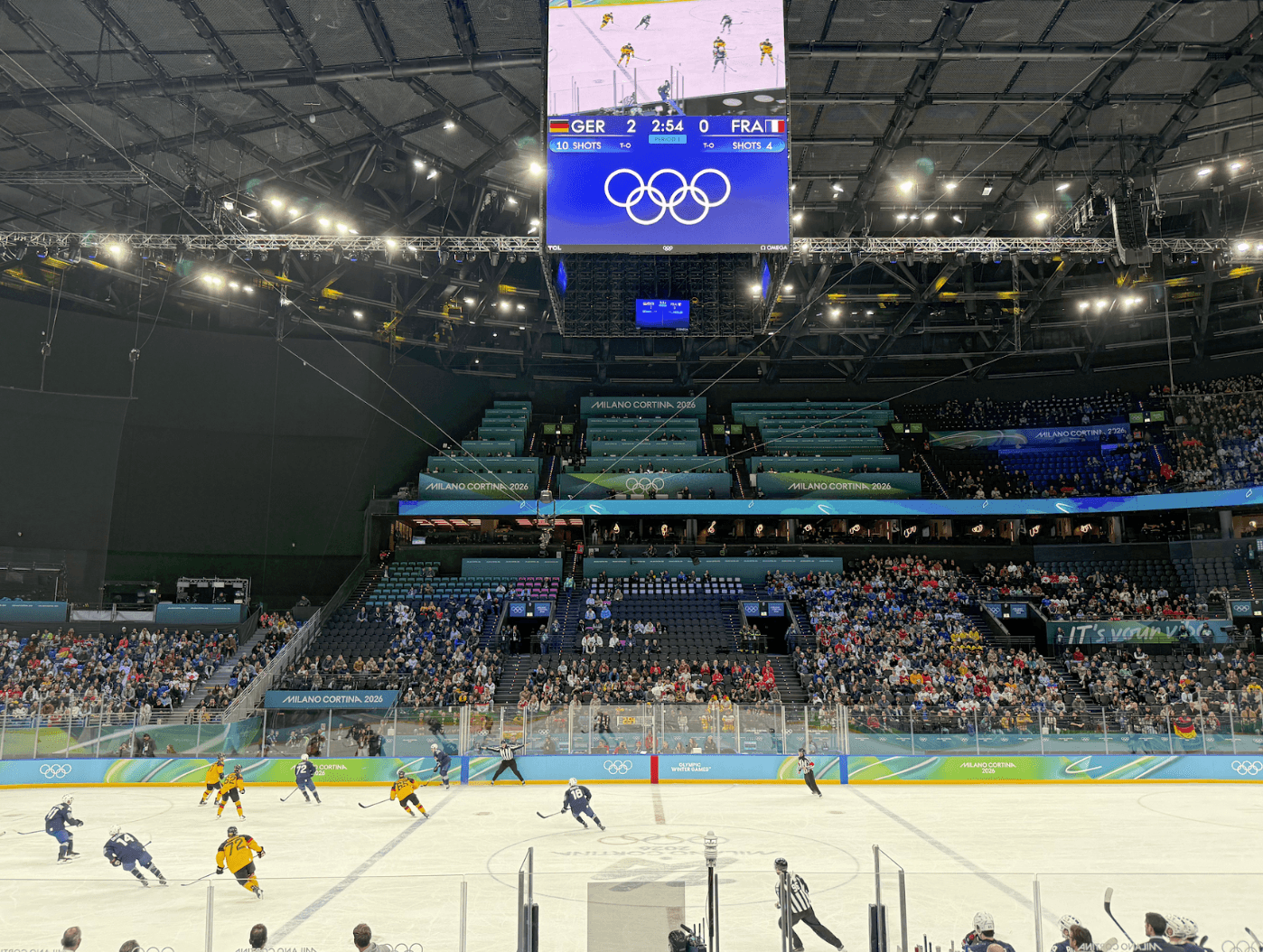
Team USA wins gold in a dramatic 2-1 overtime victory over Canada
By ALEXIA NAVARRO— sports@theaggie.org
In a highly anticipated Winter Olympic Games for ice hockey fans, the National Hockey League (NHL) players are back for the first time since 2014. NHL players were not allowed to participate in the last two Olympic Games, 2018 PyeongChang and 2022 Beijing, due to conflicts between the International Olympic Committee (IOC) and the NHL. In that 12-year hiatus, the game has grown and brought in a new market of players and fans.
The gold medal final took place on Feb. 22, 46 years since the last time the U.S. team won gold with the “Miracle on Ice” team in Lake Placid, N.Y. against the then-dominant Soviet Union team. The final brought about the most intense rivalry in international hockey between Canada and the United States.
Coming into the games, nine-time gold medalist Team Canada was the favorite to win. Despite losing their captain and most decorated forward, Sydney Crosby, in the semi-final match, there was not a shortage of sharpshooters to take his place (Connor McDavid, Macklin Celebrini, Nathan MacKinnon, etc.).
All over North America, fans woke up bright and early at 5 a.m. PST to watch the NHL’s top teams compete for the gold.
The puck dropped at 5:10 a.m., marking the start of this highly anticipated game. Right off the bat, both teams came out fast and physical, making big checks along the boards.
Staying true to the North American rivalry, Team USA’s Brady and Matthew Tkachuk started to cause problems in front of the net for the Canadian team, pushing for a scrum. However, their efforts were wasted as fighting is strictly prohibited in Olympic hockey per International Ice Hockey Federation regulations.
USA’s Matt Boldy opened up the scoring almost seven minutes into the first period off a short-handed and partial breakaway goal, assisted by Captain Auston Matthews and defenseman Quinn Hughes. After a fast and physical first period, it ended 1-0 with the USA leading.
The ice shifted in favor of Canada in the second period with 19 shots on goal (SOG), a two-man advantage power play and some big breakaway opportunities. With less than two minutes left in the second, Canada’s Cale Makar tied the game with a wrister over the pad of USA’s Connor Hellebuyck and into the left side of the net.
The second period was full of big saves by goalkeepers Hellebuyck and Canada’s Jordan Binnington, keeping the game tied at 1-1.
By the third, both teams were feeling the pressure, playing one-on-one hockey and not leaving any open ice.
With under eight minutes left in regulation, Canadian forward Sam Bennet received a double minor for high-sticking American forward Jack Hughes, chipping a few teeth out of his mouth. Team USA was on an unsuccessful four-minute power play for about three minutes until Hughes received a penalty for high-sticking Canadian center Bo Horvat, setting up a four-on-four for 49 seconds. Canada then went on their power play for 1:11 minutes, but could not get past the American goaltender.
Regulation ended 1-1, sending the game into sudden-death overtime. This was the second time a gold medal final has gone to overtime, the last one at the 2010 Vancouver Olympics when Canada’s Sydney Crosby scored the golden goal to secure the win against the United States.
The three-on-three overtime began with Canada’s Nathan MacKinnon winning the faceoff. Canada, with the NHL’s top two leading point and goal scorers (McDavid and MacKinnon), had the strongest odds to finish the game.
McDavid, moving across the ice, tried to score a short-handed goal into the net, but was blocked and lost it behind the net. Hughes picked it up and passed it to Zach Werenski, with both players moving down the ice. Canada’s line was in disarray, trying to keep up with the Americans. With lots of open ice, Werenski fought off MacKinnon and passed the puck to Hughes.
1:41 into overtime, Hughes shot and scored the golden goal for the United States. All the American players shot off the bench and onto the ice to celebrate their achievement.
Canada’s McDavid, who led the tournament in points and assists, was named the Most Valuable Player (MVP) of the tournament, adding to his bitter loss.
The U.S. dedicated this win to the late Johnny and Matthew Gaudreau, two NHL brothers who were tragically killed in August 2024 by a drunk driver on the eve of their sister’s wedding. Johnny was projected to be captain and would have played in this Olympic tournament.
This win was important for American hockey for many reasons. Canada has dominated in the sport it created earning nine gold medals), while the United States has tended to come in second with eight silver medals.
The 2026 Milano-Cortina men’s ice hockey tournament wrapped up with Finland, the 2018 gold medal winners, winning the bronze medal, Canada taking home the silver medal and the United States winning its third Olympic gold medal.
The NHL has since resumed, with the Olympians back to their respective teams and their eyes set on the next prize, the Stanley Cup Championship.
Written by: Alexia Navarro — sports@theaggie.org