






The British Museum should return its stolen artifacts
Even if its halls become a lot less interesting
By ANJALI IYER — amiyer@ucdavis.edu
At the turn of the 19th century, Greece remained under the control of the Ottoman Empire. While the Greek people suffered under the oppressive regime, British diplomat Lord Elgin employed his Turkish connections to obtain permission to ship ancient artifacts to England under the guise of “saving” them from the inevitable destruction that would accompany the Greek struggle for independence. Over the course of several years, Elgin took it upon himself to chip away at structures that stood long before the conception of the British Empire.
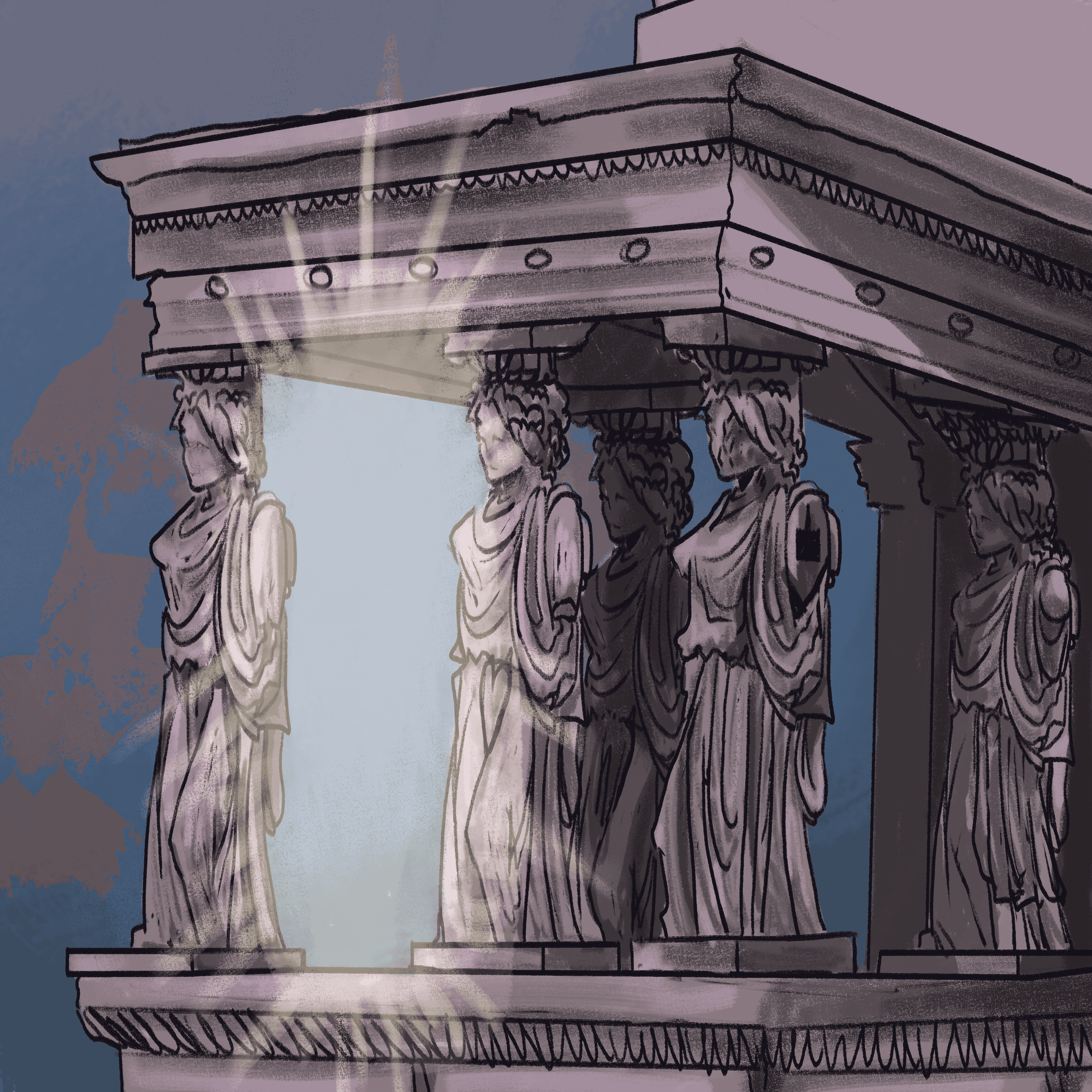
One of Elgin's many conquests was a Caryatid sister — one of six “daughters of Athens” carved into stone pillars that held up the front of the Erechtheion temple. Today, five of the sisters reside in the Acropolis Museum in Athens. The sixth and loneliest sister stands alone in the nineteenth wing of the British Museum, almost two centuries after Greece won its independence.
The British Museum is full of stolen treasures — a reflection of its dark colonial past. Notable acquisitions include the Egyptian Rosetta Stone, the Benin Bronzes, the Ethiopian Maqdala collection and even human remains looted from what was meant to be their final resting place.
British imperialists argue that these objects remained at the museum because their countries of origin lacked the infrastructure to properly house and care for them. However, the weakness in the governing structures of post-colonial nations is a feature of British involvement, so this argument is baseless. The objective of colonization was not to set up the political foundation for long-term success, but rather to create a system that allowed Britain to maximize its foreign exploits. The British then asserted their relative wealth as an indicator of their cultural superiority, which entrusted them with the burden of caring for these objects.
Repatriation of these artifacts has been discussed, but objectors summon the example of the Koh-i-Noor diamond — a priceless jewel that changed hands between Afghan, Persian and Indian rulers before the British shipped it back to the United Kingdom. They argue that since the true owner of the diamond was so hotly contested, it would be impossible for the British to determine which nation should rightly receive it. But the debate around which country to send it back to is a non-sequitur — another form of cultural chauvinism that assumes these nations would be incapable of making the right decision for their own cultural relic.
Growing up in a post-colonial nation, I became accustomed to hearing rhetoric that attempted to justify these thefts. Most meager arguments revolved around the fact that the societies which originally possessed these artifacts were too politically unstable to care for them, despite the fact that much of the civil unrest emerged as a result of colonization. The notion that these relics were “saved” or “rescued” by the British for cultural preservation is highly deceptive; the idea that the British only stole for the sake of protection or the greater good is easily disproven by the gruesome Victorian practice of consuming the flesh of Egyptian mummies and grinding bones taken from Irish burial sites for medicine. Ultimately, hoarding historical objects, priceless artifacts and human bodies is evidence of a dying British Empire desperately clinging to its former glory. When imperialists walk the halls of the British Museum, they aren’t observing a tapestry of a collective human history, but rather the myriad trophies of colonialistic violence.
Despite what skeptics believe, the objective of returning these artifacts wouldn’t be purely monetary. These objects represent deep cultural ties to history, culture and religion — ties that were brutally severed by Britain’s colonial reign. It’s time to send the Caryatid sister back home and let the victims of colonialism finally have autonomy over their own history.
Written by: Anjali Iyer — amiyer@ucdavis.edu
Disclaimer: The views and opinions expressed by individual columnists belong to the columnists alone and do not necessarily indicate the views and opinions held by The California Aggie.