






ASUCD Senate confirms judicial branch members, considers election reform at Oct. 8 meeting
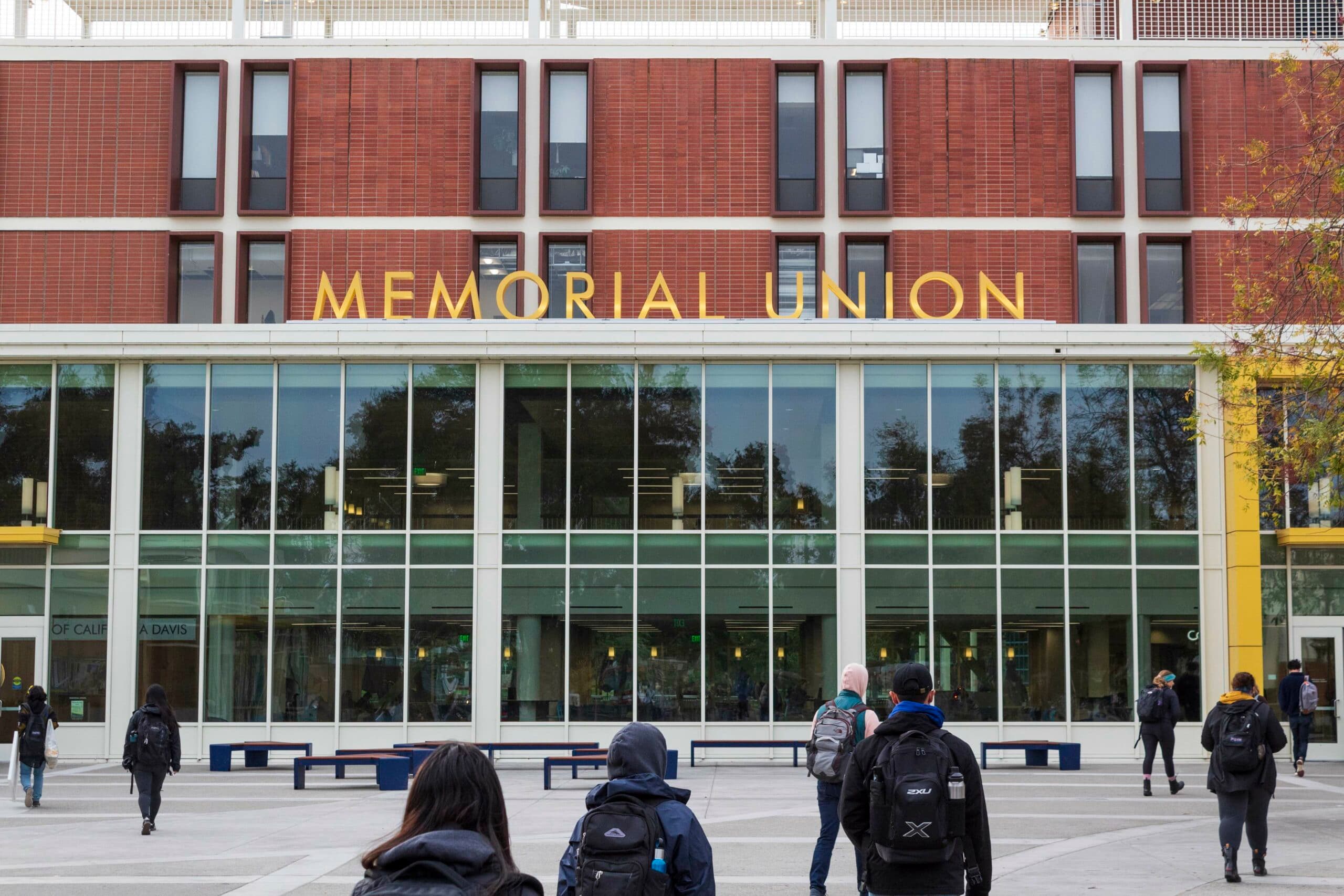
ASUCD President Luis L. Garcia is proposing elections be consolidated from twice to once a year
By LILY KENROW — campus@theaggie.org
At their Oct. 8 meeting, the Associated Students of UC Davis (ASUCD) Senate confirmed several members of the Judicial Council, the student government’s sole judicial body.
The table unanimously confirmed Katherine Zhang, a third-year economics and political science double major and veteran council member, as Head Justice. The table then confirmed Tom Doan, a second-year political science major, and Chloe Zhuo, a second-year political science major, as justices.
Earlier in the meeting, the Senate heard public comment from Anthony Dyson, a third-year history major who had interviewed the day before for a vacancy on the Judicial Council. Dyson said he had yet to receive an email with a hiring decision by the Senate meeting’s start, expressing discontent over the lack of communication over the role.
“There is just a real lack of transparency every step of the way in the hiring process and for something so important to be so opaque, it kind of raises doubt on the whole structure of this organization,” Dyson said.
Senator Pro Tempore Caleb Swaby-Pierce, in charge of the interviews and hiring process of the Judicial Council, apologized for any perceived lack of clarity. Internal Vice President Rosa Linda Martinez also added that the fast turnaround was due to delayed email account access and the immediate need for Judicial Council members. ASUCD rules require that the Senate halt regular operations if a Judicial Council vacancy remains unfilled for longer than four consecutive weeks.
Other confirmations at Thursday’s meeting included: Chloe Wagner, a fourth-year political science and sociology double major, as chair of the Sexual Assault Awareness Advocacy Committee; Aracely Garcia, a second-year political science and psychology double major, as the Undocuscholars Advocacy and Aid Committee vice chair; Varsha Thummaty, a fourth-year mechanical engineering major as STEM committee chair; Emma Jury, a third-year environmental policy analysis and planning major, as the Environmental Planning and Policy Commission vice chair; Veda Diptiman, a fourth-year political science — public service and sociology double major, as chair of the Disability Justice Committee; Moss Whitaker, a fourth-year English and psychology double major, as Disability Justice Committee vice chair; and Hazel Tran, a third-year biochemistry and molecular biology major, as the Academic Affairs Commission vice chair. These commissions and committees also had several rank-and-file members confirmed by the senate.
The senate then presented four interim senator candidates to fill the role left vacant after Senator Ezra Rubin’s resignation last month. The candidates were: Lukas Logvin, a third-year political science major; Jeeya Alag, a second-year psychology major; Harshpartap Dhillon, a third-year biology major and former ASUCD senator; and Dylan Childs, a second-year political science and economics double major.
The senate entered a closed session to interview the candidates, which lasted a little over an hour. During that time, the table also heard a presentation by Kyle Naranjo, a 2026 UC Davis graduate. According to ASUCD President Luis L. Garcia, the presentation was given to the senate in private as it included confidential and sensitive information.
Legislation
After the closed session, the senate reviewed legislation, starting with Senate Bill (SB) #1. The bill passed unanimously, accepting the ASUCD operational budget for the 2026-27 year.
A few amendments were made to the finalized budget from budget hearings, affecting hours and roles at The Pantry and the Office of the External Affairs Vice President. Controller Evan Kim, ASUCD’s chief financial officer, noted that the changes would save approximately $2,700.
The table also passed Senate Resolution (SR) #1, outlining the goals, priorities and strategies of ASUCD for the 2026-27 academic year. The resolution is traditionally written by the ASUCD president and presented as the first resolution of the year.
Though passed, SR#1 faced debate and was not unanimous, with Senator Aaron Heth providing the sole vote against it. The primary topic of debate was its inclusion of several lines about consolidating ASUCD elections to just be held once annually, in spring.
“This [resolution] in short, is our vision and mission for the association next year,” Garcia said.
Constitutional Amendment #100 continued the discussion of a single annual election. If passed by the Senate, it would place the issue on the fall ballot for students to decide upon.
Currently, ASUCD holds two elections; one in the fall to elect six senators and a larger one in the spring to elect the remainder of the senate table as well as ASUCD’s top executives, including the president and vice presidents. To change the makeup of elections, the amendment would require 60% of voters to approve the change.
The discussion largely centered on boosting voter turnout and the bill's potential to limit incoming students from getting involved in ASUCD Senate in the fall.
“Tonight we have before us an amendment that I define as the anti-transfer and anti-first-year student constitutional amendment,” Heth said. “This amendment will get rid of the ability for transfer and first-year students to run for Senate in their first quarter at Davis.”
Garcia, who authored the amendment, later pointed out that there was a limited number of transfer students on the senate. He also criticized Heth, who is a transfer student himself, and argued that he only started representing transfer students’ needs when discussion of the amendment arose.
“There’s only one transfer [student] on this table that’s a senator,” Garcia said, referring to Heth. “And you’ve never advocated for transfer needs. I do want to state the fact that we want transfer students on the table, but there’s so many other ways to actually get involved with ASUCD and make an impact.”
Transfer Student Representative Livreet Kaur Sandhu also noted the issue of new students being limited from senator positions.
“There definitely is a learning curve for the [senator] position, but also other opportunities to get involved within ASUCD,” Sandhu said.
The senate eventually decided to table the amendment for a week for further review.
Open Forum
During open forum, External Affairs Vice President Simrit Singh mentioned the rally and march against sexual violence that had occured earlier that day in solidarity with the Jane Doe victim in The Cornell Seven case.
Singh shared a general statement from Chancellor Gary May regarding all sexual violence.
“‘Sexual misconduct has no place at UC Davis, and the university works to create a community that is inclusive and welcoming to all,’” Singh read. “UC Davis is committed to responding promptly and effectively to all reports of sexual violence and sexual harassment. UC Davis fully complies with UC’s robust policy and process for reviewing and investigating allegations of sexual harassment and sexual violence.”
The meeting was called to order at 6:16 p.m. and adjourned at 10:49 p.m.
What is the ASUCD Senate? As the legislative body of UC Davis’ undergraduate student government, the Senate makes decisions on the use of student funds, oversees units that employ over 1,000 people and makes statements and resolutions on behalf of the student body. The California Aggie covers its weekly meetings and compiles Senate Reports to keep students informed.
Written by: Lily Kenrow — campus@theaggie.org