






Last-ditch efforts to salvage a slow news day
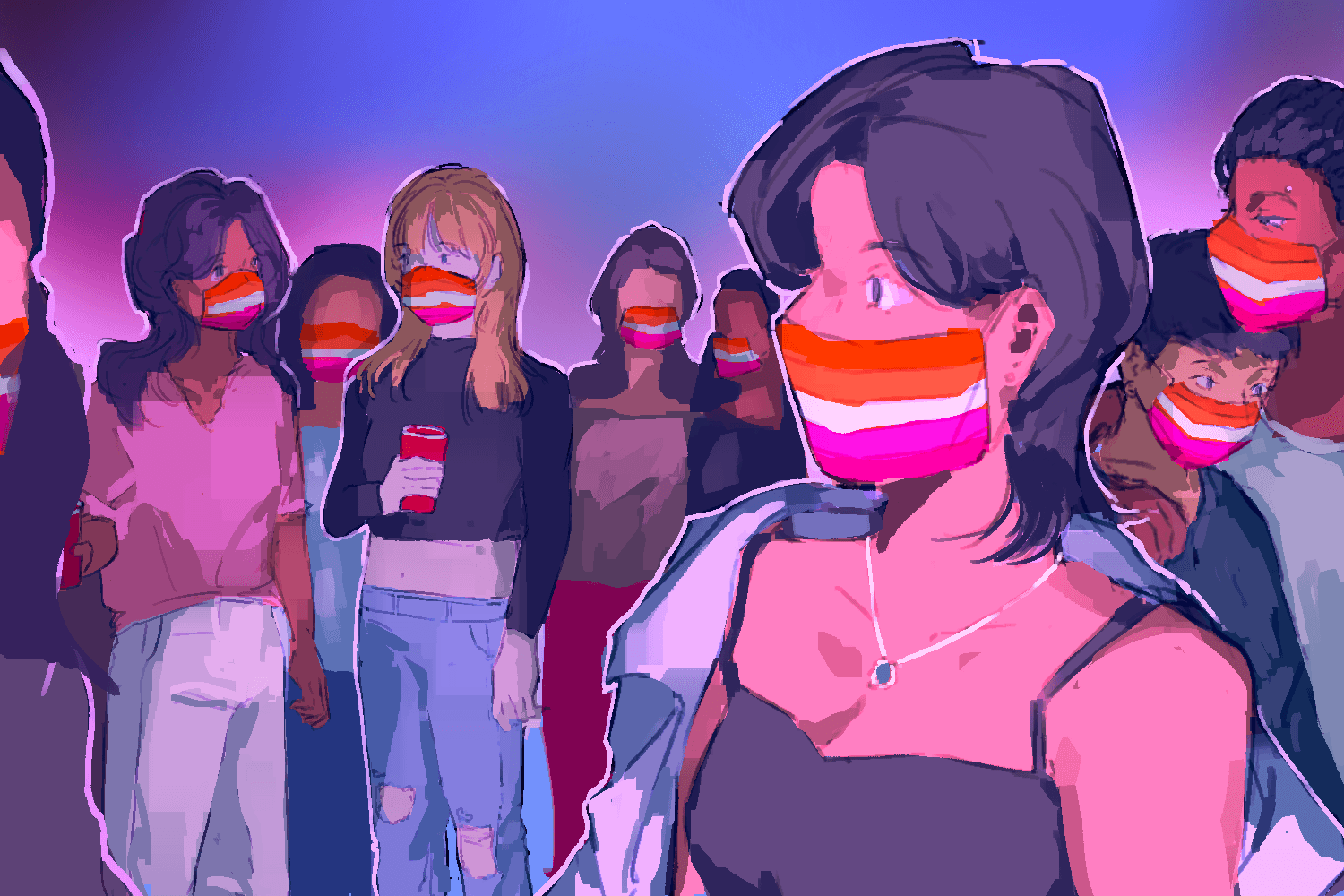
How the COVID-conscious lesbian bar became the talk of the small town
By ABHINAYA KASAGANI — akasagani@ucdavis.edu
The words “COVID-conscious lesbian bar in Greenfield, Massachusetts” do not immediately strike one as scandal-worthy. However, soon after the Last Ditch Bar and Arts Venue announced that they were considering making their strict mask policy optional for one night of the week, it appeared that the phrase was news-worthy after all. Last Ditch was met with harsh criticism and accused of being ableist, with some going so far as to suggest they were pandering to “capitalism and white supremacy.”
Taking to Instagram the following morning to address these concerns, owners Asa Rosario, Jackie Matellian and Sage Territo apologized for the tone of the earlier announcement, imploring their patrons to understand their reasoning. Despite clarifying that it wasn’t a decision they had come to lightly — and was largely due to their financial distress and declining foot traffic — this dispute became fodder for larger cultural commentary about “wokeness” and cancel culture almost immediately, with the bar’s progressive politics being contested.
The bar — conceived in efforts to provide its patrons with a safe queer space and demonstrate support for the arts — is primarily local and community-based. Located in Greenfield, a city with a population of roughly 17,700, not only was the dispute unwarranted in its escalation considering its size, but the backlash was also more intense than necessary. What began as a small-town dispute turned into a proxy argument over the state of progressive politics, prompting The Washington Post to publish a story titled “The Great Awokening is Over. This Lesbian Bar Shows Why.” The piece suggested that the backlash was indicative of a broader retreat from progressive activism wherein controversies once emblematic of mainstream political discourse now led conservatives to view the concerns of a subculture as representative of the left as a whole. They commented on the fraughtness of the political climate, turning the controversy into a caricature of sorts.
While obvious that few of us are likely to have any meaningful stake in whether the a local bar in Greenfield uphold their mask mandate on Saturday nights, the sensationalization of what was dubbed the “COVID-conscious lesbian bar” brings to the forefront the growing conservative desire to vilify hyperprogressive behavior and treat it as representative of all progressive sentiments. In misguidedly commenting on what conservatives see as the absurdity of “wokeness,” the conservative inclination becomes to strip the story of all nuance and equate these outbursts with empty rage. What appears to be an isolated outburst, in actuality, reflects misplaced feelings about the current political system's ways of excluding or marginalizing certain communities through unequal access to resources, representation and social and institutional discrimination. The dismissal of their grievances — and reduction of their personhood to caricatures of hyperprogressivism — begins feeling more personal than it should, leading to citizens feeling further excluded.
The Last Ditch controversy exemplifies this quite well, especially since the rhetoric surrounding the announcement was genuinely extreme. The Boston Globe reported hundreds of comments, including accusations of ableism, pandering and eugenics, along with threats against the venue. This gave way for political commentators to caricaturize this particular version of progressive politics in spite of the owners’ care and concerns about their patrons’ accessibility. While some understood that the bar’s financial struggles warranted making Saturday nights mask-optional and that these clashes were not diametrically opposed positions, the difficulty to simultaneously reconcile both the owners and patrons’ needs led to a rather public outburst that gave way for the opposition to turn criticism away from the economic systems’ admitted failure to account for its citizens’ needs and toward the supposed absurdities of “wokeness.”
Attempts to criticize The Last Ditch Bar solely as an instance of progressive politics gone wrong are a last-ditch effort in and of themselves. The irreconcilable distance between these two realities is where the tension lies. The controversy says less about the people involved in the actual dispute, but instead about our collective appetite for national coverage that turns local conflicts into much larger, unwarranted political considerations to redirect the focus away from truly exclusionary communities and systems that leave people vulnerable to resolve structural problems themselves. In making a mountain out of a molehill to vilify queer and COVID-conscious people, the argument morphs into something misguided about the stupidity of COVID consciousness and risks obscuring the very issues that make this dispute national fodder in the first place.
Written by: Abhinaya Kasagani— akasagani@ucdavis.edu
Disclaimer: The views and opinions expressed by individual columnists belong to the columnists alone and do not necessarily indicate the views and opinions held by The California Aggie.