






Yolo County cuts food waste by nearly 200 tons since 2024
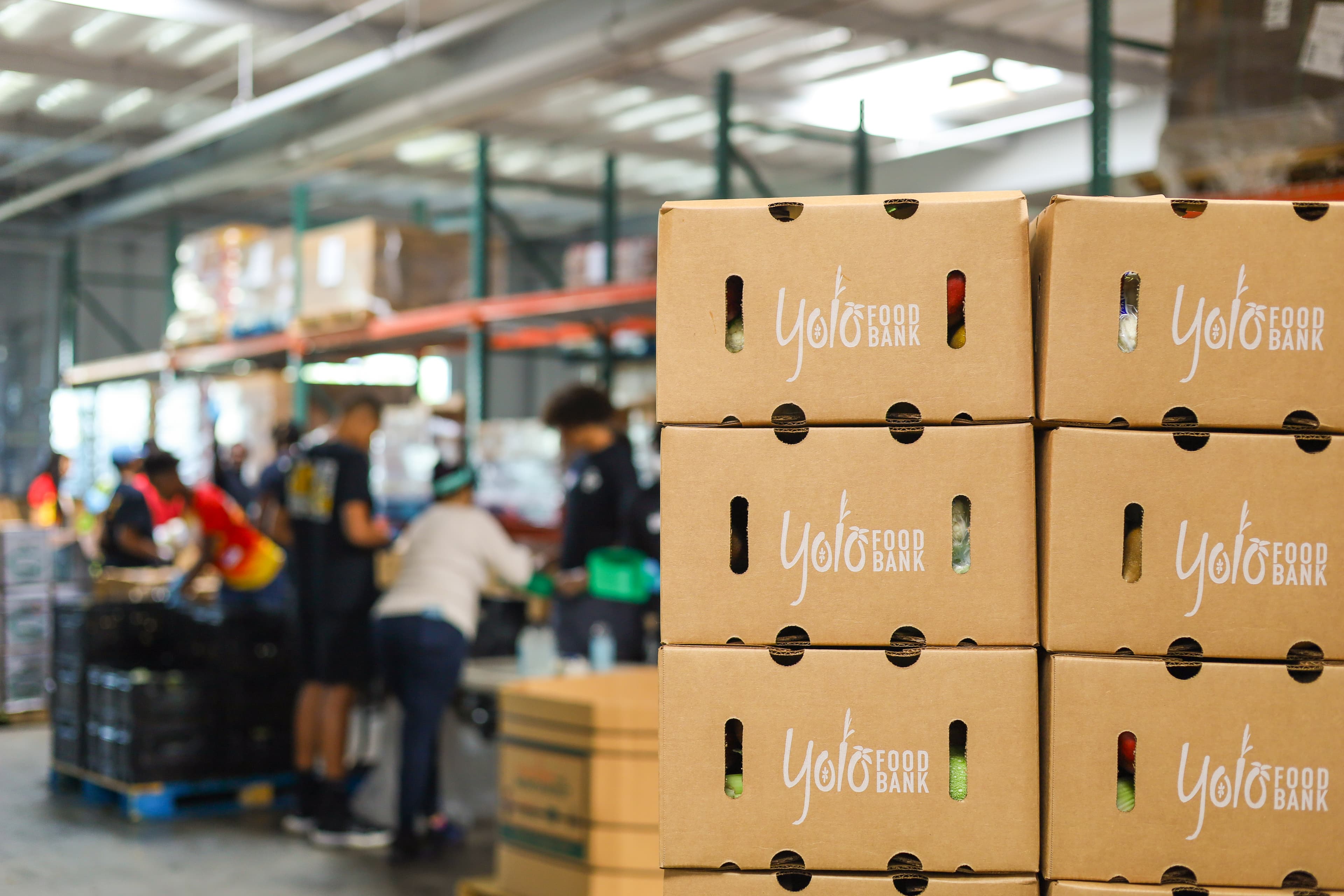
A partnership with Yolo Food Bank led to the reduction
By — COLE TAYLOR — city@theaggie.org
In a Sept. 15 press release by Yolo County, it was announced that landfill waste has been cut by nearly 200 tons in the last two years due to a partnership with Yolo Food Bank. The partnership led to Yolo Food Bank sending 108.01 tons of food waste to Yolo Landfill in the 2025-26 fiscal year, a 64% decrease from the 302.45 tons sent in the 2023-24 fiscal year.
The partnership was made in an effort for Yolo County to comply with Senate Bill (SB) 1383, a bill passed in 2016 that sets targets for reducing the amount of organic waste sent to landfills by 75% and recovering 20% of unsold, edible food for food recovery organizations.
Funding for SB 1383 comes from CalRecycle’s Local Assistance Grant Program, which allows cities and counties to receive funding to help them meet SB 1383’s targets.
Dr. Edward Spang, an associate professor of food science and technology whose research is focused on improving the efficiency of energy, water and food resource systems, spoke on the importance of a bill like SB 1383.
“What we want to do is also try to prevent food waste,” Spang said. “[...] so the bill also says we want to capture and recover and redirect 20% of edible food currently going to landfill, so that's recognizing that some of the food is actually still edible, and we have people who are hungry. [...] And so that was a totally unique take on this legislation was to try to kind of pursue both those goals at the same time.”
Spang also spoke on how food waste is not as widely considered as other factors damaging the environment.
“I think at this point we've done a good job where people know that climate change is an important thing,” Spang said. “I think people know about water scarcity, especially here in California when we're in a drought, to try to use less water. But I don't think food waste is at the same sort of household level of knowledge that these other important pieces are, and it's of course linked to both of them. You know, the more food that we get into the food supply chain and keep it there, the less greenhouse gas emissions we'll have from wasted food.”
In 2024, the United States generated 70 million tons of surplus food, accounting for 29% of total food production. Of that surplus, 32.3% or 22.6 million tons, of the surplus went to landfills, while only 2.5%, or 1.74 million tons, was donated. Surplus food also contributes to compost and animal feed, while 14 million tons go unharvested.
Methane from landfills is emitted into the atmosphere when organic waste, like food, decays over time. Food waste also decays faster than other items in the landfill, meaning it contributes to more methane in the atmosphere.
The partnership between Yolo County and Yolo Food Bank allowed food that couldn’t be distributed to be sent to the food bank. Yolo County Landfill would then separate the undistributed food from its packaging and compost it. This separation was aided by Yolo County Landfill’s depackager machine.
Marissa Juhler, director of the Yolo County Landfill, spoke on the depackaging process.
“You pick a restaurant, [...] or you pick a grocery store or a warehouse [...] they fundamentally don't have time and the resources to do it [depackaging], and so the depackager became the solution,” Juhler said. “So we do all that depackaging for them, but by comparison, that's far cheaper than if they had to hire a full-time staff person, you know, at the back of every store and restaurant to take all of those components out.”
Juhler also spoke about how the food bank partnered with the landfill to aid in depackaging services.
“When 1383 rolled out, you know, separation of organics was not for everybody, and it also wasn't easy,” Juhler said. “It’s unrealistic, and so you need infrastructure that can help meet that need, and so that's actually where we ended up with the food bank. The food bank had a significant amount of packaged food that would come in expired [...]. As a food agency that's feeding people, they have so much waste, but it is a reality at every bank, and so that's how that partnership began, was making sure they had the right infrastructure to help them.”
The press release also highlighted September as Hunger Action Month, an effort led by Feeding America, to promote awareness about hunger and food insecurity. Oct. 16 will be World Food Day, an international event meant to commemorate the founding of the United Nations Food and Agriculture Organization and raise awareness to food insecurity across the globe. More information about the Yolo Food Bank, its activities and ways to support it can be found on its website.
Written By: Cole Taylor — city@theaggie.org