






Morning she, afternoon he: the sex-changing dance of avocados
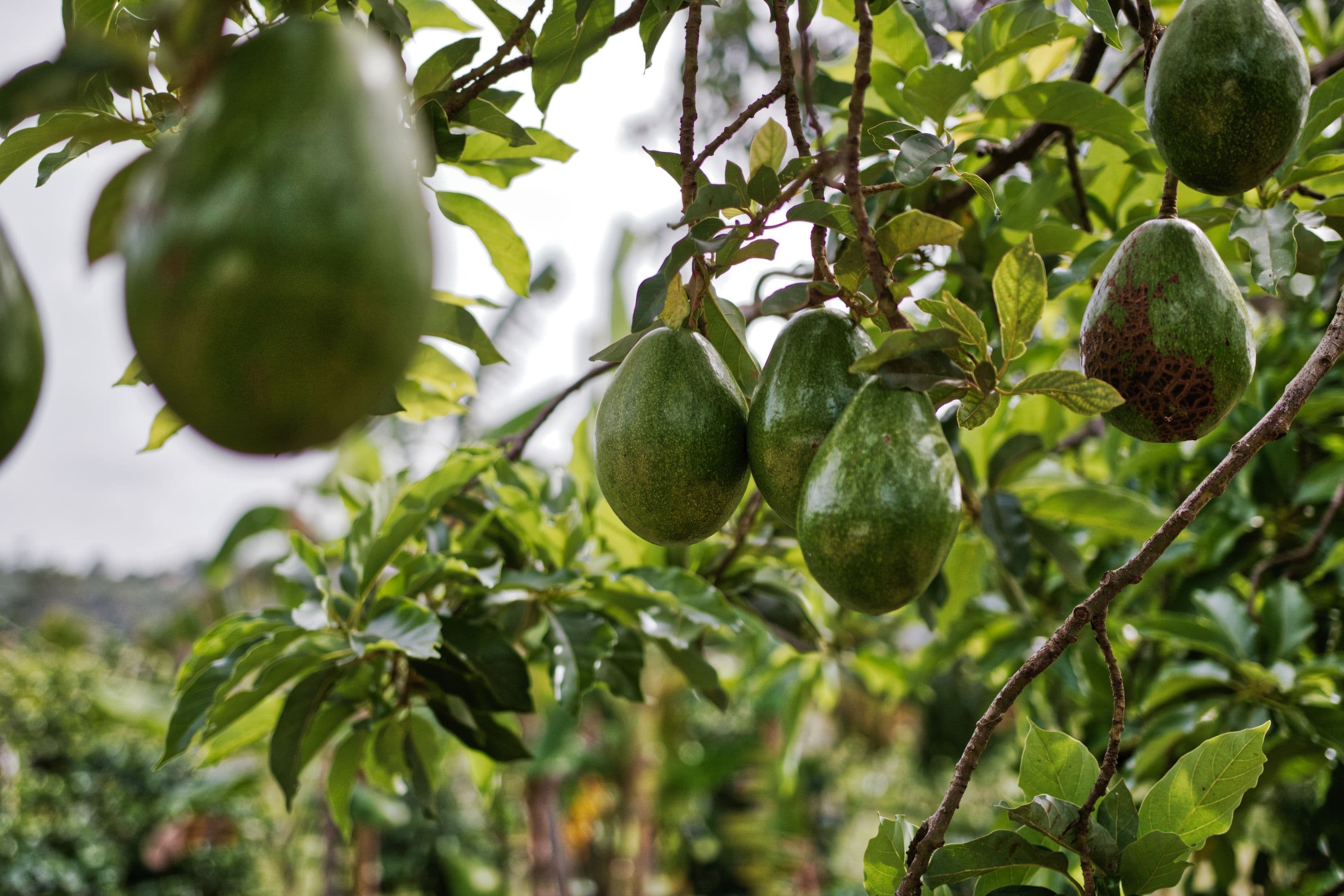
UC Davis study reveals a genetic hints for why avocado trees change sex throughout the day
By JOANNA ABRAHAM— science@theaggie.org
If you go to any garden center and ask for advice on growing avocados, you’ll probably hear a tried-and-true piece of advice: plant two different types of trees close together for the best results.
In July 2026, researchers from UC Davis, UC Irvine, UC Riverside and UC San Diego, published a study in the Proceedings of the National Academy of Sciences that provides insight into the genetic and evolutionary basis of this common practice.
Avocados are hermaphroditic — they exhibit a flowering behavior that is characterized by distinct male (pollen-shedding) and female (pollen-receiving) phases, according to UC Riverside.
To the naked eye, these phases can be distinguished by the orientation of the flower’s stamen, a stalk-shaped organ that produces and releases pollen. During the male phase, the stamen is upright and can effectively shed pollen onto pollinators that visit the flower. During the female phase, the stamen lies flat, leaving the stigma — the waxy external opening of the female reproductive system — exposed and able to receive pollen.
Graham Coop, a professor of evolution and ecology at UC Davis and co-author of the study, commented on this distinction.
“It’s subtle. They’re not dramatically different-looking flowers,” Coop said.
These phases are staggered in time. Avocado flowers occur in A- and B-type varieties. A-type plants demonstrate the female phase in the morning and the male phase in the afternoon; B-type plants follow the opposite pattern, according to researchers from UC Davis, Irvine and Riverside.
“The A and B types have the reciprocal flower open [at different points of the day]— the male flower in one type, the female flower in the other type— so that pollen can move between the types,” Coop said.
“The whole tree is basically pulsing male and female, female and male throughout the course of the day. It’s a beautiful synchronized dance.”
In other words, staggering the male and female phases across time reduces the likelihood of self-pollination. At a population level, these varieties also function to increase genetic variation, enabling the population to be more equipped to survive environmental changes in the long term.
It wasn’t until July 2026 that researchers determined the genetic basis of this phenomenon.The study traced the avocado’s alternating flowering patterns to the activity of a single gene, known as SDMYB. SDMYB is present in both A- and B-types of avocado trees. What differs between the two types is when the gene is expressed.
“The same gene is doing the same thing, but it’s doing it at slightly shifted times of the day, and that’s sufficient to give you this dance,” said Coop.
The results of the study have several applications. For one, they can be used speed up avocado breeding. Avocado trees can take up to 15 years to flower, and traditionally, avocado flowering types are distinguished by observation.
“Now, [horticulturalists] can just type the gene, and work out what type it is before it flowers,” said Coop.
Knowledge of this genetic mechanism also allowed researchers to trace this evolutionary pattern back 40 million years.
“What’s neat to us as evolutionary biologists is that because we found the gene, we can look at how widespread the polymorphism is,” Coop said.
Polymorphisms are differences in a given sequence of DNA (in this case, the SDMYB gene). The study found the SDMYB polymorphism to exist in 26 nonavocado species. From this, researchers inferred that this “dance” (a staggered and alternating flowering pattern) has existed in avocado trees and their relatives for over 40 million years.
As further research continues to examine the mechanism behind the SDMYB gene, these initial findings could have significant implications for the fields of horticulture, agriculture and botany.
Written by: Joanna Abraham — science@theaggie.org