



Inside a day of negotiations between UC-AFT and the University of California
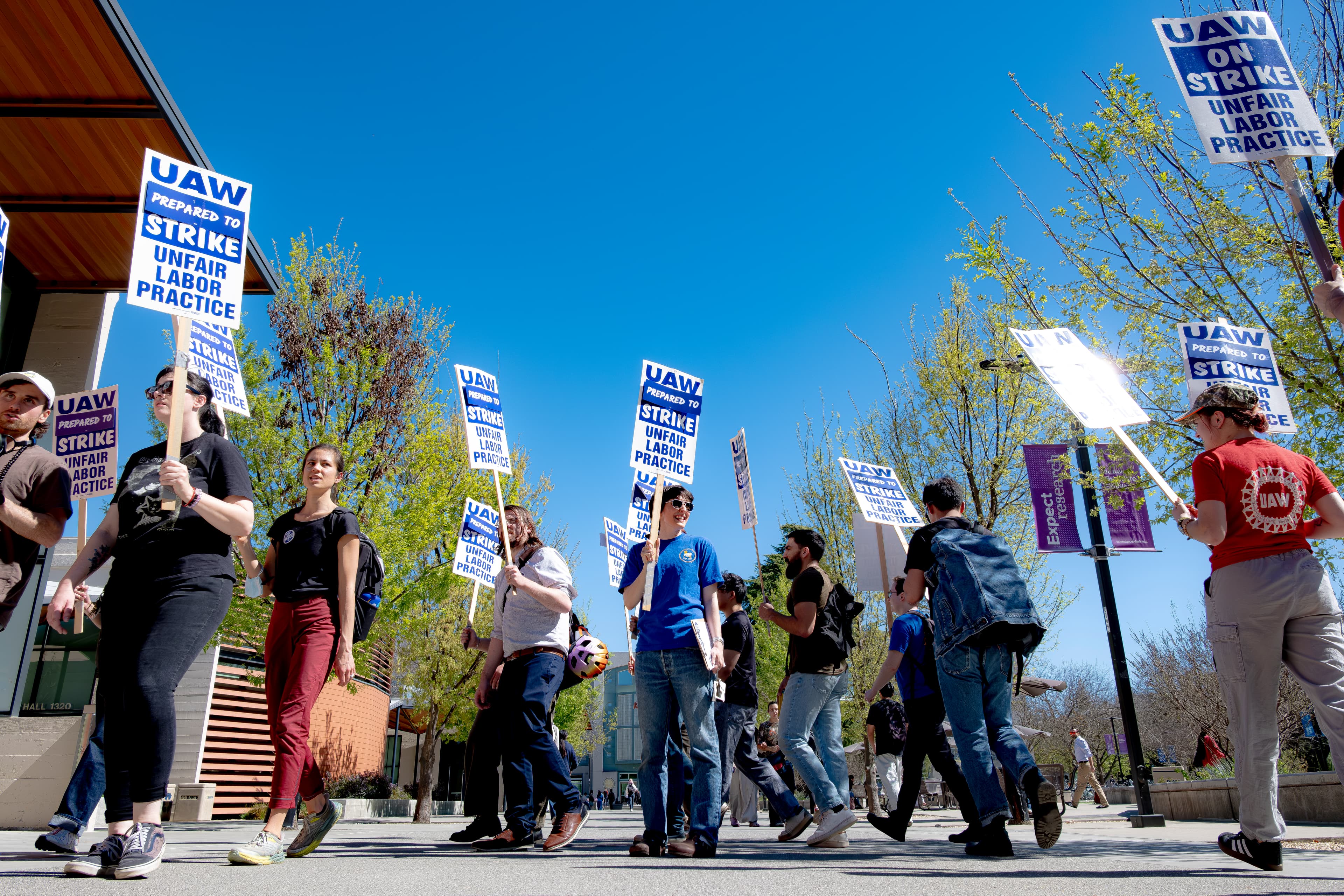
The union is aiming for stronger protections in the workplace as well as fair pay
By RIVERS STOUT— campus@theaggie.org
On Thursday, Sept. 24, leaders of the union University Council-American Federation of Teachers (UC-AFT), representing around 7,000 academic workers across the University of California (UC) schools, and a bargaining team from the UC Office of the President (UCOP) met to bargain over a new labor contract.
UC-AFT represents teaching faculty and librarians who are not members of the Academic Senate, the UC’s official governing body for faculty and academic matters. As such, they are not expected to conduct research funded by the university, unlike professors. Known as Unit 18 employees, the classification includes lecturers, senior lecturers and supervisors of teacher education.
The union had two lead negotiators as well as a member-representative from each of the nine undergraduate UC campuses. UCOP had a similar arrangement, minus a representative from UC Merced.
One of the union’s main focuses going into bargaining was stability. The union says Unit 18 faculty are being unfairly targeted, their positions being cut disproportionately compared to senate faculty.
“They’re just sort of finding unique ways to move around our work and take it away from lecturers so that we’re left with not enough work, and then we can be laid off,” Katie Arosteguy, UC-AFT union representative for UC Davis and a continuing lecturer in writing, said in an interview.
The meeting came months after UC-AFT and UCOP reached an agreement to extend their current contract, including a 4% pay increase. Now set to expire July 1, negotiations are underway to secure a new contract. Should the parties fail to reach an agreement by then, the current contract will remain in place and UCOP will be unable to make changes.
For the first few months of meetings, each side will pass their revised articles, the main sections of collective bargaining agreements, to the other. UC-AFT expects this process to be completed sometime in December.
Eventually, the parties will counter each other’s revised articles repeatedly until an agreement can be reached. The current contract consists of 44 articles and other various items.
Minutes after the meeting began, union members gave testimonies related to the articles being discussed that day, and their overall working conditions. Most if not all came from UC Davis and UC Berkeley. Among them was Rebecca Rosa, a lecturer and supervisor at the UC Davis School of Education who supervises students seeking their teaching accreditation.
“When a candidate is struggling and requires substantially more of a supervisor’s time, we receive no additional workload credit,” Rosa said. “We simply absorb those additional hours.”
Several union members echoed her sentiment. From writing cover letters to volunteering to substitute for a class, Unit 18 staff said that they are expected to do work that their pay does not account for, and want to provide these services to students in order to create a better education experience.
The UC Student Association, the recognized voice of over 230,000 undergraduate students across all the UC campuses, is supportive of UC-AFT in their bargaining process. Gabby Wong, a second-year political economy major at UC Berkeley and the labor relations officer of the UC Student Association, made an appearance backing UC-AFT.
“What we have been seeing is that our lecturers, even though they care so much, are being forced to be increasingly disconnected from the student body because they’re not being paid adequately,” Wong said. “They have less time to go towards what it is that they actually care about, which is the students, because they’re worried about their basic needs. They’re worried about their health care. They’re worried about these protections which they do not currently have.”
Little progress was made at the negotiation table that day. The parties passed their proposals to each other, with an occasional question or clarification over clauses.
Nearly all affairs were wrapped up by 5 p.m., save for an observing union member’s complaint over the lack of a university representative from UC Merced. A UC representative from the campus had been missing at a prior negotiation meeting as well, and their absence has been remarked on throughout the day by the union’s negotiating team.
In response, UC lead negotiator Ginger Burnett stated that the Merced representative was unable to come because of budget constraints, but the negotiating team spoke for all of the UC and affirmed that the contract was UC-wide. When asked by that same union observer if the UC Merced representative would appear at UC Merced negotiations, Burnett was unable to give a definitive answer.
Some back and forth continued until 5:10 p.m. whereupon the meeting ended and the university negotiation team left the building.
Multiple university representatives declined to give an interview or comment to The California Aggie throughout the day of the meeting. Lead negotiator Burnett did not respond to request for comment in time for publication.
Written by: Rivers Stout — campus@theaggie.org