



This article is lowkey fire
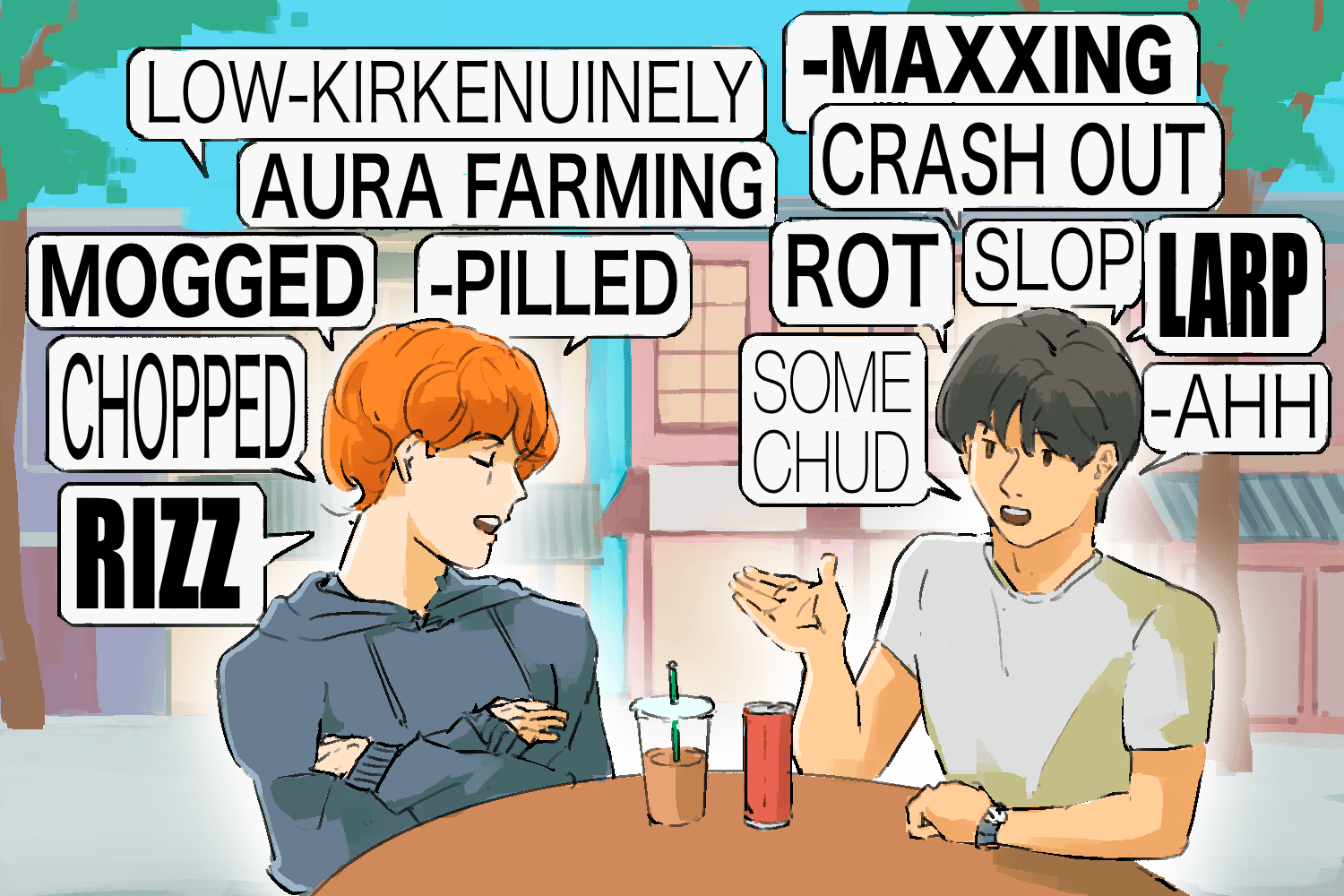
How slang defines us
By AMBER DUHS — alduhs@ucdavis.edu
We’ve all been defined by a plethora of factors. From the social zeitgeist that informs our worldview to social and political moments that influence language used, every generation seems to have their unique set of definable features. In panoramic view, however, there’s a single linguistic strand that unites us all: our unique development and use of slang.
The use of slang isn’t a novel concept — the word itself emerged back in the 18th century as an informal dialect used by the lower class. Due to the increased visibility and fast-paced nature of trends granted by social media, we’ve developed an illusion that Gen Z’s use of slang is significantly more concentrated than previous generations — that’s simply not the case.
Throughout the years, hyper-specific slang developed as a way for people to demonstrate identity and solidarity, where words denote the culture you’re a part of — social circles, beliefs and community. Passed on from different subcultures, commonly used phrases today developed from trends or counterculture movements decades prior as slang has historically been used as a bridge between these subcultures. Terms belonging once to niche groups move through the mainstream culture and along with it, develop new meanings, connotations and their own set of definitions.
For example, dialects like “groovy” and “cool” originated during intense political and social change in the 1960s. They encompassed the anti-establishment movement, anti-war rhetoric and call for social justice. Language that was once highly situationally specific and reflected one’s association with a counterculture movement — like the rise of hippie lifestyles in the 1960s — has now integrated itself into our casual lexicon. It no longer bears the same weight due to its modern informality.
While slang has historically been seen as unprofessional or a less respectable version of “proper” English, its use is significant to both social and linguistic development — language naturally develops in a unique manner that reflects the culture of the time. As slang words spread and become used consistently by the general public, we slowly loosen the association the word had with a particular social or political niche and instead add it to our plethora of casual language.
On top of this, using slang that is familiar to others psychologically signals to them that you are a part of the same “in-group,” which promotes homogony and trust, and reinforces the sentiment of belonging. This is why slang is so important and popular to young people — it enhances the unique identity of the individual generations and while demonstrating distinct, intergenerational social worlds.
Our language — and thus, slang — is learning to adapt to the digital age as terms move into and past the mainstream culture at a more rapid pace than ever before, spreading through global regions and developing into conglomerations of themselves. From words that have worked themselves into more casual contexts, such as “low-key” and “high-key,” to words that most adults still don’t understand — like “chud” or “cooked” — Gen Z’s use of slang may seem more abstract than most since it’s not directly affiliated with any concrete counterculture movements. However, it’s not only normal, but completely socially and linguistically necessary.
Gen Z’s use of slang might not be unique to this modern time period, but the speed in which it has spread and been adopted in comparison to previous generations is an unprecedented phenomena that society is learning to navigate. With Gen Z growing up between the ages of analog and digital — most of us recalling the switch from our VHS and DVD players to Netflix and YouTube — our slang is defined by social media use and widespread internet access in ways that prior generations never faced.
The counterculture movement of the 1960s that led us to these commonly used words was western — logically, those outside of the in-group were not using the slang and were not associated with the niche. However, with the rise and globalization of social media, anyone on a particular platform who consumes even a small overlap of content could be considered a part of this in-group. Hence, the spread of slang has become wider and more efficient, often exceeding country lines (cue the videos of American Tourists yelling “6-7” to children while abroad, creating those true cross-cultural connections).
The hyperbolic — and sometimes unserious — nature of slang is an important and definable characteristic that every generation experiences. From concrete psychological understandings to the simple feeling you get when someone says a slang word you’ve been loving recently, this informal and mostly undocumented language has the ability to unite us all.
Written by Amber Duhs — alduhs@ucdavis.edu
Disclaimer: The views and opinions expressed by individual columnists belong to the columnists alone and do not necessarily indicate the views and opinions held by The California Aggie.