




Pick a card, any card!
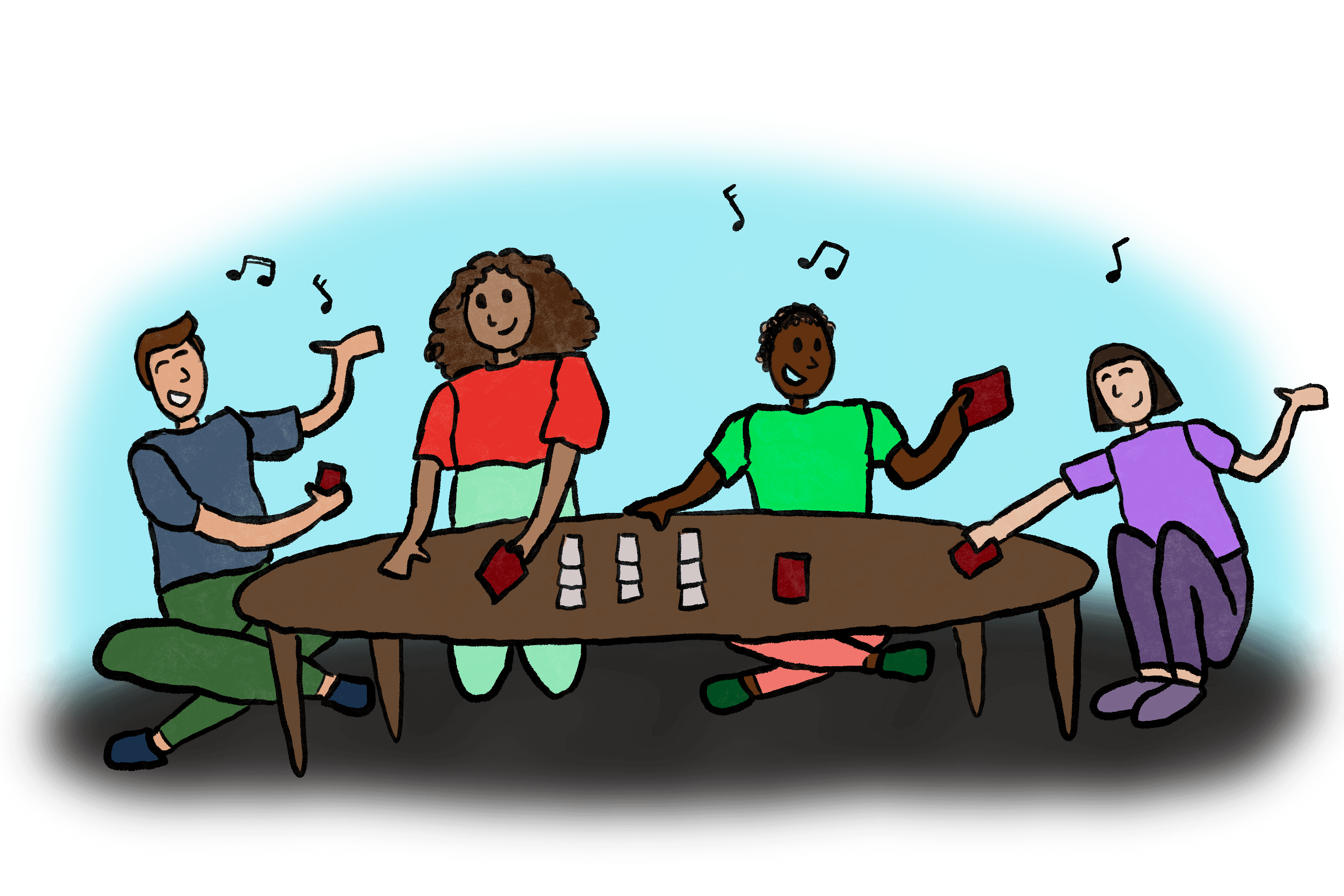
The humble return of the game-night
By AMBER DUHS — alduhs@ucdavis.edu
As a former introvert, I’ve learned to love the impromptu social gatherings that university has granted me. From a weeknight sweet treat to a quick hangout between classes, those small moments have become my favorite parts of any given week. While these interactions are often filled with chatter and laughter, there are natural lulls as well — moments when silence may grow uncomfortable and we twiddle our thumbs. These quiet moments, however, are often broken by a different type of noise: the clicking of a cellphone or, worse, the sound of an Instagram Reel or TikTok. Instead of moving toward another activity or conversation starter that keeps both parties entertained, we instinctively hop to the thing we know will provide us immediate stimulation and gratification.
It’s human nature to want to fill the void of understimulating silence with a quick dopamine boost. But, to avoid this awkward social media-induced tango, I’ve begun carrying with me a new essential alongside my keys and wallet: a deck of playing cards.
Some of my warmest childhood memories are from large family gatherings, which almost always end in exhaustion from hours of Rummikub, Canasta or trivia. As naturally as the setting of the sun brings out a bright moon and cool breeze, cards and tokens alike are ushered onto the dining room table. There’s something therapeutic about the complete assurance that, in the absence of dialogue, these fond games await, catalyzing conversation and connection.
The beauty of a deck of cards isn’t just that you can play thousands of games with it or that its compactness fits perfectly in a handbag; it’s that it carries a different meaning for everyone. Without fail, each time I present the deck, someone instinctively shouts the name of a game they’ve come to associate the red and black faces with. From Mao to Go Fish, the possibilities become endless, allowing us to turn a moment of silence or scrolling through social media into what is essentially a cultural exchange — I’m passing down my favorite family tradition, and, in turn, my friends are too.
When card games were first created around the 13th and 14th centuries, they were essentially folk games, operating with rules and procedures that were not only specific to one's geography or culture, but had the potential to differ between families and social groups. As they’ve developed and become popularized, games are provided with standardized rule books — but that’s not to say we haven’t given them our own domestic, modern mark. From varying interpretations on vague rules to silly additions that reflect shared experiences, “house rules” are a reminder of the social and familial ties we’ve created. Each game that’s played with a new group of people may influence us to adopt (or abandon) specific rules with the potential to pass those altered mannerisms along to the next group we play with. In essence, each time we play a game with someone, a piece of them (or us) is passed along.
Games carry family history as much as they expose the inner workings of our minds. From logic-based games like Battleship or chess to strategy-based games like Catan and Stratego, every decision we make reveals our thought process and priorities to our opponent. Games are not just a way to share a cherished memory or childhood favorite activity, but an avenue through which someone's personality is amplified and exemplified.
Long, complex games also require a group’s full attention, becoming an inadvertent way to ground us and refocus our attention on analog social activities. When I'm in the depths of a long game of Canasta with my family, my mind is completely occupied; the only thoughts racing through my head are my strategies, leaving behind the stress of everyday life. Amid a busy week, games can become a way to unwind for just a few hours — where our only focus in the world is what’s in front of us.
The games that we grew up playing weren’t just a way to get us away from the TV or con us into spending quality time with bickering siblings — they were a way to engage in a beloved cultural institution and connect with those around us. Games have the potential to break the ice with a new acquaintance, ease the tension in a crowded room or relax the energy at an uptight gathering. They do all the heavy lifting in a social situation, allowing our brains to fall into the comfortable rhythm of repetitive movement and relaxed chatter. Allow games to initiate the subtle exchange of competitiveness, culture and conversation — so next time there’s a quiet moment, reach for that deck of cards.
Written by Amber Duhs — alduhs@ucdavis.edu
Disclaimer: The views and opinions expressed by individual columnists belong to the columnists alone and do not necessarily indicate the views and opinions held by The California Aggie.