




‘You Can See Everything’ is an engrossing documentary that feels like a psychological thriller
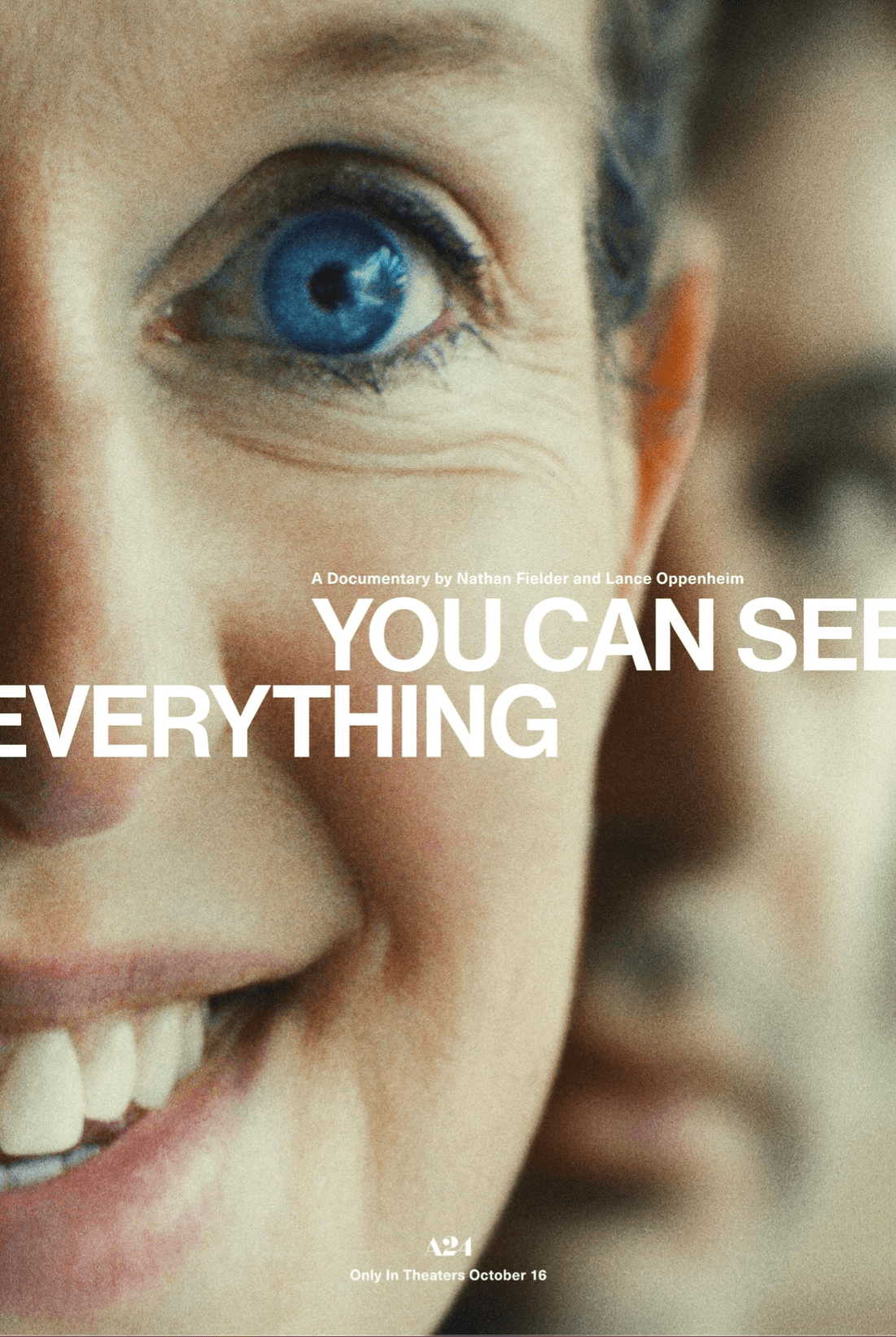
Nathan Fielder and Elizabeth Holmes spar in the unusual and ambitious film
By JONAH BERMAN – arts@theaggie.org
Mainstream documentary cinema, although engaging when it meets the right subject, can easily fall into cliches or formulaic tropes. These films usually purport to provide a thorough and in-depth view into their subject. However, “You Can See Everything,” the most popular documentary in decades, has instead veered into an ever-growing web of conflicting stories, half-truths and unreality.
“You Can See Everything” is directed by Nathan Fielder and Lance Oppenheim, two filmmakers with different approaches that, nevertheless, complement each other. Fielder’s half-serious style was perfected in series such as “Nathan for You” and “The Rehearsal,” while Oppenheim’s keen eye for striking images earned him acclaim for “Primetime,” which was released just weeks ago.
Over three hours, the film depicts the disgraced Theranos founder Elizabeth Holmes and her partner Billy Evans as they invite Fielder into their San Diego home weeks before she departs to serve an 11-year prison sentence.
In this film, you can indeed see much, but rarely into the unfiltered minds of our deceptive protagonist and antagonist. In the family’s beach bungalow, Fielder and Holmes play an odd and frequently unsettling game of dyadic cat-and-mouse as Fielder attempts to psychoanalyze Holmes and understand the unusual way in which she perceives the world.
However, it quickly becomes evident that Fielder is somewhat compromised. Shrewd viewers aware of the Theranos scandal will perhaps be disappointed by the lack of inquiry into Holmes’ well-documented history of fraud and deceit, as the film instead depicts Holmes and Evans’ relationship dynamic and their plans to rebuild a Theranos-adjacent project.
The anti-journalistic route here is a bug for the keen investigator, but a feature for the ambitious filmmaker. Perhaps unethically, it allows for Fielder to dance around direct questions about moral culpability in favor of relentless probing into the mind of one of America’s most prolific fraudsters and the equally eccentric people in her immediate circle.
Oppenheim’s camera work is specific and intentionally manipulative. A24’s new wunderkind continues his hot streak here, with shot selections and humorous cuts that communicate what dialogue cannot. Although the film is less stylized in its color palette than Oppenheim’s other works, the director’s near-perpetual onslaught of claustrophobic close-ups in the film’s opening segment invites intense focus from viewers.
In addition, the chilling and colossal score from Ari Balouzian is relentless in its force, helping to keep the audience enthralled during all aspects of the film’s sweeping scope.
However, the film drastically shifts direction once Holmes and her family move to Texas, where she is incarcerated. Under the guise of protecting the family and Holmes’ image, Evans quickly reveals himself as a cartoonishly malevolent heel bent on power and wealth. Increasingly suspicious of Fielder and perpetually prone to histrionics, Evans gleefully brags about his complete control of Holmes’ image, eliciting a mix of awe and disgust from Fielder and others. In Texas, abrasive Cybertrucks dot the asphalt, while Evans brags about his gun ownership and the vengeance he seeks on everyone who has apparently wronged his family.
This segment, shot two years after Holmes went to prison in 2023, is reflective of broader shifts within tech culture. Evans’ aggressive behavior and praise of right-wing political figures illustrate a sweeping change in attitudes toward technological progress that coincided with Donald Trump’s second term in office. Specifically, while Theranos’ undelivered promises were associated with the optimism of the early 2010s, Evans’ new ambitions (and gleeful embrace of artificial intelligence) reveal a far more venal approach to entrepreneurial innovation.
Meanwhile, an unexpected turn occurs when Fielder recruits an actress to play Holmes for the scenes he could not film with her in prison. At this point, the film completely unravels itself as to reveal the complicated web of untrustworthy narratives it was from the start, rather than a simple profile of the former billionaire.
In addition, the actress serves as an excellent foil to Fielder. By the time she is introduced, Fielder is so fascinated with Holmes’ mind that he no longer seems like a curious outsider and more like an emotional accomplice. To see him challenged on his beliefs further reinforces the film’s constant repudiation of objective storytelling.
The actress’ presence is central to the film’s unsettling tone and retroactively makes the initial California scenes even more powerful. Fielder and Oppenheim achieve this not only by turning the camera back on themselves and questioning the ethics of the film being produced, but also by splicing in footage that directly undermines Fielder’s own narration of events. The resulting atmosphere is suffocating in its ambiguity, but nevertheless rewarding by the film’s close.
In our current landscape, “You Can See Everything” feels almost like the polar opposite of sensationalized and increasingly popular true crime documentaries. Instead of luring the audience in with salacious details, the intentionally serpentine structure invites confusion while also challenging the audience to ponder grand theses on marriage, honesty and subjectivity.
“You Can See Everything” is a film sure to leave audiences guessing. But there are, ultimately, some things it reassures with certainty: the challenge of truly comprehending these master manipulators’ psyches and the power of cinema to simultaneously reveal and deceive.
Written by: Jonah Berman — arts@theaggie.org