




SURFILMUSIC: the story behind our banana pancakes
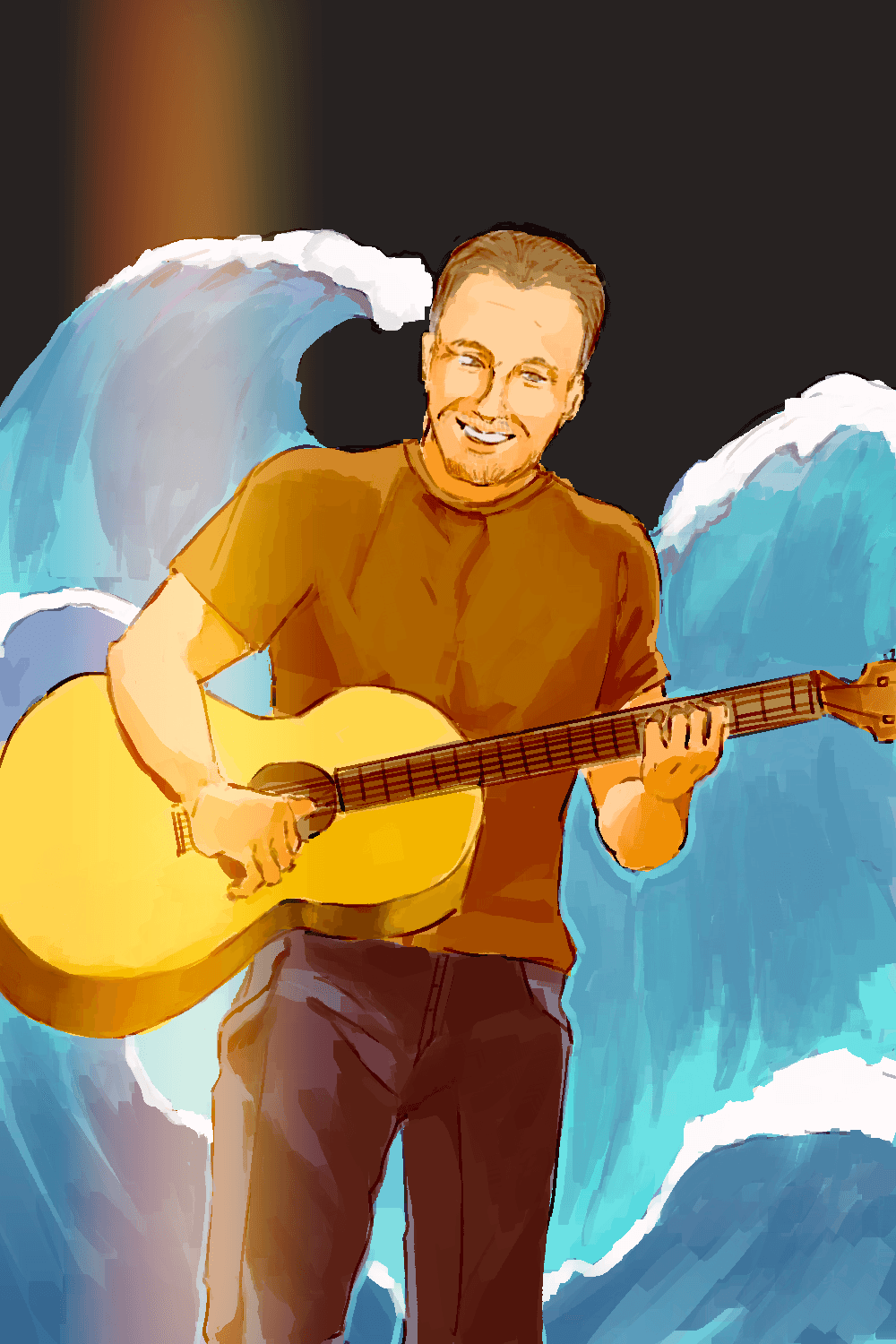
Forgetfulness is derogatory to the artist
By NEVAEH KARRAKER — nakarraker@ucdavis.edu
Artists yearn to share their heritage and evoke emotion — they’re storytellers. Their work serves as a physical manifestation of life events, powerful social themes or simple self-expression. For music, tangible listening experiences through CD’s and vinyls force us to listen to an album in its entirety — a slow immersion through appreciation of anecdotal verses, homemade record jackets and the narrative of chronological songs. It’s an idiosyncratic stimuli directly linked to personal transparency of the author; music has never been casual.
Unfortunately, streaming services dilute this opulent purpose as users quickly sift through songs to find a guitar riff they fancy without bothering to ascertain about the artist or the profound inspiration. For example, hits like “Banana Pancakes” and “Upside Down” became the avatars of Jack Johnson, devoid of his ventures that shepherded him to that career.
Johnson never intended to be a professional musician; he was born in O’ahu, Hawaii, where the salt in the sea saturated his blood as he became infatuated with surfing and grew up alongside legendary surfers belonging to the Momentum Generation, like Kelly Slater. At 17, Johnson was the youngest surfer in history to become a finalist in the 1992 Pipeline Masters Trials. Unfortunately, his professional career ended only a week later when he suffered a severe head injury while surfing the Banzai Pipeline.
It was this ill-fated event that directly steered Johnson into alternative passions like music and film, majoring in Film Studies at UC Santa Barbara. Throughout college and after graduation, he traveled across the world with his friends — surfing, filming and gathering memories as if he was collecting seashells. The surfing documentaries he created, like “Thicker Than Water” and “The September Sessions,” stood not only as a method to uphold surf culture, but also as a gallery of his life, brimming with reverence for his friends and the tropical currents of the sea.
Unrecognized work like this can easily get lost in the frenzy of fame, where concert attendees flock just to encounter an eminent artist or fans come to be asphyxiated in nostalgia. We tend to be egocentric when it comes to music; we relate it to our personal memories and emotional response without caring about the artist. While that’s not inherently immoral, music was never meant to be self-serving; it’s a cultural and psychological exchange designed to be deliberately savored.
For the musician, it’s more than a melody, but a portrayal of their soul that’s been molded by vicissitudes — Johnson’s preordained odyssey following his adverse injury — and vulnerably offered to the outstretched hands of listeners. And in turn, the auditor shares an internal consciousness with the artist as the euphony transcends all barriers, siphoning down into witnessing the musician’s memories and the realization that humanity is more similar than presumed.
During Johnson’s SURFILMUSIC tour — a concert featuring a documentary playing in the background, directed by Emmett Malloy, of his college surfing clips — he shared that most of the tracks from his famous albums were written during his travels. Humorous stories like his friend puking over the side of a boat and trampling a swarm of hermit crabs inspired “F-Stop Blues,” or his father and himself bribing law enforcement with cigarettes inspired “Holes to Heaven.” Johnson’s music is a reminder that we all are veterans in grief and love; it’s this unsaid intellectual understanding and cultural unification that allows us as listeners to reflect on our own life. We cannot forget that as playlists are individually curated through algorithms on streaming services.
Accessibility to music inhibits our ability to understand the significance and culture behind the music we listen to. Modern media forces us to subconsciously strip albums of stories as we cherry pick lyrics we like. In reality, this music is poured from the depths of the musician’s identity and is meant to be appreciated in its full narrative. SURFILMUSIC is just one of infinite examples that reaffirms the specialty of an artist and their album, of a person and their memories and how our environment and friendships will forever shape us. As listeners, we cannot forget the stories behind the music we listen to.
Written by: Nevaeh Karraker—nakarraker@ucdavis.edu
Disclaimer: The views and opinions expressed by individual columnists belong to the columnists alone and do not necessarily indicate the views and opinions held by The California Aggie.