





Take vaginas seriously
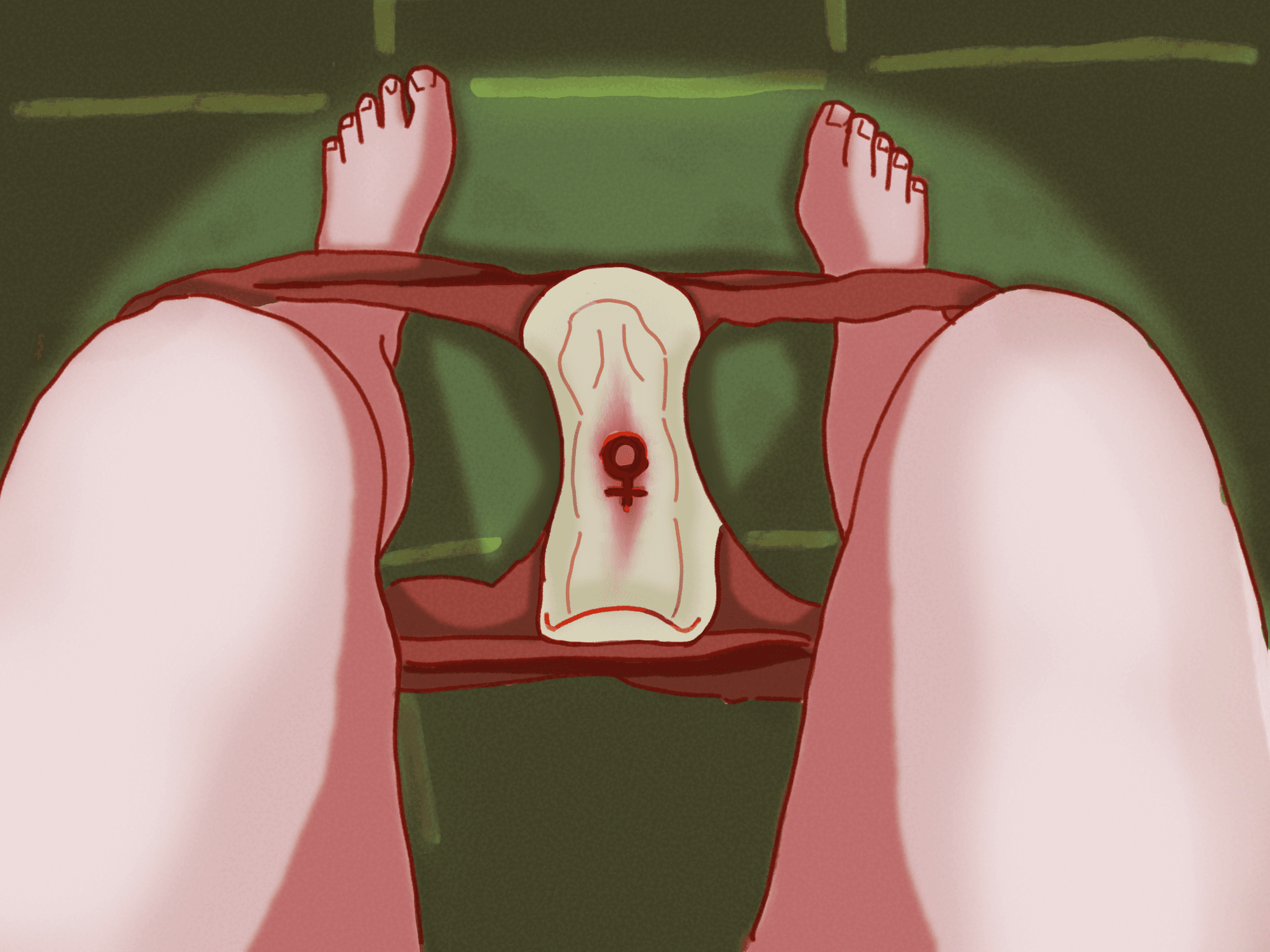
Pain is a symptom of womanhood
By ANJALI IYER — amiyer@ucdavis.edu
I distinctly remember the moment I realised that pain was to forever be a symptom of my existence. I didn’t quite have the words to describe the feeling — a tide of anger and a backwash of defeat that thrashed in my mind as I sat hunched in a ball on a plastic chair, holding a heating pad to my belly.
After excusing myself from class, I’d hobbled across campus to see the school nurse, who now sat opposite me, skeptical. The consequences of forgetting my pain killers came in the form of cramps that lurched me in and out of consciousness and spasms that radiated down my legs. I swallowed the urge to cry, half delirious with pain, as the nurse tentatively dialed my mother, who held my hand as she led me out of the clinic.
Before I turned to leave, the nurse said she hoped I’d feel better, then added, “I know it hurts, but that’s just how it is. You know, being a woman.” I scowled at what I thought was condescension, but realised she was being completely sincere. As my mother started the car, she looked over at me and simply said, “I know.”
Perhaps it was that day when I became a woman — curled in the cold fluorescence of a school clinic.
The dismissal of pain has become an emblem of the female experience. Every woman can attest to a point in her life when someone has downplayed or even denied the validity of her pain, often attributing it to a symptom of reproductive function. It seems that pain specific to the female reproductive system dominates diagnoses while remaining an egregiously understudied area of medicine.
The biological nature of reproductive pain, like childbirth, dysmenorrhoea and ovarian cysts, connotes a need for some level of tolerance — moving through life with discomfort or even excruciating pain is considered an immutable feature of womanhood. But normalising pain creates a level of acceptance that numbs us to truly understanding its detriment and minimizes suffering to justify its dismissal.
It’s important to acknowledge that periods and reproductive issues are common sources of pain for women. But historically, the flippant attitude toward female discomfort means that these conditions are not prioritized for medical studies. In fact, women were not legally required to be included in medical trials until 1993. A lack of curiosity toward women’s health and the illusion of pain as being endemic to womanhood means that women struggle to get comprehensive diagnoses and treatment plans.
Pain is seen as being built into the female reproductive system, which makes diagnosing a reproductive issue look like an efficient conclusion to make. The novelty of women in clinical trials means that our foundation of medical knowledge best serves the male body. Physicians are trained to identify tissue damage to explain pain, which makes it easy to dismiss complaints where there is no visible injury, like in case of period cramps.
This has resulted in an impasse in which female pain is often attributed to normal reproductive function but with comparatively little knowledge of its operation. Women are left to suffer undiagnosed or undertreated, sequestered to margins of the medical system with no recourse. Women experience longer wait times in emergency departments and are needlessly prescribed birth control or mood stabilizing medications to suppress symptoms of larger, underlying medical issues. These “solutions” often cause side effects that can manifest in new conditions, like chronic stomach issues, irregular bleeding and life-threatening blood clots.
It can take months to years to obtain a comprehensive diagnosis, forcing women to become advocates for their own health. Eva Mayrose, a fourth-year cognitive science major, experienced debilitating symptoms — exhaustion, nausea and body aches — for two years before an accurate diagnosis. She explained that although Polycystic Ovarian Syndrome (PCOS) seemed like a partial explanation, doctors told her there was little they could do because of the lack of knowledge on the condition.
After another year and a half of pressuring endocrinologists, neurologists and gynecologists to take a closer look at her symptoms, they finally agreed to take an MRI of her brain. The scans revealed she had a tumor occupying 40% of her pituitary gland.
“Being a woman, a young woman, they assumed that it was something related to my period and reproductive system,” Mayrose said.
If Mayrose’s symptoms had been taken more seriously and looked at beyond reproductive conditions, it would have saved her months of suffering.
When I complained that I was experiencing side effects from my medication, my gynecologist joked, “50 years ago you would’ve been barefoot and pregnant at this age with no period at all!” Countless women have stories of being ignored or dismissed as impudent for demanding better medical care.
Reducing women to a set of uteri and ovum to legitimize haphazard treatment has become a medical norm. It allows society to avoid confronting the inconvenience of broadening the scope of women’s healthcare — a daunting task that would force us to acknowledge the systemic minimization of female suffering. It’s time we take pain seriously, because somewhere out there is a girl hunched in a cold chair under the glare of clinic lights, begging to be believed.
Written by: Anjali Iyer — amiyer@ucdavis.edu
Disclaimer: The views and opinions expressed by individual columnists belong to the columnists alone and do not necessarily indicate the views and opinions held by The California Aggie.