




Plucking the juiciest confession is anything but fruitful
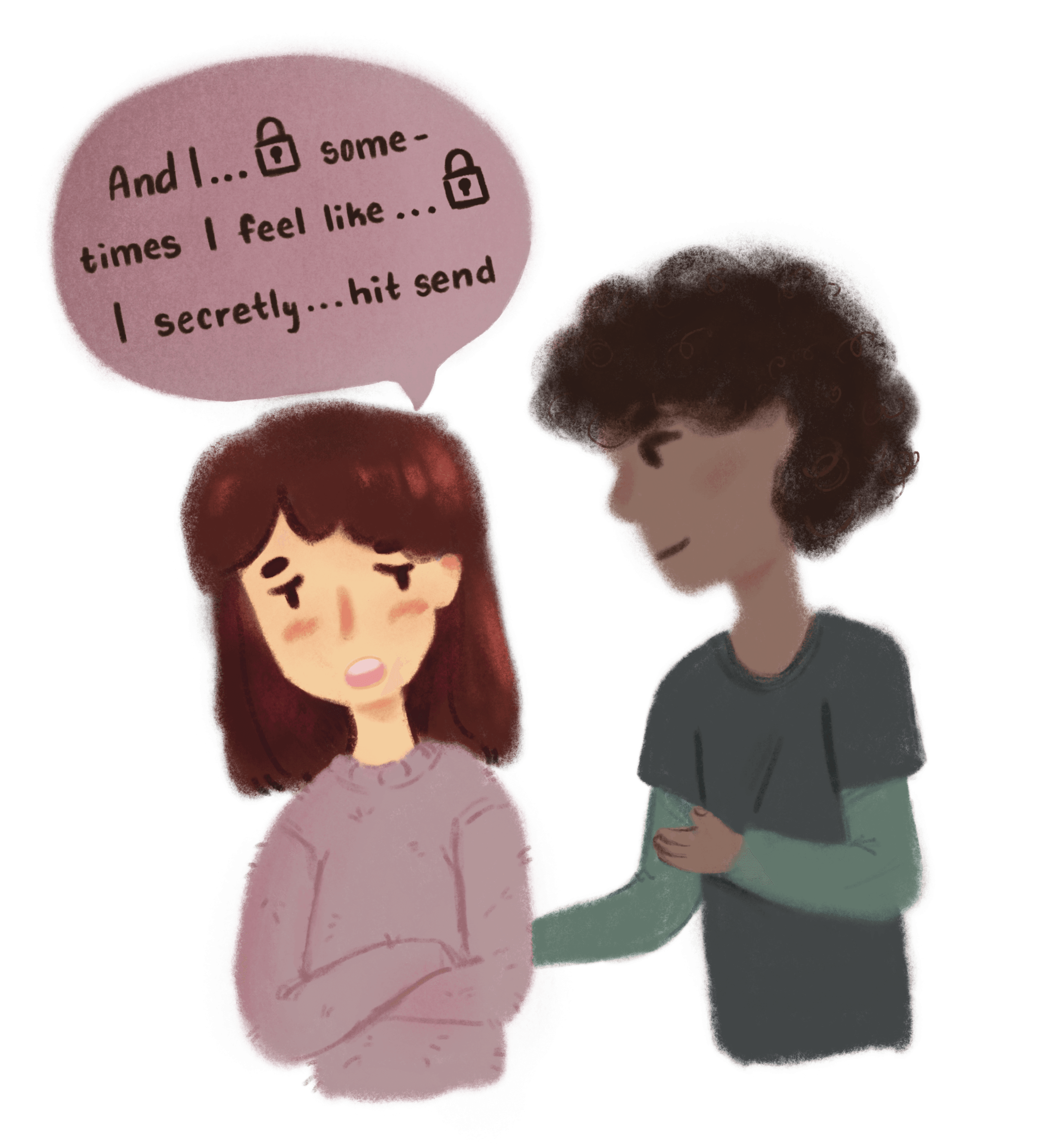
Why are we privately public about our lives?
By ABHINAYA KASAGANI — akasagani@ucdavis.edu
On the World Wide Web, you can be anyone you want to be. The possibilities are endless; how frightening, but yet how wonderful. I, for one, take to the internet at any minor inconvenience, continuously overtaken by the desire to post for others what I should otherwise reserve for myself. I am anything but anonymous, and my digital footprint is planted firmly in the ground with a steadfastness unbecoming of any self-respecting member of society.
Our desire for anonymity isn't altogether shocking, especially when considering how the internet encourages users to continually document our personal lives for the masses by way of anonymous confession pages, advice columns, Reddit threads and other forums. Anonymity can oftentimes feel like a mother’s dilapidated coat: comforting and shielding in most ways, yet threadbare in others. The internet is scary enough without being virtually accosted by strangers demanding your blind allegiance or being vilified for not being agreeable. There exists a degree of safety in such secrecy, allowing us to express ourselves without fear of retaliation, especially when our divulgence assigns blame to someone in particular. In this sense, anonymity offers not only protection from scrutiny but also the freedom to say what we otherwise wouldn’t have.
Not only is there something irresistible about a confession, but the ability to hide behind a username also grants us a degree of control over our self-disclosure, letting us omit what embarrasses us and amplify what entertains us. We are offered an inexhaustible audience to whom we can divulge our most intimate feelings. By deriving satisfaction from the extent to which faceless strangers engage with and validate our feelings, we risk confusing disclosure with companionship or intimacy.
While this can strike some as cowardly, others see it as offering a semblance of community, making us feel less alone in our embarrassment. There is a certain comfort in discovering that our most shameful experiences are rarely ever as singular as we think them to be — for every foolish thing we’ve done, there’s a digital record of someone else who has done it too.
What makes a confession compelling isn't simply the information disclosed, but the risk the admission involves. For instance, the Reddit r/confession contains harmless declarations (“I pretend to be way busier than I am so I can spend time alone”) interspersed among much more violent ones.
Online confessionals let us reveal ourselves to the world without the threat of being perceived, which not only reduces the risk of self-disclosure but also allows us to shirk responsibility and enables bad behavior. Coming clean to strangers whose judgment has no bearing on our daily lives has made confession feel more accessible, yet the catharsis of this disclosure is ultimately hollow. Unable to absolve us of our misdeeds, confessionals serve only to selfishly relieve one’s guilt, often without any consideration for any harm caused by the indiscretion.
Since these admissions rely entirely on self-reporting, reframing the narrative to produce a more favorable version of the story becomes remarkably easy. Without a face to put to the name, respondents on online forums cannot independently distinguish between contradictory versions of the truth. The person confessing is afforded the luxury of controlling the narrative and playing the victim to garner sympathy by withholding the very details that contextualize the core tension.
For trivial disclosures, however, it becomes less justifiable to seek digital respite by masquerading as a nobody. In our current digital social climate, it comes as no surprise that recognition deters us from acting in certain ways; we are constantly aware that we are being perceived and do our best to self-regulate before being accused of impropriety. We have become so averse to vulnerability that we fear our confessions will disappoint those we love or cause them to reject us, leading us to preemptively take our secrets elsewhere. While confessions can feel as if we have agency over the situation, the very necessity for an anonymous confession signals dependence on empty validation instead of active honesty.
Arguing in favor of online confessionals, one could claim that our present-day inclination toward optics, public displays and doing things for “the plot” to fuel dinner party conversation has made anonymity feel almost virtuous. By rejecting the expectation to be public facing, and instead reserving parts of our identity for those we trust, anonymity has become a way to quietly rebel against the demand that our identity can be constantly accessible to those online. The question, then, becomes not about whether confessionals are inherently good or bad, but whether we use them to confront the truth or escape its consequences.
While there is nothing inherently shameful about seeking the comfort of strangers, not every confession requires us to conscript strangers into the role of witnesses. There remains a difference between using anonymity to find the courage to confront an uncomfortable truth versus using it to avoid being held accountable for our misdeeds. Although the internet offers us the freedom to reinvent ourselves, the onus of responsibility is ultimately on us. While it is easy to confess to an audience who will never know your name, it might perhaps be far more worthwhile to tell the truth to someone who does. If not, we run the risk of our juiciest confessions becoming ripe for the taking.
Written by: Abhinaya Kasagani— akasagani@ucdavis.edu
Disclaimer: The views and opinions expressed by individual columnists belong to the columnists alone and do not necessarily indicate the views and opinions held by The California Aggie.