






Tires and tune-ups
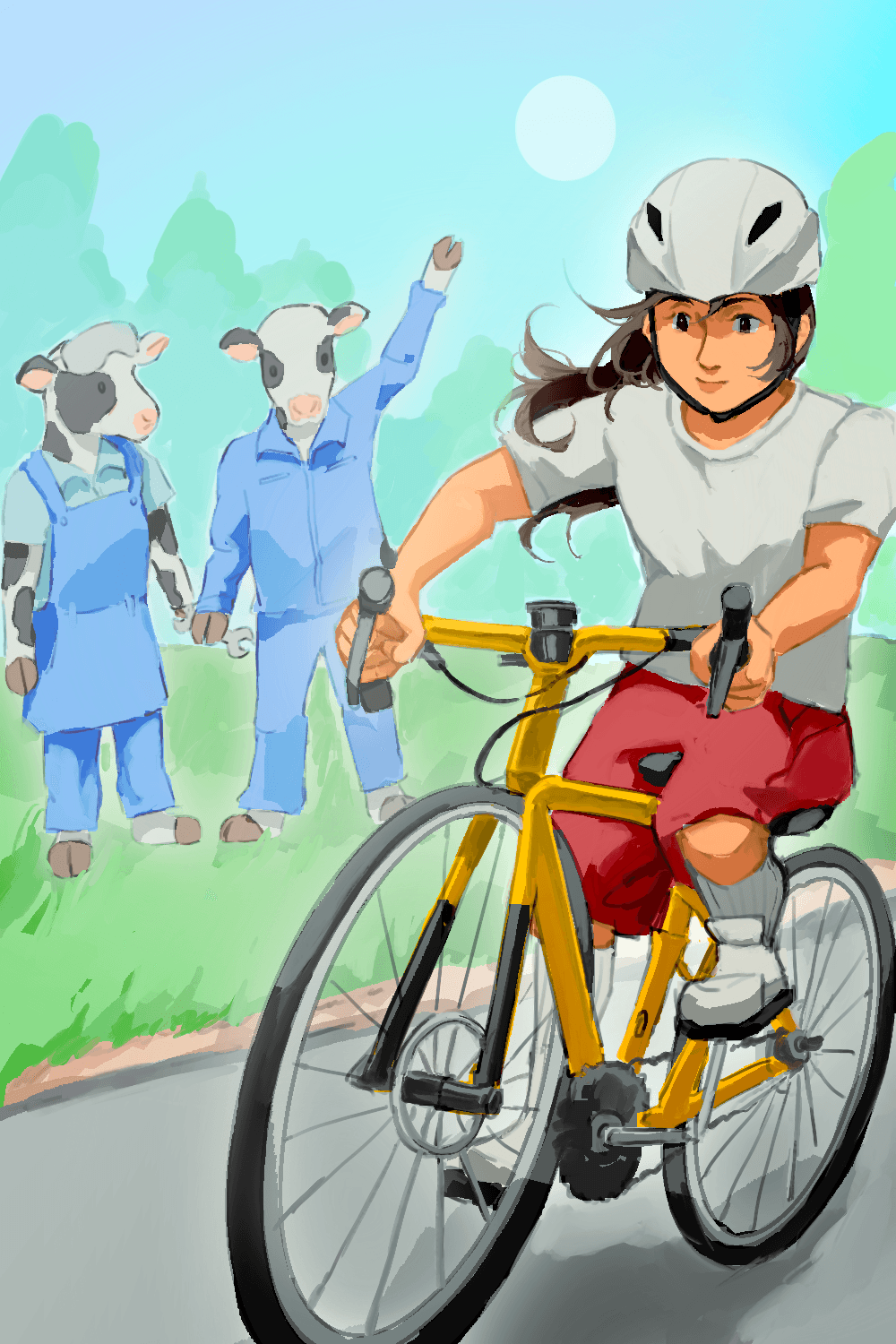
Local organizations offer free and low-cost resources to help students maintain their bikes
By AMBER WARNKE — features@theaggie.org
At the start of every school year, countless students — quite literally — roll onto campus; many new Aggies come to Davis with a bike or look to purchase one quickly, as the expansive campus can be hard to navigate on foot. However, when it comes to bike repairs and maintenance, some Aggies may not be so prepared.
Luckily, Davis offers a variety of bike care and maintenance resources for students. Regardless of which of these services they use, students are sure to find whatever they need for their bikes somewhere in Davis: the “bicycle capital of America.”
Oscar McBain, a 2019 UC Davis international relations alumnus, has worked as the general manager of the Bike Barn since 2021. He often works directly with students, helping them understand how to care for their bikes. For McBain, helping students who are new to biking — some of whom may only learn to bike while attending UC Davis — is deeply rewarding. These interactions often introduce students without prior biking experience to aspects of bike maintenance they have never encountered before.
“They come in here, and they're like, ‘What's this thing on my handlebar?’ and they point at their gear shifter,” McBain said. “They say, ‘I don't know why my tire is flat,’ and we say, ‘Have you ever put air in it?’ They're like, ‘What are you talking about? I didn't know there was air in my tires.’”
The Bike Barn provides several free services, including diagnostics, during which employees inspect bikes to recommend necessary maintenance procedures.
“Only about a third or a quarter of the people that come into the bike barn actually get a repair done with us,” McBain said. “More than 50% of people leave having gotten some other kind of service. Maybe they got a bike map. Maybe they got a free helmet. Maybe they got a diagnostic. Maybe as part of that diagnostic, we did a few small adjustments for free for them.”
Students looking to learn how to care for and fix their bicycles can also turn to the Davis Bike Collective, located at the northwest corner of 4th and L streets.
Nick Wiley, a 2022 UC Davis history alumnus and videographer for UC Davis Housing and Dining, volunteers as the secretary for the Davis Bike Collective.
“If you want to have a flat repaired on your bike, instead of taking it to an actual bike shop and paying $15, $20 and waiting a day or two for them to do it, you can come to the Bike Collective, and we can show you [and] teach you how to fix your flat yourself,” Wiley said.
The Bike Collective has a variety of spare and used parts cyclists can use, and even a Build-A-Bike program, in which makers can purchase a bike frame for $50 and assemble the rest of the bike from parts. A Build-A-Bike could cost as low as $65, according to Wiley. The Bike Collective also runs weekly Women-Trans-Femme nights, held Wednesdays from 4 to 7 p.m., which are open shop hours for patrons “who are typically marginalized in the bicycling and bike mechanic world,” according to their website, to explore bike mechanics
Like the Bike Collective, the Bike Barn also teaches students about bike care. Its mobile bike clinic offers free bike checkovers, tire inflation and chain lubrication, as well as opportunities to ask questions and learn more about bike care. The clinic schedule is posted on the Bike Barn’s website.
Maya Riley, a 2026 UC Davis sustainable environmental design alumna and current employee, discussed the initiative.
“The mobile bike clinic [is] our effort to bring the Bike Barn services into the community,” Riley said. “We offer all kinds of adjustments, diagnostics and very minor repairs. We're not able to replace anything, but we are able to provide more of a bicycle education out in the world than we could in the shop alone.”
Riley noted the importance of taking measures to protect one’s head while biking.
“Your brain is the most valuable possession you will ever own, and you should take care of it,” Riley said.
The Helmet Hair Don’t Care initiative, which distributes free bike helmets to students across campus, aims to address this issue. Bicycle helmets can reduce head injury by 48%, traumatic brain injury by 53% and the total number of killed or seriously injured cyclists by 34%, according to a study published in the National Library of Medicine.
“We have a QR code in the shop that people can scan, but people can also go online and look up Helmet Hair Don’t Care,” Riley said. "It's a safety pledge that they fill out. [...] And then they can come into the shop, and we, as the distributor, will give them a helmet.”
UC Davis also has a variety of free self-service bike repair stations around campus that students can use at any time.
Bike safety revolves around preventing risk, which includes keeping one’s bike in good condition, with well-maintained brakes and tires.
Jeffrey Bruchez, the active mobility manager for UC Davis Transportation Services, offered a helpful way for students to remember what maintenance their bike may need.
“You should be putting air in your tires every time you have a midterm,” Bruchez said. “You should be making sure your brakes work every quarter. You should be moving your chain on that same midterm schedule.”
Written by: Amber Warnke — features@theaggie.org