






Aggie Fiction at UC Davis offers community and resources to aspiring creative writers
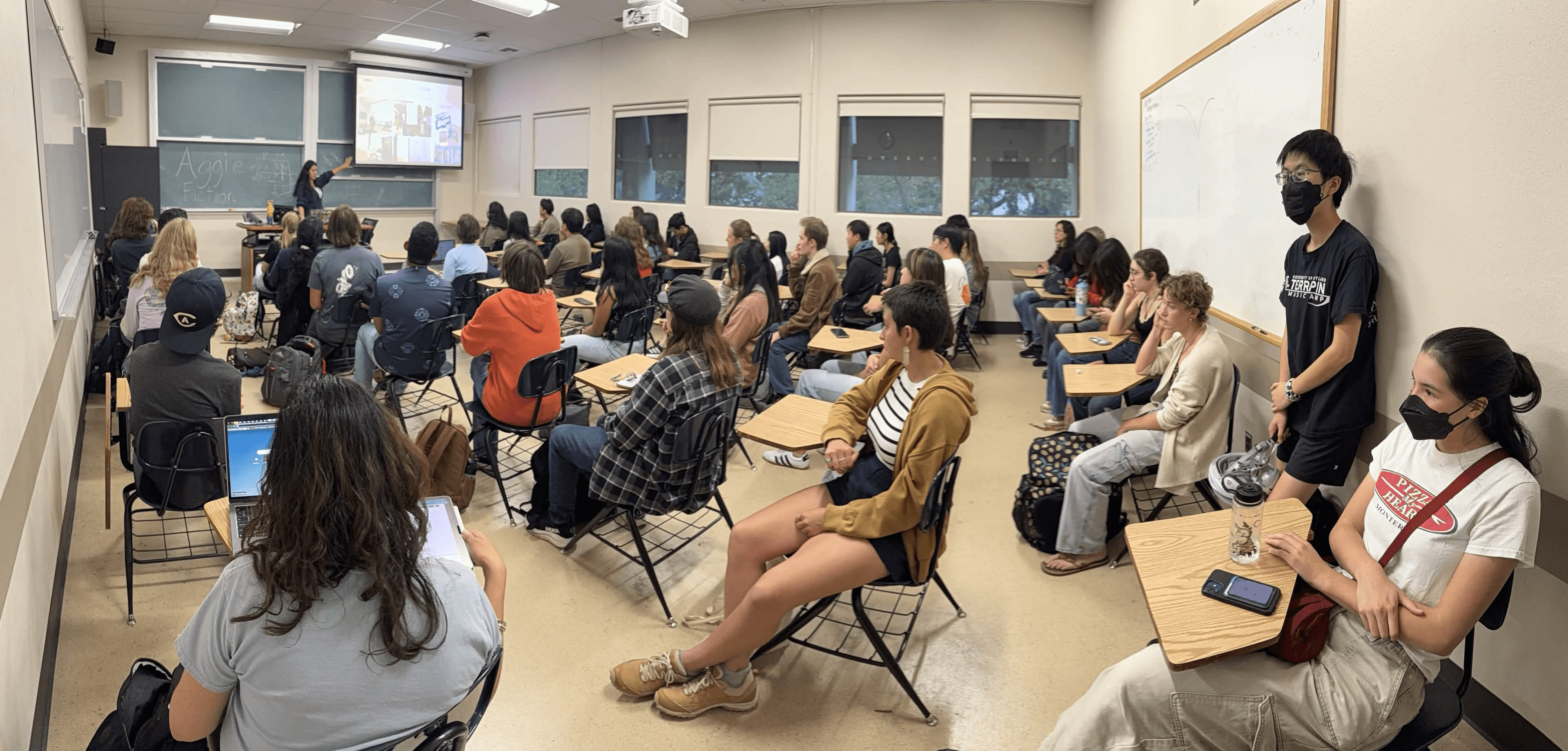
For students looking to enter the literary scene, Aggie Fiction provides ample opportunity for experience and connection
By NATALIE SALTER — arts@theaggie.org
If you’re curious or passionate about the world of creative writing but haven’t found a place to express your interest among others, you need not look any further than Aggie Fiction at UC Davis. A creative writing club focused specifically on prose fiction, you are likely to find a wonderful combination of community and constructive experience in it.
While Aggie Fiction hosts a number of events, including fundraisers and social activities, most of its meetings follow a familiar structure meant to give club members the chance to develop their writing abilities.
Each club meeting begins with a presentation or activity designed to expand participants’ imagination and knowledge of the creative writing process. The second half of each meeting is devoted wholly to communally reading and providing commentary on club members’ original works.
Nayah Hlebakos Del Rio, a second-year biological sciences major and the club’s communications chair, expressed the depth of the feedback shared during workshopping, which offers aspiring writers more concrete paths for improvement.
“It really helps promote critical thinking about different parts of writing and going deeper than just, ‘this is good or bad,’” Hlebakos Del Rio said. “It’s more about picking apart what elements really make good writing.”
The group discussion segment of each meeting is designed to balance constructive criticism and meaningful insights from fellow writers with plenty of uplifting support, an environment fostered by club members’ awareness of the courage it takes to share one’s writing with others.
Leila Wang, a third-year history and classics major and the club’s president, emphasized how much of a safe space the club provides for writers who volunteer their projects to be read.
“Maybe it’s different for other people, but I feel like sharing something that you’ve written is a scary thing,” Wang said. “So I think it’s really nice to see people react positively to that, giving feedback and helping this person grow their craft.”
Sharing your work is not required to be a part of Aggie Fiction, however, and club members who participate in group discussions without throwing the spotlight onto their personal writings still have much to gain from every meeting.
“Even if you’re very shy, and you just want to show up and listen, you’ll still get a lot out of the club,” Hlebakos Del Rio said. “We do quite a few fundraisers where we all go out as a club together to restaurants downtown or boba shops, so there’s chances to be social with members of the club that don’t necessarily revolve around sharing your writing.”
Perhaps the most significant event of the year in Aggie Fiction is their annual trip to the San Francisco Writers Conference, during which club members volunteer at the event in exchange for free access to all of the conference’s panels and resources.
“For two or three sessions, you can volunteer as someone who runs the clocks or brings the microphone around for people to ask questions,” Hlebakos Del Rio said. “But then for the rest of the time, you just get to go around and watch whatever talks you want.”
Attending the conference also offers club members the chance to make professional connections and learn more about the industry firsthand.
“Volunteers also get the opportunity to network with industry professionals and sit in on some of the talks that professionals are giving,” Wang said. “It’s a great way to gain an understanding of how the industry works.”
Nea Le, a fourth-year comparative literature major and the club’s vice president, echoed this sentiment.
“That’s where all of the networking happens,” Le said. “That’s where you get to meet a lot of published writers and agents and get your foot through the door.”
Beyond all of these professional benefits to attending the conference, the club’s annual trip is also an invaluable opportunity for social connection. In sharing rooms, eating meals, volunteering and spending the entire weekend together exploring the conference, club members are afforded a chance to form true friendships with each other.
“It’s an overnight experience, so you really get to bond with the members,” Le said. “A lot of people told me that that trip was when they really got to know people’s names and build friendships from it. It’s been the same for me as well.”
All of these opportunities together have the added benefit of reshaping members’ perspectives on creative writing, giving them the chance to learn from one another and discover new ideas and approaches they might not otherwise have found.
“A lot of our writers write really interesting things, and everyone has their own unique perspective to offer, and there’s always something you can learn from that,” Wang said.
Even for those who are just beginning to test the waters of creative writing, Aggie Fiction offers community and a chance to learn from people in all stages of experience. Those who are wary of sharing their writing shouldn’t be afraid to join the club regardless.
“We welcome writers of all levels,” Wang said. “It doesn’t matter where you are in your writing journey. There’s always going to be a place for you here.”
Aggie Fiction meets Mondays from 6 to 7 p.m. in Olson 217, with their first general meeting on Oct. 19.
Written by: Natalie Salter—arts@theaggie.org