






Doomed to doomscroll
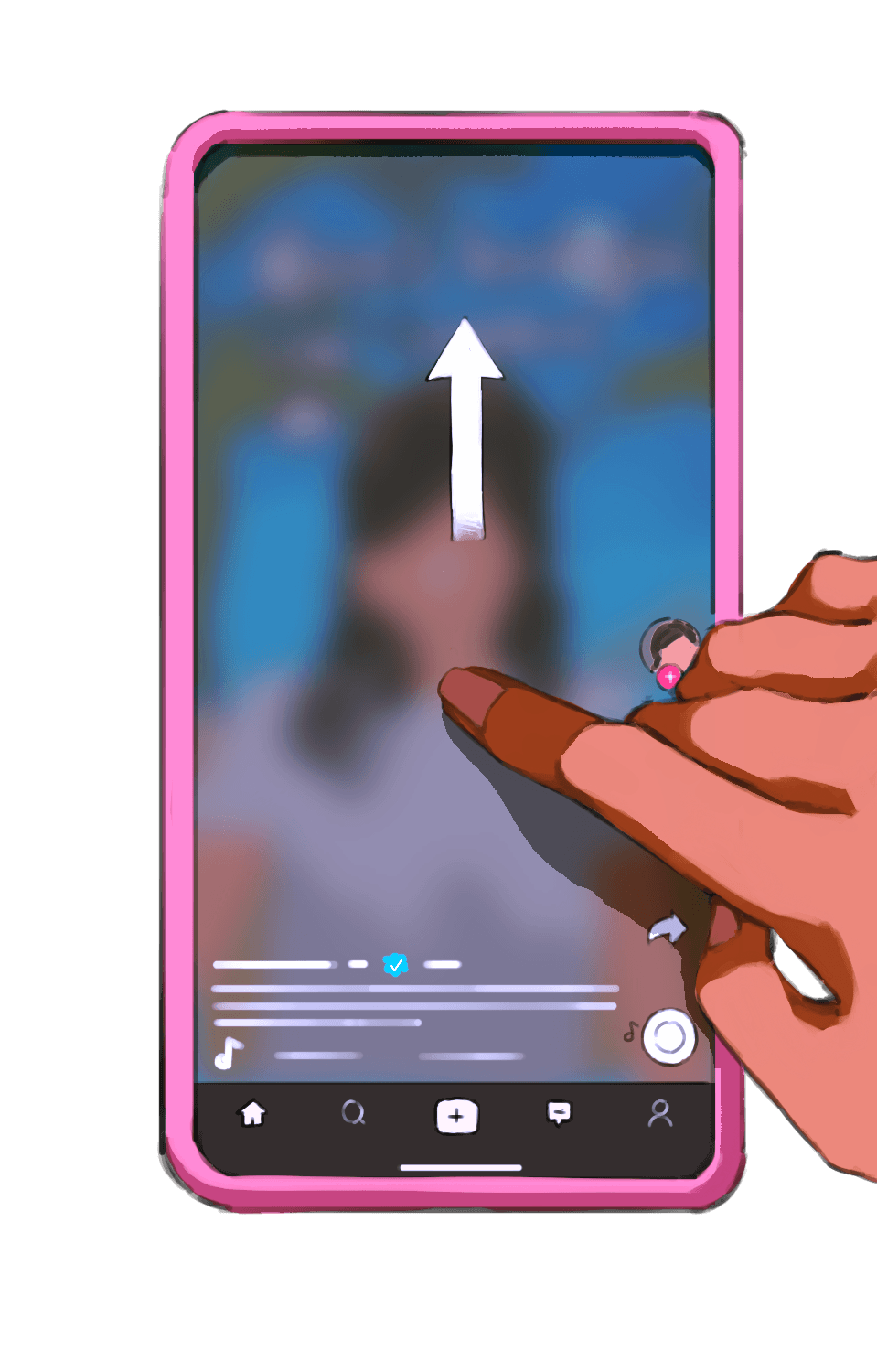
Screen addiction has shown to have negative impacts on student well-being
By DIEGO CASTRO CURRY — science@theaggie.org
According to the American Brain Foundation, doomscrolling is the overconsumption of short-form content or news, particularly consuming a constant stream of new posts on social media platforms.
Brian Vuong, a fifth-year human development major, described his experiences with doomscrolling.
“I doomscroll on a regular basis,” he said. “I doomscroll for around two to three hours and after I am done, I don't feel like getting anything done.”
A report released by the UC San Diego says that humans are naturally drawn to negative information. This tendency stems from an evolutionary survival trait that focuses attention on threats, such as predators and conflict. When people consume negative information, the amygdala — the part of our brain that regulates emotions — sends signals throughout our bodies which can trigger the release of stress hormones. These hormones induce feelings of anticipation, stress and a heightened sense of awareness.
This stress-fueled cycle also releases dopamine, the brain chemical associated with pleasure and satisfaction. Dopamine’s release facilitates a pleasure-stress cycle that promotes videos of seeking out negative content, feeling rewarded and continuing to seek out more content to make our brains feel satisfied
Arya Chatterjee, a second-year biochemistry and molecular biology major, shared his experiences combating doomscrolling this past summer.
“Earlier this summer, I used to doomscroll for one to two hours per day on YouTube and Instagram,” he said. “I never remembered much from each reel, but I was someone hooked on swiping to find out what the next reel was.”
Doomscrolling is associated with several serious health effects, such as existential anxiety and loss of productivity. Some physical symptoms of doomscrolling include nausea, headaches, muscle tension, neck and shoulder pain, low appetite, sleep issues and elevated blood pressure, according to Harvard Health Publishing.
While many of us cannot afford to cut ourselves completely off the internet, there are many strategies that we can use to limit unhealthy amounts of negative media consumption.
Xander Ng, a fourth-year anthropology student, mentioned strategies they use to limit their screen time.
“Typically, I would clean my apartment, play some video games and take a nap to stop doomscrolling,” they said.
Chatterjee remembers the challenges trying to stay consistent in his efforts to reduce his time spent doomscrolling.
“There are times I’ll watch a few reels when I’m bored or just need to get my mind off things, but I’ve been more mindful about my screen usage,” he said. “It’s definitely not easy to cut it cold-turkey, but gradually easing your way into it can help prevent you from crashing and falling deep into addiction.”
Acknowledging what content makes you upset and setting in-app limitations are good first steps, according to the National Council for Mental Wellbeing. Furthermore, it is also recommended to find activities beyond the screen to help you recharge.
Chatterjee shared some of the strategies he used over this summer to shift away from his screen.
“I focused more on real-life activities and social interactions,” he said. “I got a job, started to make time for myself through meaningful activities, made time for my friends and put more time into my schoolwork. I started to have a much better quality of sleep and I didn’t have a constant requirement of stimulation from reels.”
Doomscrolling may play a big role in our everyday lives, but overcoming it is a reversible process. Focusing on self-care, trying new experiences or stepping outside of the house are just a few ways to ease out of doomscrolling.
Written by: Diego Castro Curry — science@theaggie.org