






The neck hump that haunts us all
The price our bodies pay for our convenience
By AMBER DUHS — alduhs@ucdavis.edu
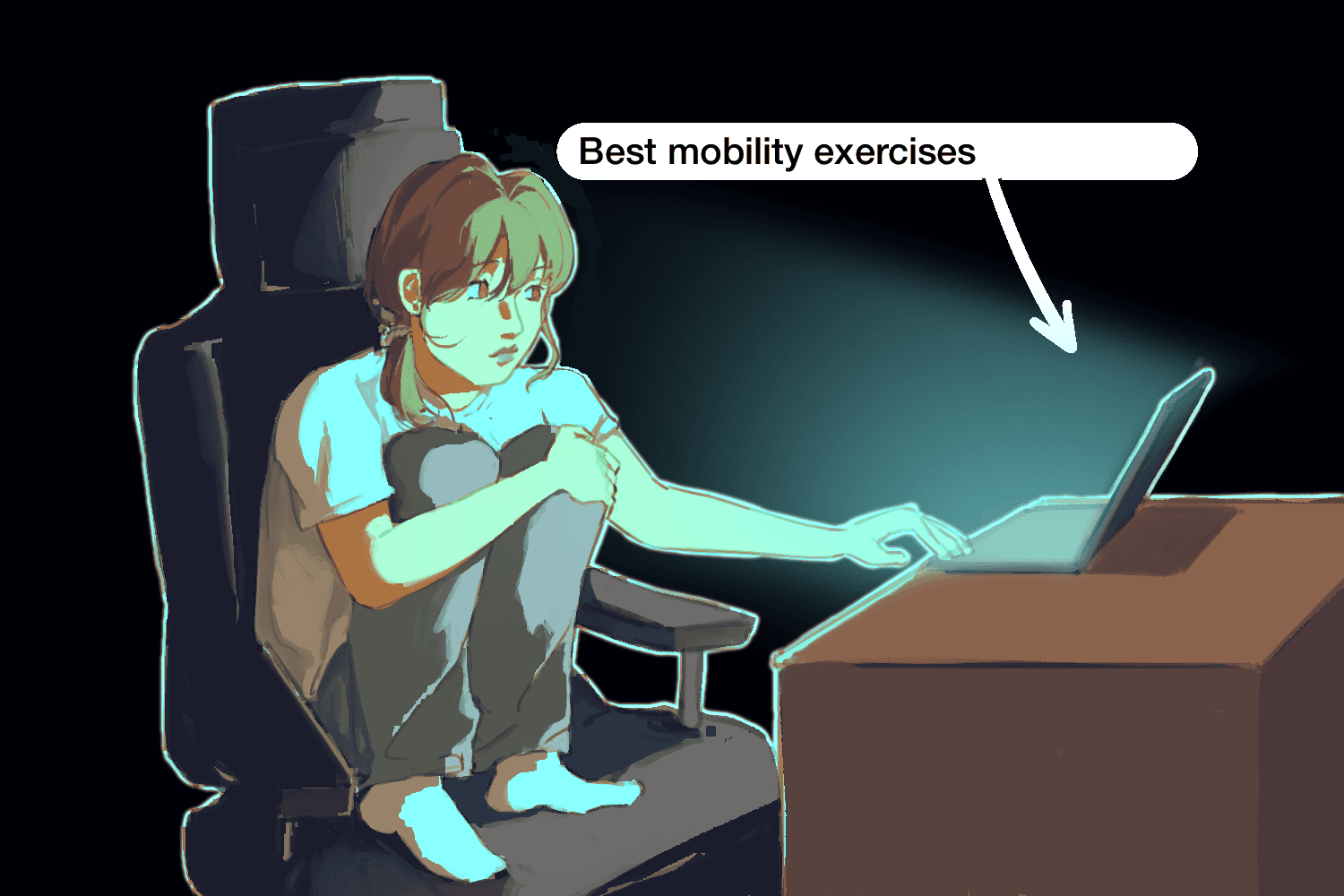
Each day, I subject my body to a series of unnatural positions instigated by my undergraduate experience. My hours are either spent in small and unsupportive lecture hall chairs, slumped over my computer dredging through required readings or — at the end of a long day — laying with my neck cranked at 90 degrees doomscrolling on TikTok. Willingly or not, my body never seems to catch a break.
The continual shift toward technology in our academic and professional spaces is taking an increasing toll on our bodies. From “tech neck” — the Quasimodo-esque neck humps emerging from extended time spent slumped over our computers — to rounded shoulders and tight hips with little to no flexibility, we’re physically deteriorating.
Somewhere between the developing stiffness my brain is hyperaware of and the interruption of my focus, my fitness priorities shifted from getting in daily movement as a busy college student to reversing physical damage I’ve accumulated. I stretch — desperately trying to release the lower back tension. I lay supine — giving my shoulders any break they can get. I even occasionally attempt to work through those online posture workouts that supposedly promise ballerina-like straightness. Nothing ever seems to be a good enough remedy for the full days I spend parked in front of my laptop.
The dystopian nature of these extra steps I've built into my weekly routine just to keep my body afloat — looking and functioning relatively healthily — isn’t lost on me. Eventually, our livelihoods began slowly sucking the life out of us, withering away the most basic components of our being: Hips flexible enough to dance, posture strong enough to support a long walk and a body limber enough to go bouldering on a whim. The irony of it all is that, if you open your devices for long enough, you’ll be fed all sorts of content that denounces this lifestyle by connecting the dots of our digital existence and declining physical health.
On social media, we’re inundated with apparent wellness content, which suggests a million and one ways to “fix” these problems — the ones that wouldn’t exist so prominently if we allowed ourselves to return to an analog lifestyle. So, instead of taking these cues as a sign to revert our dependence on our technology or shift our lifestyle toward habits that better support our physical health, we resort to quasi-solutions.
Don’t go on a walk outside and smell the earth around you, simply buy a walking pad and stomp through your workday. Don’t put effort into intentionally correcting your posture and investing in seating that supports you, just buy one of those snazzy posture correctors.
The relationship we have with our bodies has quietly shifted from supporting an active lifestyle to demanding support from our technological dependence. The convenience of a single digital platform, such as Canvas, where thousands of pages of course readings can be accessed is unmatched; it allows me to finish a quick assignment at the bus stop, freeing up the rest of my day for socializing. The ability to hop onto a Zoom call when a rainy day strikes brings immediate relief by eliminating the time cost of travelling to and from campus. The complete restructuring of our lives that technology has brought about isn’t inherently negative — it enables an academic and personal life balance.
But, at what point do we realize our obsession with ease and digital access directly impacts our physical and mental health? Even after my perfectly designed digital day, I’m left unable to actually spend this time using my body to its full potential. When we begin to trade our physical health for convenience, we lose the real reason we wanted that convenience in the first place: to have more time to live our lives.
Like most problems in life, moving forward begins with a careful acknowledgment of the impact our daily habits cause. There doesn’t seem to be a conceivable future on the horizon in which our technological dependence is majorly depleted, so we must focus on palliation. Use the convenience technology grants you, but also practice those posture exercises or mobility stretches.
Written by Amber Duhs — alduhs@ucdavis.edu
Disclaimer: The views and opinions expressed by individual columnists belong to the columnists alone and do not necessarily indicate the views and opinions held by The California Aggie.