





UC Davis leads multi-institutional collaboration in four projects addressing gaps in environmental exposure research
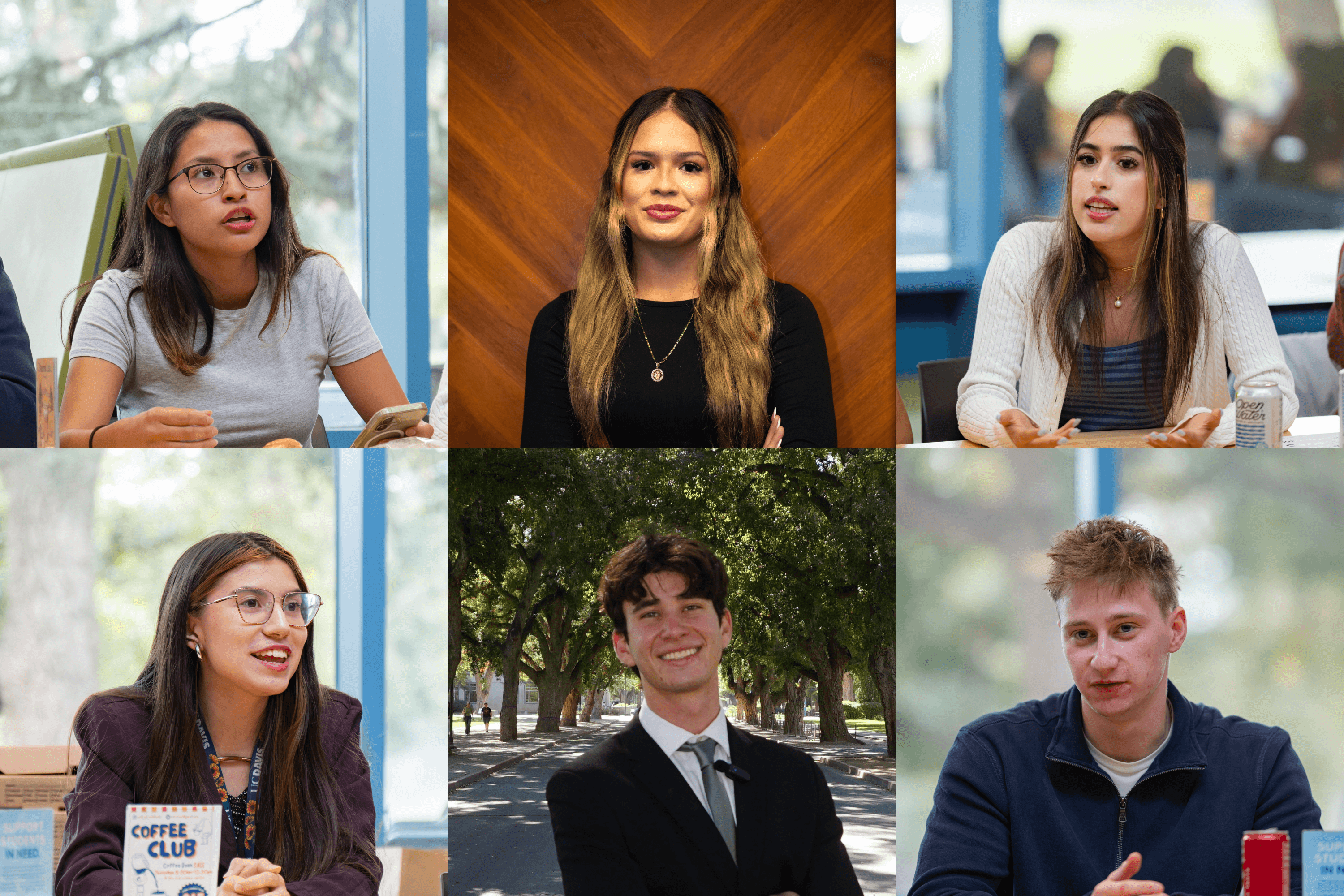
GOAT slate candidates won three of the six Senate seats, despite facing backlash during the campaign
By LILY KENROW — campus@theaggie.org
The ASUCD fall elections have been called, with all members of the Greater Opportunities, Affordability and Transparency (GOAT) slate winning seats on the student government Senate.
In order of votes received, the senators-elect are: Grace Azanedo-Leon, a second-year political science — public service major (GOAT slate); Saba Rahimi, a second-year economics major (GOAT slate); Dali Y. Guerrero Fernández, a third-year political science and Chicano/a/x studies double major (Avanza slate); Jacob Dougherty, a second-year mechanical engineering major (Independent); Lukas Logvin, a third-year political science major (GOAT slate); and Tatiana Eden Ochoa, a second-year political science — public service, cognitive science and philosophy triple major (Independent).
ASUCD elections use a ranked-choice voting system, in which voters rank candidates by preference. Votes are then redistributed from low-preference candidates to higher-preference candidates until the group is narrowed down to the six winners. In total, 15 students ran for Senate this fall across four different slates.
Last week’s election proved a disappointing performance for several ASUCD veterans seeking second terms. Interim Sen. Harshpartap Dhillon and Sen. Nate Little both lost their bids for reelection, placing in seventh and eighth place, respectively. Candidate Tianneh Garcia Bonardi, a fourth-year political science — public service and sociology double major, was the only other candidate with experience on the Senate, having previously served as an interim senator. She placed ninth.
The GOAT slate’s success in the election came despite backlash to the candidates online and in-person over their perceived political alignment with the Make America Great Again (MAGA) movement. The backlash was sparked after students discovered that Logvin had previously interned for The Heritage Foundation, a conservative group closely associated with President Donald Trump’s agenda.
Logvin said via email that he received personal threats during the campaign and that his beliefs “do not align exclusively with any one political party or movement, including MAGA.” Additionally, Azanedo-Leon and Rahimi allege they were verbally harassed while campaigning late Thursday, Nov. 5, by students who believed them to be “pro-MAGA.” Both Azanedo-Leon and Rahimi say they do not align with MAGA views.
ASUCD senators are tasked with voting on legislation and bills, deciding on the allocation of the Association’s $22 million budget, advocating and representing the undergraduate student body to administrators and overseeing ASUCD’s units. The 12 senators each serve one-year terms; six are elected in fall and another six are elected in spring.
The newly elected candidates will replace three senators — Aaron Heth, Mia Oscanoa and Little — and three interim senators — Arya Banerjee, Genesis Arroyo and Dhillon. The senator-elects are set to be sworn in during the last Senate meeting of the quarter on Dec. 3.
Two ballot measures were also put up for a vote. Constitutional Amendment (CA) #99, changing the student advocate position from an elected role to an appointed role, passed with 79.05% of the vote — 1,577 votes for, 418 votes against and 1,719 abstentions. A similar measure, CA #96 was proposed in spring of 2026, but failed to reach the threshold required to be ratified.
CA #100, an amendment that would consolidate fall and spring elections to become one larger election in spring, passed with 88.52% of the vote — 2,144 votes in for, 278 votes against and 1,292 abstentions.
The amendment is currently under review by the Judicial Council over concerns that it was introduced unconstitutionally by the ASUCD President. A hearing on CA#100, and another piece of legislation under review for the same issue, is scheduled for Nov. 17.
3,295 students voted in the fall election, approximately 10.3% of the undergraduate population, according to ASUCD election data.
Vince Basada contributed reporting to this story.
Written by: Lily Kenrow — campus@theaggie.org