





Aggie Propulsion & Rocketry Lab prepares for test launch in Mojave Desert
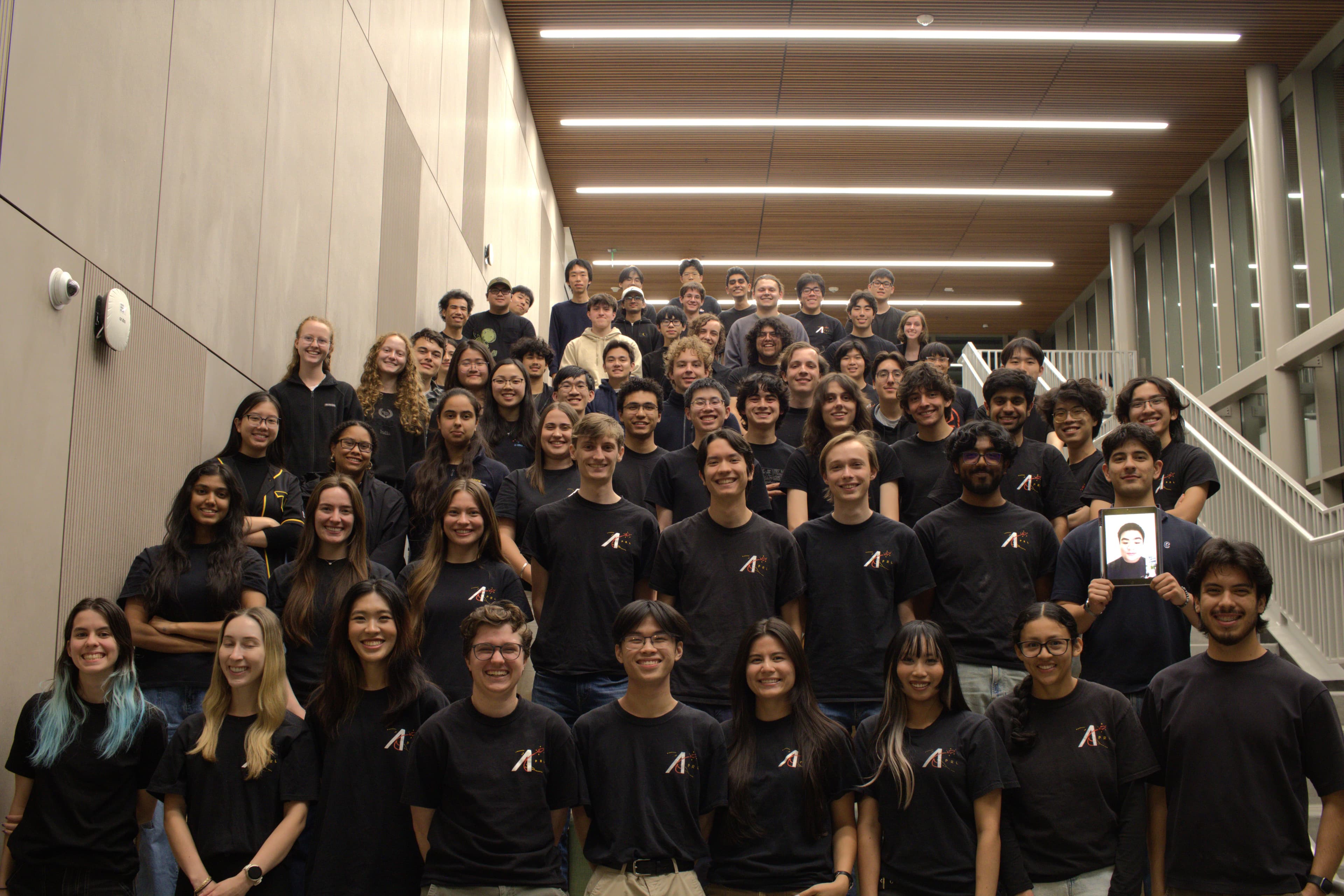
Student-led rocketry team to introduce liquid-fueled rockets for the first time in UC Davis history
By HANA KOHESTANI — science@theaggie.org
The Aggie Propulsion & Rocketry Lab (APRL), UC Davis’ student-led collegiate rocketry team, aims to construct and launch liquid-fueled rockets for the first time in the university’s history.
Conventional model rockets use solid-fuel motors, premixing fuel and oxidizers into a single solid propellant (energy source). Once combustion is initiated, a nozzle guides the rocket’s thrust force, propelling it into the sky.
APRL aims to launch a bipropellant liquid-fueled rocket, separating fuel and oxidizer as liquids in separate tanks. During flight, the two fluids are fed through valves and plumbing systems into a combustion chamber to mix and burn. The club took significant steps to reach this goal through the Adaptive Liquid Infrastructure Stand (ALI), a pressure-controlled testing system designed to test, fuel and control their in-house μ2 engine.
On Nov. 21, the club will conduct a full-scale launch of their solid test vehicle, Ophiotaurus — named after the Greek mythological figure with the head of a black bull and the tail of a serpent — at the Friends of Amateur Rocketry (FAR) site in the Mojave Desert as a part of FAR’s Dollar Per Foot challenge, where every foot climbed in elevation earns the organization a dollar towards future research and development.
Ophiotaurus provides an early platform to validate vehicle hardware and electrical instrumentation in preparation for the upcoming spring quarter liquid-rocket launch.
Adam Pratt-Dermer, a second-year mechanical engineering major and one of three APRL Airframe subteam leads, shared his insights and goals for the upcoming launch.
“With Ophiotaurus, we will be testing the skeleton, the structure, the recovery and the skin of our rocket,” Pratt-Dermer said. “And in our vertical test stand, which is in the next quarter, we will be testing the guts of our rocket.”
A primary objective of this test launch is to measure how the load-bearing stringers behave during an actual flight.
Stringers are the main structural component that allows the Ophiotaurus to withstand aerodynamic and recovery forces, which are mostly tensile and compressive along the length of the rocket. In addition, the test launch seeks to assess the functionality of the rocket’s recovery system. After the rocket reaches its apex, it deploys a two-stage parachute system to gently fall back to the surface for reuse and data collection.
Vaughn Bui, a second-year mechanical engineering major, serves as the business and operations lead for the Ophiotaurus.
“When Ophiotaurus succeeds, it will prove our rocket structure and recovery system are working properly,” Bui said. “[The] Vertical Test Stand […] will show we are able to create a pressure-controlled system in a slim profile — essentially ALI but thin and tall, firing the same μ2 engine. The success of Ophiotaurus and [Vertical Test Stand] fire means we launch.”
After the launch, APRL plans to analyze flight data and revise the design for a second iteration — Ophiotaurus II — with hardware more representative of the planned liquid rocket for a second test launch in winter quarter.
Atreganson Lowry, a fourth-year mechanical and aerospace engineering double major, is another APRL Airframe lead. He explains how this experience can introduce new members to full-scale launches.
“Apart from myself and some other individuals on our team, not a lot of people have the experience of going to a remote desert facility, integrating the rocket [and] launching and analyzing it,” Lowry said. “Therefore, this is a checkpoint for our veteran members and a critical learning point for our new members.”
In the spring, the team hopes to combine the data from the fall and winter test launches and static fires, integrating complete software and hardware elements into one liquid-fueled rocket to launch by the end of the academic year. Since its conception in 2023, APRL has evolved rapidly, starting a new era of liquid-fueled rocketry at UC Davis characterized by collaborative, inclusive research and engineering, creating innovations that can propel future work into the stratosphere while bringing more opportunities and experiences to interested undergraduates.
Written by: Hana Kohestani — science@theaggie.org