





Review: Madeline Miller’s “Mestra” puts a modern twist on Ovid’s Greek tale
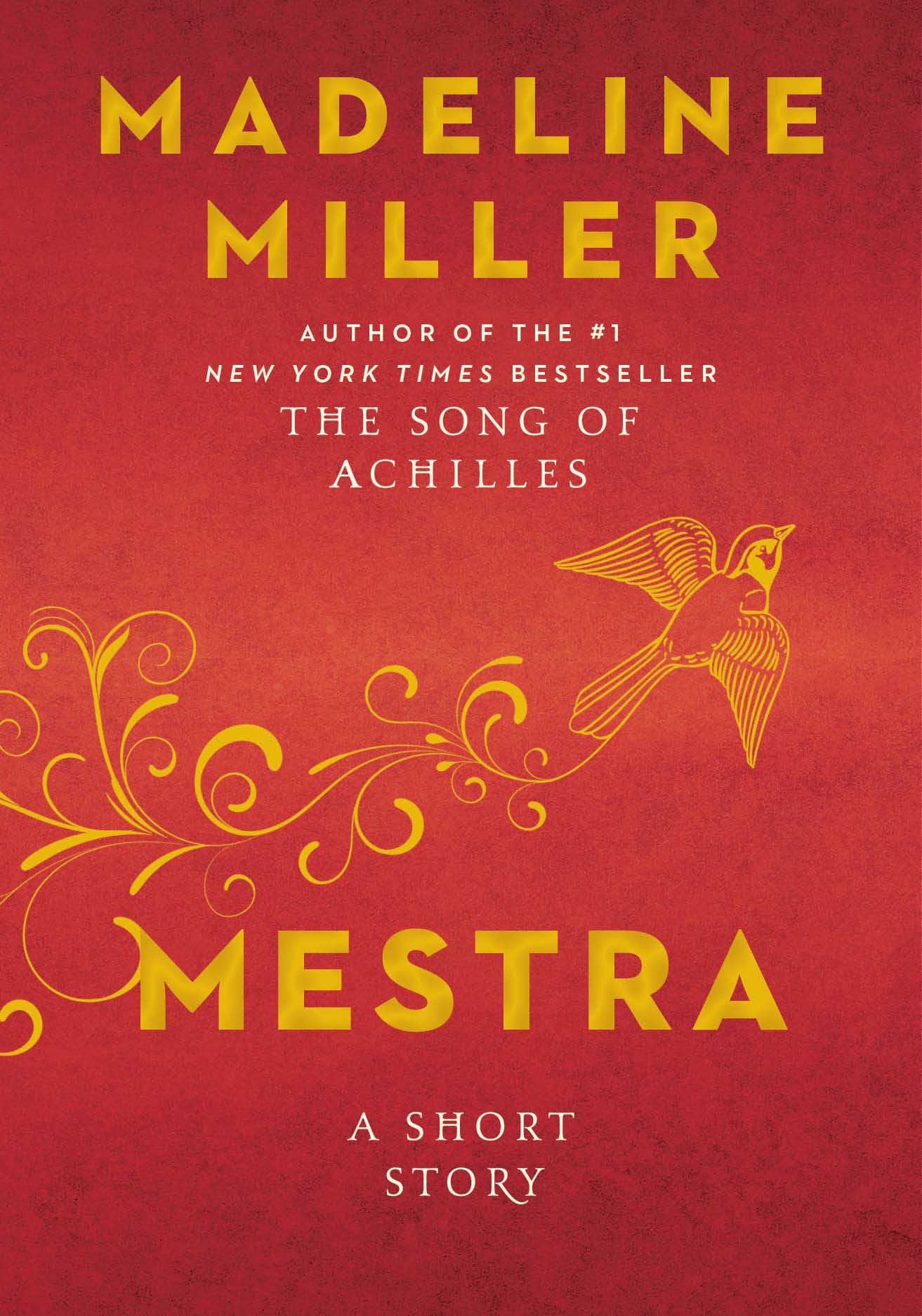
This new short story from the author of “The Song of Achilles” explores themes of self-sacrifice and domestic abuse
By HELENA BIRBROWER — arts@theaggie.org
Who doesn’t love a classic retelling of a Greek myth? With the cult following of book series like Rick Riordan’s “Percy Jackson” and the smash success of the recent film release “The Odyssey,” many creatives have pivoted towards this lucrative niche.
However, few authors have earned greater acclaim for Greek myth retellings in the past few years than Madeline Miller. Miller developed a devoted fanbase after the 2011 publication of her debut novel, “The Song of Achilles,” which adapts the story of the Trojan War to further explore the relationship between Achilles and Patroclus. Her 2018 novel “Circe,” which explores the Greek myth of the sorceress of the same name, was named a number one New York Times bestseller.
“Mestra” is Miller’s “first new work of fiction since the publication of ‘Circe,’” according to her website. Following such a successful novel, “Mestra” had big shoes to fill — and it did — in just 65 pages.
“Mestra” is a retelling of a tale from book eight of Ovid’s “Metamorphoses.” The tale follows a Thessalian king, named Erysichthon, who desecrates a sacred grove of Ceres (the Roman goddess of agriculture and harvest). In retaliation, she curses him with an insatiable hunger.
After consuming all his food stores and selling his belongings, Erysichthon sells his daughter, Mestra, in exchange for food. Devastated, Mestra prays to Poseidon, the god of the sea, for help.
Heeding Mestra’s call, Poseidon gifts her with the ability to shapeshift. Mestra returns to her father, and realizing that he can now sell her repeatedly for an unlimited source of food, Erysichthon is thrilled. However, this is still not enough, and the Thessalian king dies when he eats his own flesh.
The original myth is deeply disturbing and tragic, but functions more as a moral tale warning against greed and sacrilegious behavior than a complex narrative. Ovid never really explores how Mestra feels, and she plays an extremely passive role in the tale — reflecting gendered expectations of the time.
However, in her retelling, Miller reimagines Mestra as a deeply complex character with desires, hopes and loyalties. She doesn’t blindly allow herself to be sold by her father as an act of submission — she does so actively, out of a desperate desire to provide for him.
Even as Erysichthon disrespects his daughter and allows her to be repeatedly violated, she tells herself that she is doing well and cherishes the small crumbs of praise that he bestows upon her. Mestra refuses to acknowledge her father’s abuse as what it is — she sees it as a responsibility for her to carry, having assumed the role of his caretaker.
This dynamic mirrors many real stories of domestic abuse and toxic parent-child relationships. Often, when mothers are absent, daughters are ‘parentified,’ and even as children, forced to make sacrifices, suffer abuse and work as providers and supporters for other members of their family unit. Interacting with realistic family dynamics, Miller reworks the original myth, helping it resonate with modern audiences.
In addition to commentary regarding the often oppressive expectations for women within family dynamics, “Mestra” explores themes of bodily autonomy and consent. In Ovid’s tale, the details of Mestra’s relationship with Poseidon were not made explicit. His description of their history is brief — just a single line noting that the god stole her virginity to explain why he pitied her and chose to give her the power to shapeshift.
Miller expands upon this detail, illustrating a visceral scene of sexual assault early on in the tale. She emphasizes the marks Poseidon left on Mestra’s skin, her swollen and bleeding lips and the soreness of her limbs. Afterwards, Mestra returns to her father, who doesn’t even seem to notice her injuries.
By embellishing this aspect of the story, Miller adds an additional layer of nuance, linking even the source of Mestra’s newfound power to male abuse and emphasizing the ways in which misogyny saturates the original source material.
“The term ‘feminist retelling’ has gotten flimsy with overuse, but if ever a story qualified it is this one,” New York Times Book Review editor Jennifer Harlan said. “‘Mestra’ is not a simple revenge tale or a sexy rehash. It is a stark look at heteronormative power structures, at exploitation, at that deeply ingrained reflex to please, even as it hollows you out. It’s a habit Mestra must break if she ever hopes to claim her gift for herself.”
Miller has no upcoming releases scheduled currently, but fans should look out for updates regarding a television limited series adaptation of “Circe,” which was announced to be in the works by HBO Max in late 2019.
Written by: Helena Birbrower — arts@theaggie.org