





UC Davis researchers awarded $4 million to develop standard tests for nanoplastics
Carney and Nicklisch labs to investigate neurotoxicity of airborne nanoplastics.
By ESHA KANNAN — science@theaggie.org
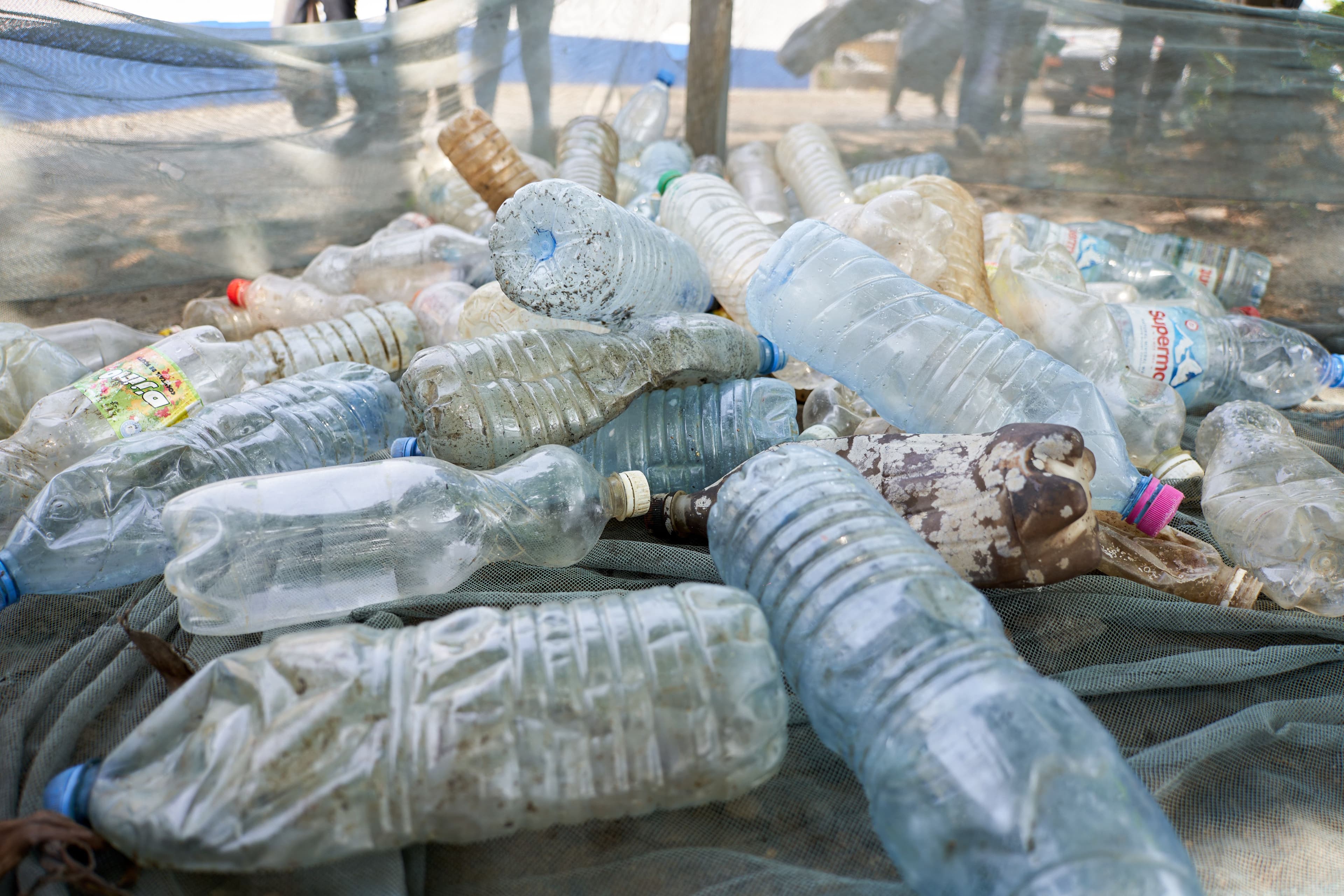
Nanoplastics are nonbiodegradable plastic pieces less than one micrometer in one or more dimensions, typically born from clothes, tools, appliances or other common items. They are prevalent pollutants found in food and drinking water, posing concerns for health and safety.
In July 2026, the National Institute of Environmental Health Sciences granted $4 million toward UC Davis research meant to formulate the first universal method of evaluating the neurotoxicity of airborne nanoplastics.
Randy Carney, an associate professor of biomedical engineering at UC Davis, serves as a co-lead on the grant. When polluted, Carney explains that nanoplastics can take on new chemical characteristics that increase toxicity.
“[Due to] their enormous surface area, we hypothesize that [nanoplastics] readily absorb other airborne pollutants like pesticides, heavy metals and combustion byproducts,” Carney said.
Carney’s group plans to study these composite particles to assess the differences in biodistribution and physiological effects in comparison to their constituent components.
"We [concluded that] the resulting composites [are] pollutant-adsorbed nanoplastics, or PANs,” Carney said. “A plastic plus pollutant combination can behave very differently from either component alone, including how it distributes through the body after inhalation and whether it reaches the brain.”
Carney and his team aim to develop a novel method of standardization using various mass-based (spectrometry) and light-based techniques (spectroscopy). In addition, the Carney lab is actively developing label-free imaging methods that identify individual PANs in tissue without chemical extraction, preserving the inherent chemical properties of the particles for analysis using various molecular techniques. Other projects plan to use engineered blood-brain barrier spheroids and primary neuronal cultures to investigate PAN permeability and associated neuronal inflammatory responses.
Alongside Carney, Sascha Nicklisch, an associate professor of environmental toxicology at UC Davis, is collaborating to study the internal routes and mechanisms PANs use to enter the brain.
“Beyond whether [PANs] cross [the blood-brain barrier], we want to know how Dr. Carney’s lab has successfully used inhibitors and targeted gene knockdown in the past to block individual entry routes one at a time to see which one small particles use,” Nicklisch said. “The barrier may not simply be leaking but actively shuttling these particles through.”
To accomplish this, the Nicklisch lab plans to assess changes in gene expression in response to PANs using techniques like RNA sequencing on exposed lung and brain cell and tissue samples.
“We will use these data to identify candidate transporters and other uptake machinery that may mediate small-particle and/or absorbed-pollutant transfer across the membrane,” Nicklisch said. “We pair the in-vitro work with inhalation studies in rats, in which we expose nose-only to aerosolized PANs and then examine the lung, liver, kidney and brain.”
Developing these methods is expected to take several years, but Carney said the payoff is groundwork that regulators currently lack.
“There is not yet a formal regulatory standard for airborne nanoplastic analysis, nor for any health outcomes like neurotoxicity,” Carney said. “Essentially what we expect to emerge from our project over the next few years are standard single-particle measurements and in vitro brain uptake and neurotoxicity assays, which regulators will need before any exposure limits can be written.”
To learn more about this ongoing research, you can read more about the Carney and Nicklisch labs.
Written by: Esha Kannan— science@theaggie.org