





ASUCD Judicial Council issues injunction, to hold hearing over Constitutional Amendment #100
The Council is set to review if the amendment’s introduction to the Senate by the student government president violated the ASUCD Constitution
By VINCE BASADA and LILY KENROW — campus@theaggie.org
An ASUCD constitutional amendment on the ballot in this week’s student government elections may now be struck down and deemed unconstitutional.
In an injunction released late Sunday, Nov. 1, the ASUCD Judicial Council said it would hold a hearing over the constitutionality of Constitutional Amendment #100 (CA#100) and Senate Bill #2 (SB#2). Both pieces of legislation were introduced to the ASUCD Senate for consideration by ASUCD President Luis L. Garcia, in seeming violation of ASUCD’s governing documents.
Article 3, Section 3 of the ASUCD Constitution says that “the president shall not introduce any legislation to the ASUCD Senate. There are two (2) exceptions to this rule: (1) The Annual ASUCD Budget and (2) The Annual ASUCD Priorities Resolution.” Further, Section 501(B) of the ASUCD Bylaws states that “any ASUCD member may author legislation (with the exception of ASUCD Judicial Council members). However, either a member of the Senate or an ASUCD Commission must introduce it.”
If approved by the student body, CA#100 would consolidate the two ASUCD elections into one larger annual election at the end of the school year. Currently, ASUCD elections are held in both fall and spring; six of the 12 senators are elected in the fall and the other six, as well as all other elected positions, are elected in spring.
As of time of publication, CA#100 remains on the online ASUCD fall election ballot, which remains open through Friday, Nov. 6. Constitutional amendments require a simple majority of yes votes to pass.
In a statement released late Monday, the ASUCD Elections Committee said it will not certify the results of the CA#100 vote until the petition process to the Judicial Council is concluded, per the Council’s orders. ASUCD Elections Officer Colin Eilerman told The California Aggie that if CA#100 is deemed unconstitutional, the Elections Committee may issue a statement saying that votes for or against it will be invalidated and not be counted.
SB#2, the other piece of legislation under review, would have re-established the Tipsy Taxi program and allocated funds from Senate Reserves to the ASUCD Executive Office to purchase Uber ride vouchers for students. It was passed by the Senate at their Oct. 29 meeting.
Similar to CA#100, the Judicial Council has ordered that SB#2 not be enforced while the review process is ongoing.
In an interview, Garcia attributed the issue to discrepancies between the ASUCD Constitution and Bylaws.
“I will say as a senator that did introduce the most legislation last year, I think I was just in that like mindset — like introduce, introduce, introduce,” Garcia said. “I think something slipped and then we're still figuring [it] out.”
The ASUCD Senate voted to let CA#100 appear on the fall ballot at their Oct. 15 meeting, and Garcia says that the constitutional issue had not been raised during its reviews by ASUCD’s six legislative commissions or when it was considered by the Senate’s 14 voting members.
The Judicial Council’s injunction followed petitions by Senator Aaron Heth for injunctive and declaratory relief against both pieces of legislation, filed just hours after the Oct. 29 ASUCD Senate meeting and a little over three days before voting started on Monday.
“In our Association’s system of checks and balances, no one is above the bylaw,” Heth said in a video posted to his official ASUCD Instagram account. “As such, I'm requesting that the Judicial Council adjudicate a remedy to this egregious violation of our governing documents. I will always fight unapologetically for what is right.”
Heth’s petition against CA#100 also raised concerns over its impact on the terms served by senators elected this fall. If passed, the amendment would shorten the terms of the six students elected to the Senate this week by one quarter. Instead of serving full one-year terms through the end of fall 2027, they would instead term out this upcoming spring.
In their injunction, the Judicial Council said it declined to address the alleged unconstitutionality of the term limitations in CA#100.
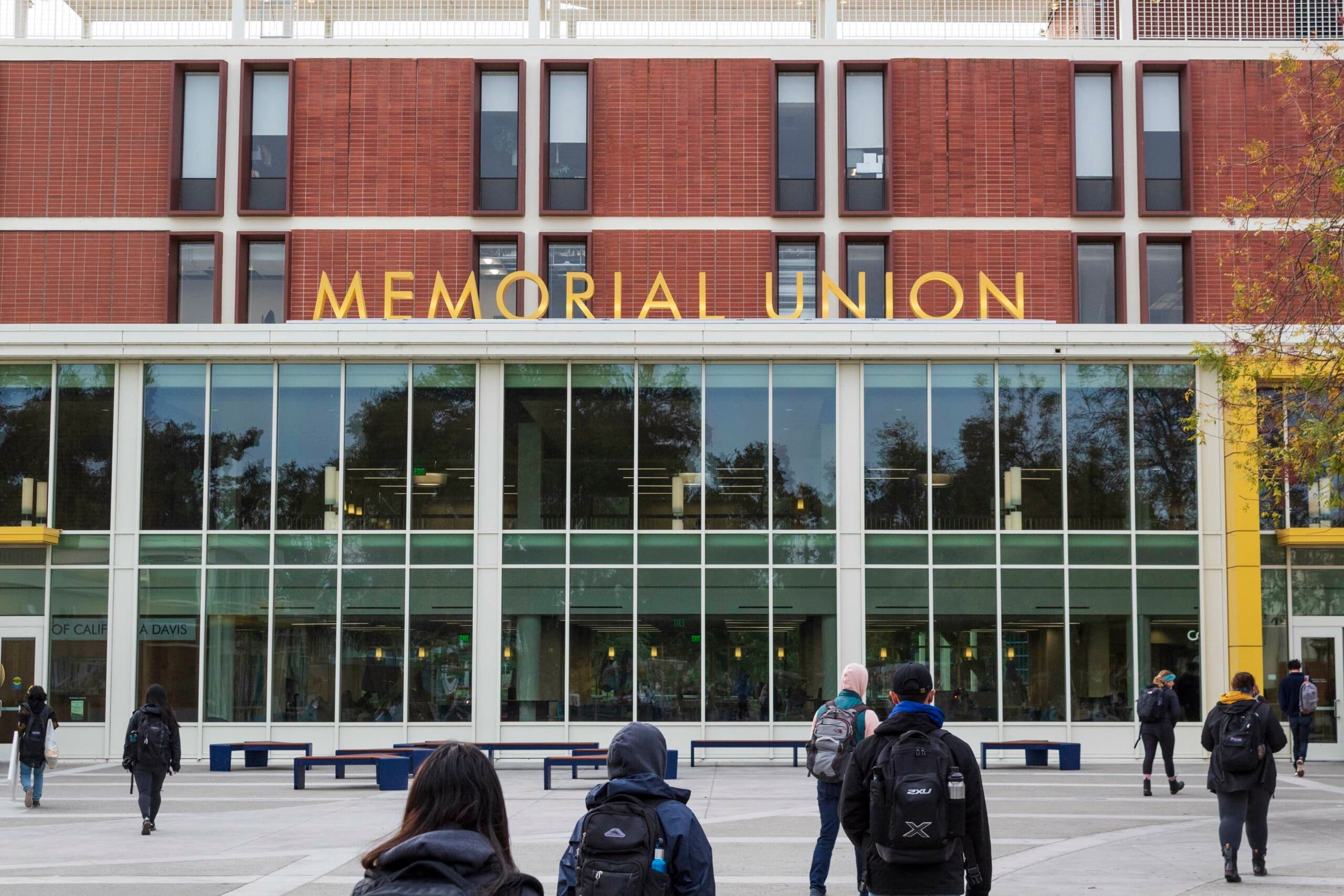
The Judicial Council is scheduled to hear the case of Heth v. Garcia on Tuesday, Nov. 17 at 6:30 p.m. The hearing will be held in the Mee Room on the third floor of the Memorial Union and will be open to members of the public .
Garcia said that if CA#100 is struck down, he will try to advance a similar elections reform amendment in the future.
“At the end of the day, if for some reason things just don't work out, we're gonna try again,” Garcia said.
Written by: Vince Basada and Lily Kenrow — campus@theaggie.org