





UC Davis launches no-cost routine STI and HIV testing pilot program
The initiative aims to remove financial barriers to routine sexual healthcare for registered students
By MICHELLE BEKHTEL— campus@theaggie.org
For the 2026-27 academic year, UC Davis Student Health and Counseling Services (SHCS) has launched a pilot program offering routine, no-cost STI and HIV testing to all registered students, regardless of their insurance status.
Funded through a strategic reallocation of existing student fees approved by the Health Fee Oversight Committee (HFOC), the initiative fully covers screening for four standard infections: chlamydia, gonorrhea, human immunodeficiency virus (HIV) and syphilis.
The program specifically targets routine, asymptomatic screenings, servicing students who are not currently experiencing physical symptoms and have no known sexually transmitted infection (STI) or HIV exposure.
“Many students and staff at UC Davis have advocated for increased access to STI/HIV testing for years,” SHCS Sexual Health Promotion Specialist Rachel Cradit said via email. “Response has started really strong. We've already seen an increase in routine testing for the start of the academic year, for both students with and without UC SHIP.”
The most recent drive for zero-cost testing was spearheaded by 2025-26 ASUCD President Amrita Julka, a fourth-year political science and human development double major. Throughout her term, Julka engaged directly with university health administrators to push for expanded, barrier-free STI and HIV testing.
“Taking an initiative like this signals to our student body that we pay attention to problems they may not even be aware of,” Julka said in an email. “Many students don't realize they have to pay for testing until they need it, and many don't realize they should be getting tested. Solving an issue like this shows that student health and well-being is always the priority, as we remove barriers they may not even know existed.”
In response to widespread student feedback, Associate Vice Chancellor of Student Health and Wellness Bahar Navab proposed reallocating existing student fees within the HFOC budget, which the committee officially approved for this school year.
To access no-cost testing, registered students can log into Health-e-Messaging and submit the STI and HIV Testing Request Questionnaire, where they select their preferred routine screenings.
“When a student submits the STI/HIV questionnaire, they will select which test(s) they are interested in receiving,” Cradit said. “After submission, a nurse will review their answers and confirm the lab orders that have been requested and/or message the student to make additional recommendations for care based on their questionnaire responses.”
Cradit says that students should receive replies from nursing staff within two business days, after which they can schedule a lab appointment at their convenience.
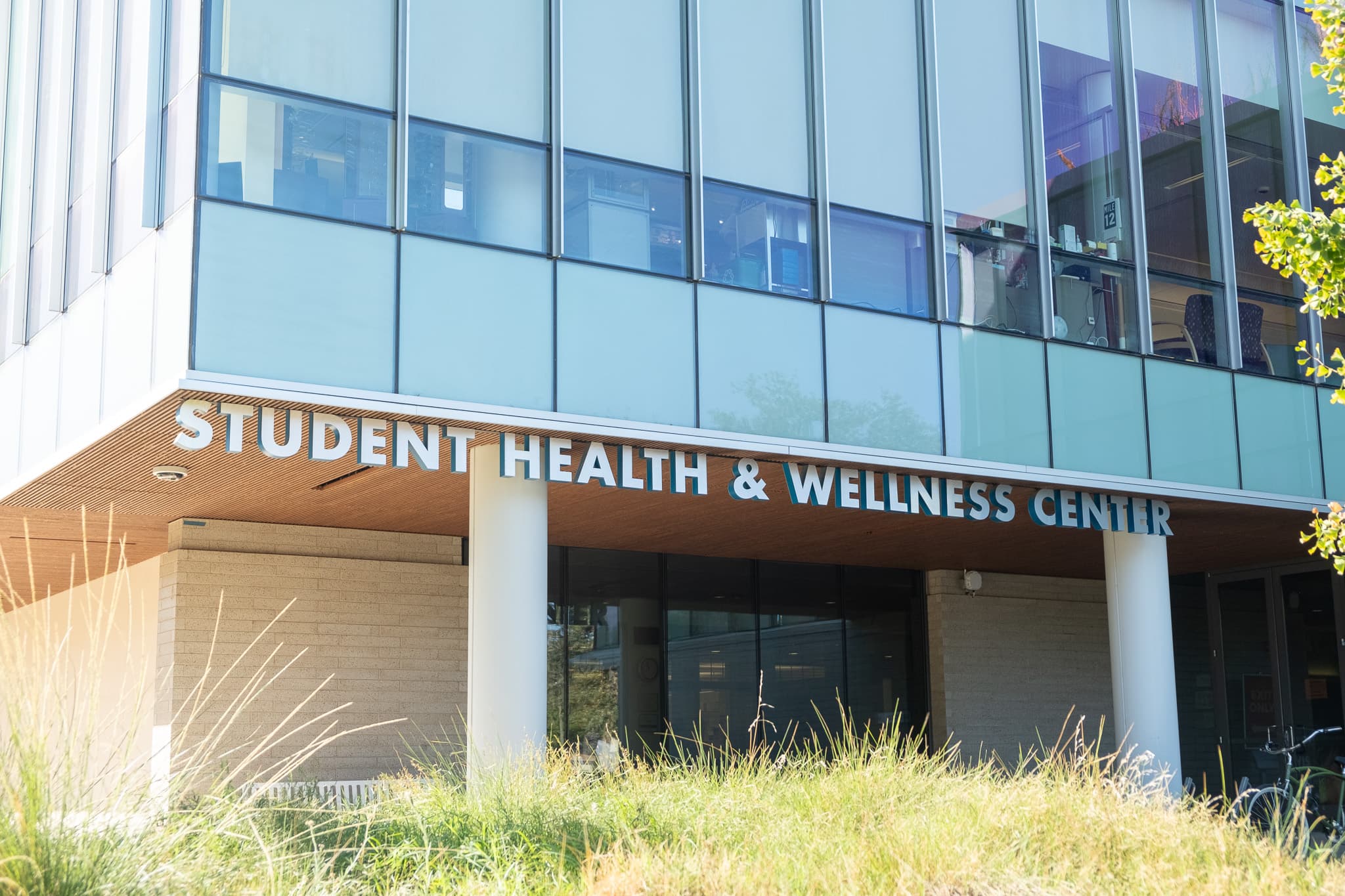
Testing sample collection is conducted at the Student Health and Wellness Center through standard urine samples, self-collected swabs or blood draws. The four covered tests align with routine screening standards established by the Centers for Disease Control and Prevention and the California Department of Public Health. Other conditions, such as herpes or HPV, are excluded from the pilot package as national public health guidelines do not recommend routine testing for individuals without symptoms.
Students experiencing active symptoms or known exposures are advised to bypass the routine questionnaire and schedule a direct appointment with an SHCS provider. While medical visits fall outside the pilot's coverage, appointments and testing remain covered for students enrolled in the UC Student Health Insurance Plan. Students not enrolled can seek assistance through the campus Health Equity Fund.
Addressing privacy barriers was another focus in designing the program, particularly for students covered under their parent’s commercial health plans and who may receive insurance notifications about tests they undertake. To safeguard confidentiality, SHCS says that students can submit a Confidential Communication Request form directly to SHCS or their insurance provider to ensure claims and statements remain private.
As testing is offered on a "while funds last" basis, SHCS says it is monitoring student demand and their budget closely to evaluate the program's long-term feasibility beyond this academic year.
“I hope that this program helps to normalize routine screening as a normal part of being a sexually active person,” Cradit said. “There is no shame in taking care of your health, and it is always better to know your STI/HIV status so that you can keep yourself and your sexual partners healthy.”
Written by: Michelle Bekhtel — campus@theaggie.org