





Aerospace science and engineering students explore aviation and spacecraft
Students discuss opportunities and hopes within the major
By AMBER WARNKE — features@theaggie.org
Students majoring in aerospace science and engineering at UC Davis have access to a variety of resources, such as a staff that includes a former NASA astronaut professor, major-related events and study abroad programs. This past week, the UC Davis Aviation Club, one of the main UC Davis clubs focusing on the aerospace field, hosted guest speaker Dan Oppenheim, a local news helicopter pilot, to discuss his career with students and give them insight into the aviation industry. Oppenheim pilots for local news station KCRA, which is stationed in Sacramento, and covers news across Sacramento, Modesto and Stockton. Oppenheim said his favorite aspect of the aviation industry is its variety, as aviation and aerospace can be pursued from many different angles.
“[I wish students knew] just the diversity of tasks that we have,” Oppenheim said. “I think there's a lot that goes on behind the scenes that people don't really consider. When people think of aviation, they think of commercial airlines. There's a lot to do in aviation that does not involve commercial airlines.”
Unnati Shekhar, a second-year aerospace science and engineering major and social media and publicity chair for the UC Davis Aviation Club, similarly focuses her studies on aircraft rather than spacecraft. Through her social media position for the club, she is able to help other students with a similar focus access resources to help their aviation careers.
“There is this thing called Cal Aggie Flying Farmers, and that's basically an opportunity for students to fly as a co-pilot and just look around the sky,” Shekhar said.
The Cal Aggie Flying Farmers are located at the UC Davis airport, and offer students across disciplines lessons in flying for “reasonable costs,” according to the organization’s website. The resource is particularly helpful for aerospace students, who are then able to better understand how all the mechanisms work together and get a hands-on approach to plane design.
Many students value hands-on experience, much like Shekhar, but struggle to find resources when opportunities like the Cal Aggie Flying Farmers still cost money and internships can be highly competitive, according to Sam Walker, a second-year aerospace science and engineering major. However, Walker said that, in these situations, the most helpful resource students have is each other.
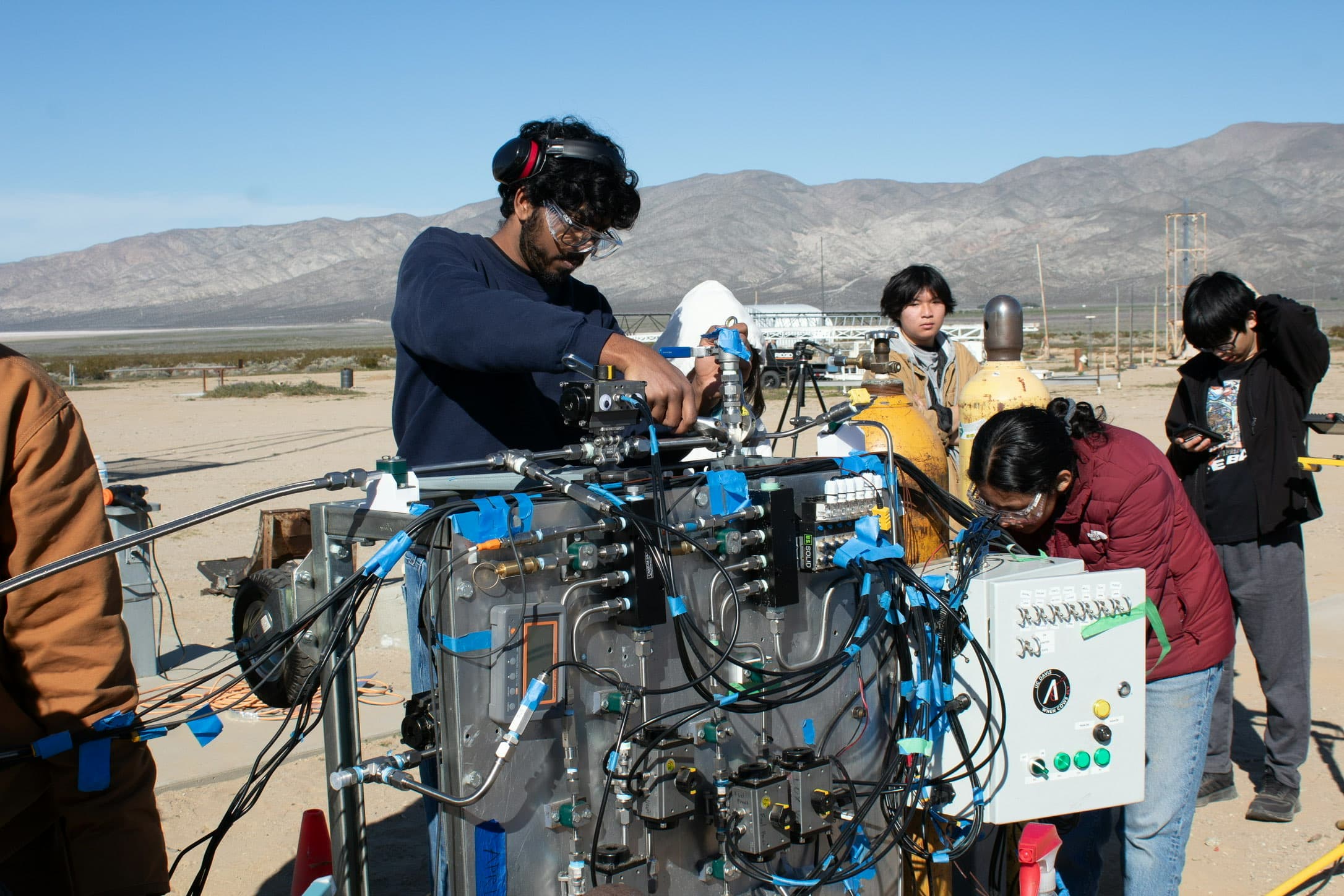
“What I really like about the aerospace major program here is not so much the classes as it is the people,” Walker said. “I’m one of the team leads for the Aggie Propulsion and Rocketry Laboratory here at the [Engineering Student Design Center] … and I really like the experience of getting some hands-on work with a lot of aerospace components and really discussing the world's problems and how to how to fix those with my peers.”
The Aggie Propulsion and Rocketry Laboratory (APRL), is a club dedicated to rocket science, and currently aims to build UC Davis’ first liquid-fuel rocket, according to Walker. While other groups, like the Aviation Club, focus on aircraft, APRL allows students to lean into the spacecraft side of aerospace.
“It's a great opportunity to meet a lot of people who are like-minded and to explore some of the subjects we'll be getting into in the field,” Walker said.
Walker mentioned that he’s still deciding which part of the major he wants to choose a focus in, but still has a variety of interests within the field, and reported feeling confident in his ability to use aerospace to have a positive impact on the world using engineering.
“There’s a lot of important things that can be applied using aerospace, especially things like space travel and exploration, but also here on Earth, talking about renewable energy and coming up with more efficient wind turbines and lighter components for planes and things like that, that can help the environment,” Walker said. “My dream would be to make a lasting impact that can help as many people as possible, either something with renewables or exploring space.”
While many students across majors are still figuring out exactly what they want to do with their careers, Oppenheim advised students to focus on what they can accomplish while staying open to the future.
“I sort of stumbled into the job just by being in the right place at the right time, and it was just by chance,” Oppenheim said. “I thought it was going to be a career stepping stone, [and I’ve been] doing news for eight years now. Just go one step at a time. Focus on the end goal, and just remember that the journey could change very much between where you start now and where you might end up.”
Written by: Amber Warnke — features@theaggie.org