





“Sense and Sensibility” holds its own in 2026
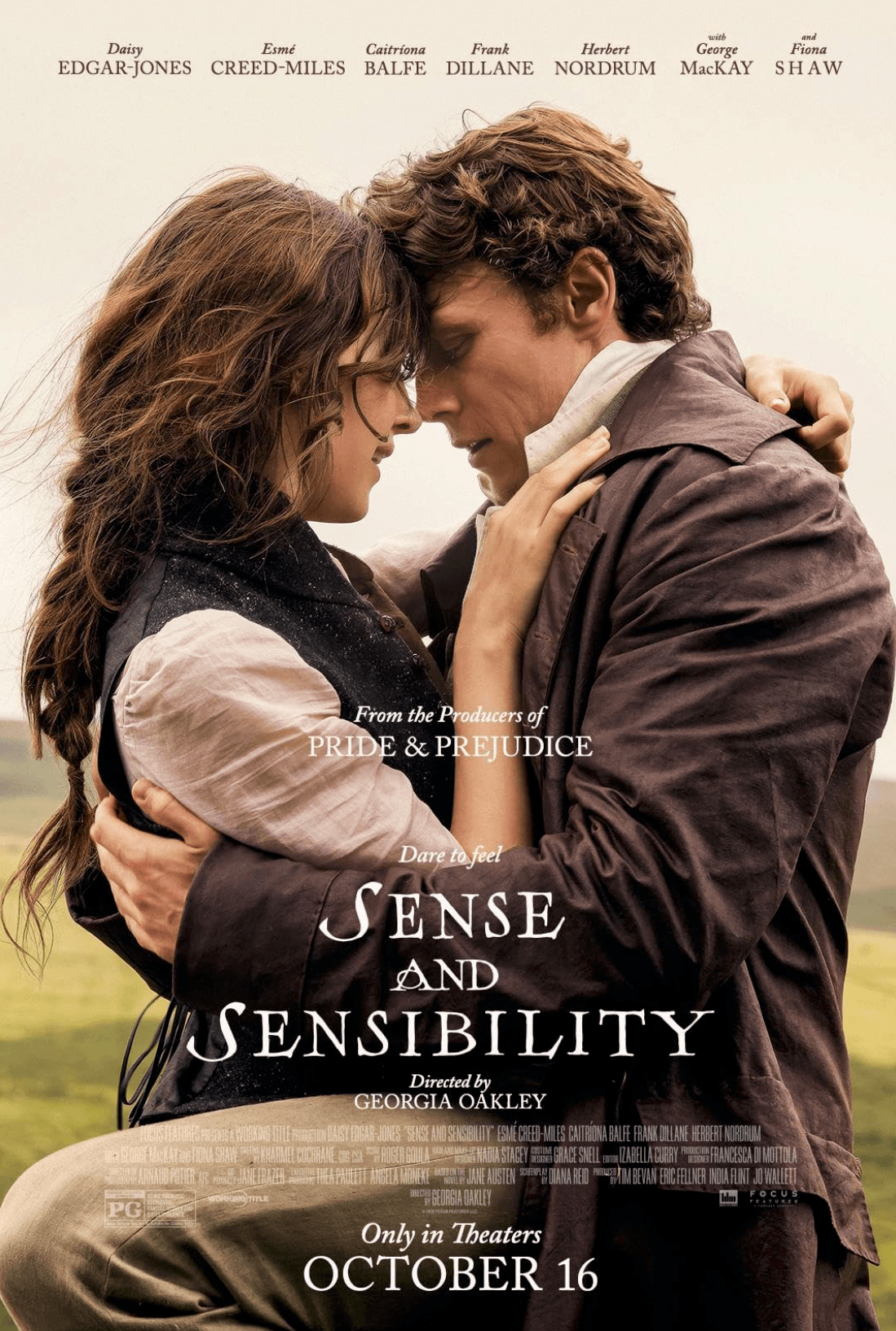
The remake, albeit less colorful, brings the same warmth and wit as the 1995 film
By MIRIAM RAMAKRISHNAN — arts@theaggie.org
With Jane Austen being as beloved of an author as she is — and with the 1995 adaptation still having a dedicated fanbase — bringing “Sense and Sensibility” to the silver screen once again was no easy feat.
The book follows sisters Elinor and Marianne Dashwood through their romances, financial heartbreaks and betrayals after their father leaves them no inheritance in favor of his other wife and son.
Though there are many plotlines that intertwine and weave through each other over the course of the novel, the two girls and their sisterhood comprise the core story.
“Every generation finds its own Austen, and this film is simply mine,” director Georgia Oakley said In an interview with Focus Features. “I hope people feel the force of the relationship between Elinor and Marianne: the idea that love is not always graceful or uncomplicated, but can be difficult, demanding, and utterly essential.”
In that vein, Daisy Edgar-Jones was a fantastic casting choice by Oakley, delivering a beautiful and dramatic performance as Elinor.
Esme Creed-Miles is just as good in her performance as Marianne.
“As Creed-Miles plays [Marianne], it’s impossible to dislike her,” Stephanie Zacharek said in a piece for Time Magazine. “When Marianne becomes truly hurt, we hurt for her, thanks to the bruised anguish in Creed-Miles’ eyes.”
The colors of the film, however, leave something to be desired. The scenery, wardrobe, and characters have a muted and neutral palette — much unlike its 1995 predecessor.
With that said, the movie is shot in such a beautiful way that it’s still easy to appreciate the work and cinematography that went into each scene.
The hairstyles were a strange choice as well: each of the characters sported visibly tangled and unbrushed hair, which, for an Austen adaptation, is not something that viewers expect to see.
With historical adaptations like this one, there will always be complaints over accuracy and costume choices. However, at the end of the day, this movie feels good to watch.
It evoked a similar feeling that one might feel watching the 2005 film adaptation of Austen’s masterpiece “Pride and Prejudice”; as a viewer, you’re sucked into the screen and hoping for characters to touch hands or even talk to each other.
This is a perfectly cozy movie for fall, and Oakley brings an incredibly talented and star-studded cast to boot — it’s hard not to recommend this film.
Written by: Miriam Ramakrishnan — arts@theaggie.org