






The taste of a poison paradise
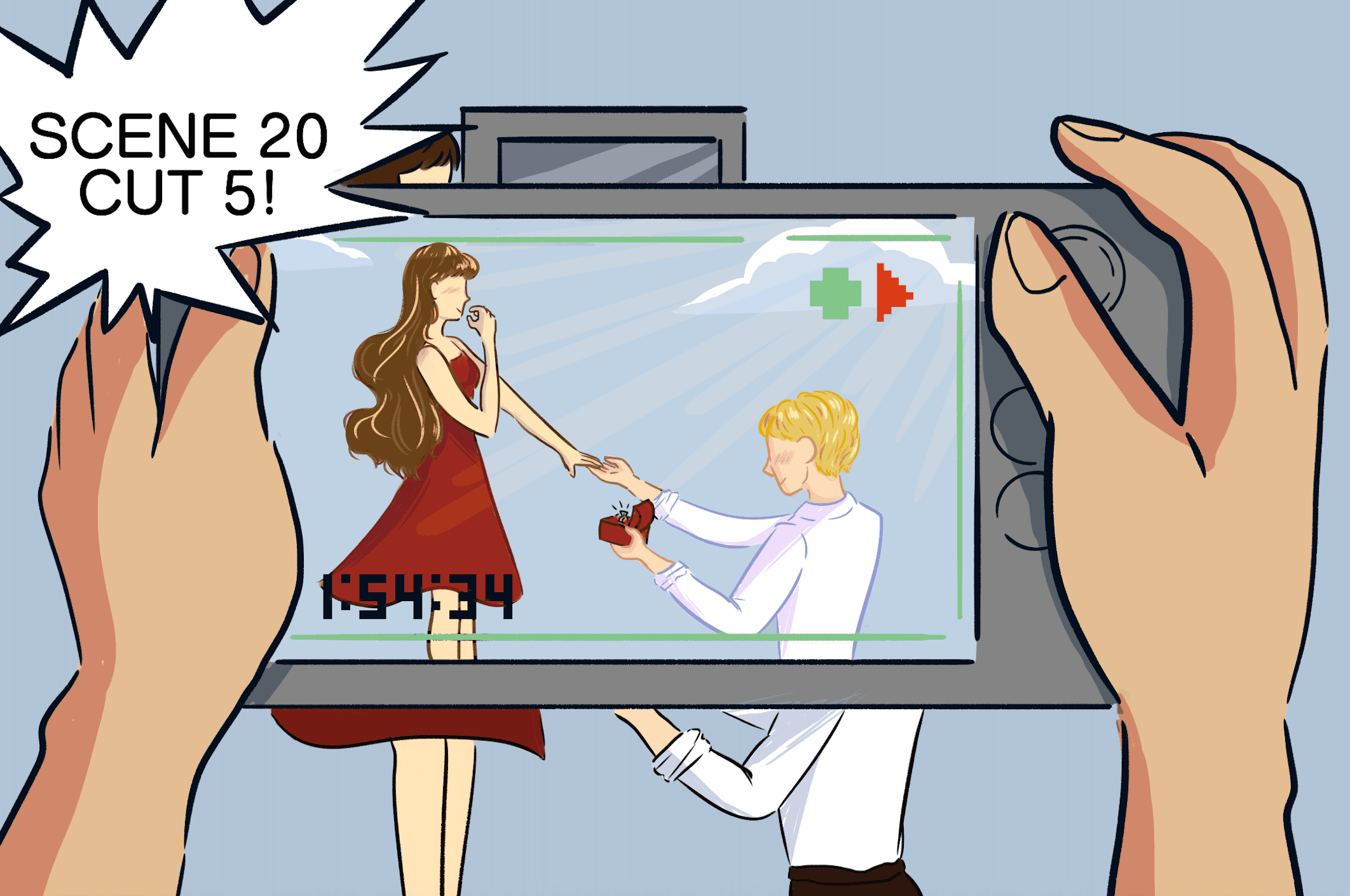
Reality dating shows are setting us up for failure
By MOLLY THOMPSON – mmtthompson@ucdavis.edu
My Netflix homepage recently came down with a bad case of reality dating shows. Honestly, my screen is covered in them: It’ll be a miracle if it ever recovers.
I am, of course, at fault for this. I take full responsibility for the fact that I watched “Too Hot to Handle” and “The Perfect Match,” along with the first episode of about seven other reality dating shows (I try to get into “Love is Blind” every season, but I just can’t do it). So when I saw the bold, salacious banner for “Temptation Island” pop up as a suggestion for my next watch, of course I had to take the bait.
Before getting into the actual drama that unfolds, the show is blatantly problematic, toxic, provocative and a whole slew of other adjectives that are abhorrent for relationships but phenomenal for entertainment. Hosted by Mark L. Wahlberg (who, I learned, is not the same as Mark Wahlberg from the hip-hop group Marky Mark and the Funky Bunch), “Temptation Island” casts a set of couples who already have admitted issues with trust, jealousy, infidelity and other fun stuff.
The producers separate the men and women into isolated living quarters, where they spend the duration of the show unable to contact their partners. The twist is that each cohort lives with a set of hot, single potential matches (who have no qualms with dabbling in light homewrecking) who are meant to tempt and test their partner’s devotion. While they can’t communicate with their partners, each star is periodically updated with a highlight (or rather, lowlight) reel of how their counterpart has been engaging with their new housemates, further sowing seeds of resentment.
The series, which originally aired in 2001 before being revived on Netflix this year, asks the question: If your partner isn’t watching you, will you keep your loyalty to them? Is your connection strong enough to withstand the allure of a sexy new fling behind closed doors, or will you succumb to the titular “temptations?”
For the couples, ultimately the goal is to prove their true love and dedication. If they decide to return to each other at the end of the month-long challenge, they will have succeeded. But, if they decide to leave alone or with one of the “tempters,” they fail.
It’s a test of trust that puts one’s relationship in jeopardy with increased risk because they come in with established instability. Take one of the couples from the newest season, Ashley and Grant, as an example. After a year and a half of dating, they continued to struggle with moving past an instance of Grant’s infidelity from the first month of their relationship. They both hoped that the show would give Grant a chance to prove himself as faithful to Ashley, eliminating their worries once and for all.
Spoiler alert: Neither Grant nor Ashley resisted the lures of “Temptation Island.” This result, to me, seems somewhat unavoidable. If there’s enough animosity and doubt in a relationship to warrant a test like the one posed by the show, it’s dead on arrival. If you need “Temptation Island” to prove the strength of your bond, it’s already unsalvageable.
Not only is an experience like the one marketed by this show certain to only throw another wrench in an already rocky relationship, but it’s also almost certainly a symptom of a match that’s doomed to fail. The fact that so many of the show’s cast members end up leaving each other isn’t because of the show itself. The show is a catalyst for the inevitable — people in healthy, loving relationships don’t feel the need to test each other.
Of course, “Temptation Island” is set up to be a social experiment — designed to create dramatic content, not heal tumultuous relationships. Even so, mending was the primary goal of the cast, and it ultimately fails time and time again.
Putting the kind of pressure that “Temptation Island” creates on any relationship is a recipe for disaster. The couples were far too wrought to heal in that kind of environment. Even if they could have solved their problems (which they very well might have been able to do if they’d done so in a healthy, smart way), it was never going to happen because of the petty, immature antics the show set them up for.
This show is far from the only example of sacrificing personal growth and well-being for the sake of entertainment. The vast majority of reality TV shows have the same priorities and effects. It’s not unique in that sense, but that doesn’t absolve it of its faults. The truth of the matter is that you simply can’t heal a stress fracture by putting it under more pressure.
As an audience, we absorb the messages of what we watch, whether we intend to or not. My only hope is that the message we take away from this show in particular is that resentment can’t be solved by throwing a relationship armed with a knife into a gun fight. Empathy, vulnerability, intentional communication and open-minded conversation are the real solutions, but they don’t make for good TV.
Written by: Molly Thompson — mmtthompson@ucdavis.edu
Disclaimer: The views and opinions expressed by individual columnists belong to the columnists alone and do not necessarily indicate the views and opinions held by The California Aggie