






Human Relations Commission unveils Sanctuary City Ordinance draft
The ordinance aims to strengthen Davis’ sanctuary city doctrine
By YUENJO FAN — city@theaggie.org
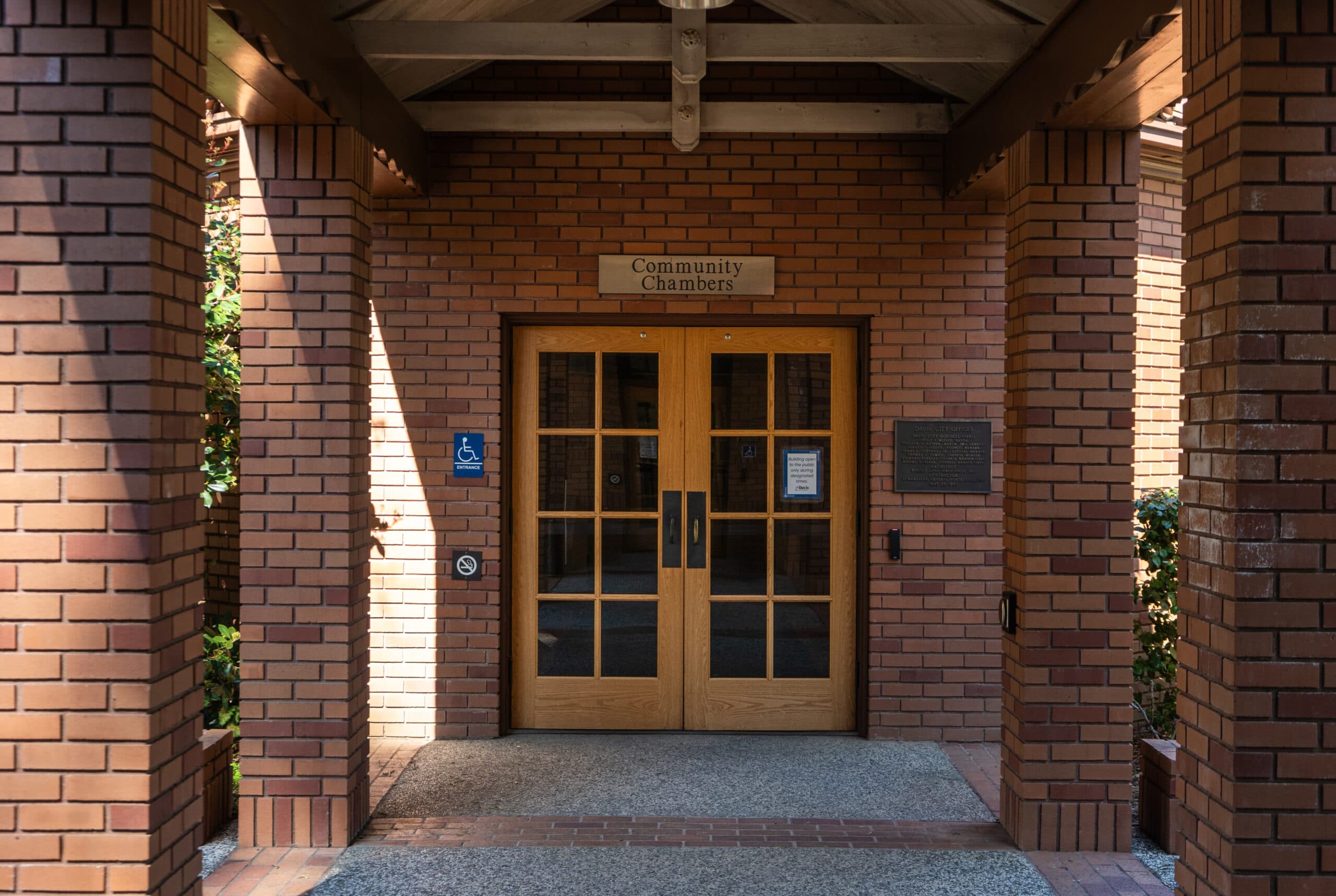
On Feb. 26, the Human Relations Commission met to discuss and review the draft of Davis’ Sanctuary City Ordinance.
Directed by the Davis City Council to initiate the ordinance draft, the Human Relations Commission composed a draft of 10 main principles, which was forwarded to Jeff Reisig, the Yolo County district attorney. Though not planned to be the city’s only response, the ordinance is meant to cover a wide scope of issues traditionally proposed.
Kevin Baker, co-chair of the Human Relations Commission, briefly described the process behind creating the ordinance draft.
“In our proposed principles, what we tried to do was address the scope of issues that have been proposed in similar local government ordinances,” Baker said. “We have [also] heard many good ideas that are outside the scope of traditional Sanctuary City Ordinances that we are familiar with that we believe to be fully considered.”
Davis adopted a Sanctuary City Resolution in 1986, but the city has never adopted a formal ordinance. A resolution serves as a statement of intent, while an ordinance acts as a legally binding document that applies to the entire city.
The proposed ordinance includes outlawing city resources to assist immigration authorities, prohibiting the disclosure of residents’ immigration status and recommending the development of a community notification system.
Davis City Attorney Inder Khalsa spoke on her review of the ordinance and its relationship with federal regulations.
“Our primary concern in adopting an ordinance is that it would be preempted by federal law,” Khalsa said. “What this means is that in the United States, immigration law is solely a federal matter, and it is enforced solely at the federal level. Local governments do not engage in immigration enforcement. That said, we also have no obligation to assist with federal law enforcement, and there is a long line of cases that says that the federal government cannot use local government to enforce federal law.”
Khalsa noted how the California Values Act, also known as SB54, set forth principles to guide her revision of the ordinance draft. A 2022 piece of legislation that restricts cooperation between local and federal immigration enforcement agencies, the law teeters on the fine line between federal and state rules.
“We are attempting to expand upon SB54 to increase the protections that the City of Davis is providing to our whole community,” Khalsa said. “We are trying to do so in a way that does not push it so far that we are standing in the way of federal law enforcement.”
Ultimately, the changes that Khalsa made to the commission’s ordinance draft were mainly regarding its language, particularly in clarifying certain terms such as “immigration activity.” Khalsa explained how she opted for a conservative approach to the ordinance to avoid the legal pushback an aggressive ordinance might provoke.
“The city receives substantial federal funding,” Khalsa said. “[It] is used for critical social services as well as infrastructure, and one of our considerations as city staff is to not have an ordinance to conflict with any contractual language that is currently in our grants from the federal government. [...] Some of the funds we do receive goes to critical affordable housing services, homeless services and other social services that the city provides that we frankly have no alternative funding sources for.”
However, the Human Relations Commission questioned certain changes, particularly the removal of the community notification system for federal law enforcement activity. Davis Police Chief Todd Henry addressed the commission’s concern, citing deconfliction, a law enforcement tactic that minimizes miscommunication to prevent friendly fire incidents.
“[If] our officers come in contact with [federal agents] and they come out of a car holding a weapon, now our officers are in a potential blue on blue situation,” Henry said. “My concern would be that if we disclose this information, [federal agencies] would simply stop notifying us.”
Henry also noted that not all federal agencies engage in immigration enforcement and that communication between the Davis police and federal agencies is common. He explains that a notification system would impede deconfliction and potentially jeopardize the safety of Davis' law enforcement officers.
However, not all community members present at the meeting were satisfied with the proposed ordinance. Spear, a public commenter who chose to only share their first name, voiced a need to do more.
“As a concerned community member, I am not excited to hear the city take a conservative approach to a federal government acting extrajudicially and above the law,” Spear said.
The sentiment was similarly shared by others present at the meeting, who took aim at the District Attorney's conservative approach. Their concerns primarily stemmed from a belief that the city has not done enough to protect its undocumented immigrant population.
The Human Relations Commission will continue further talks with the District Attorney’s Office and the Davis Police Department before forwarding a final copy to the Davis City Council. The Human Relations Commission meets every month on the fourth Thursday of each month. More information can be found on their website.
tten by: Yuenjo Fan — city@theaggie.Wriorg