






Election reform legislation sparks fierce debate at March 5 ASUCD Senate meeting
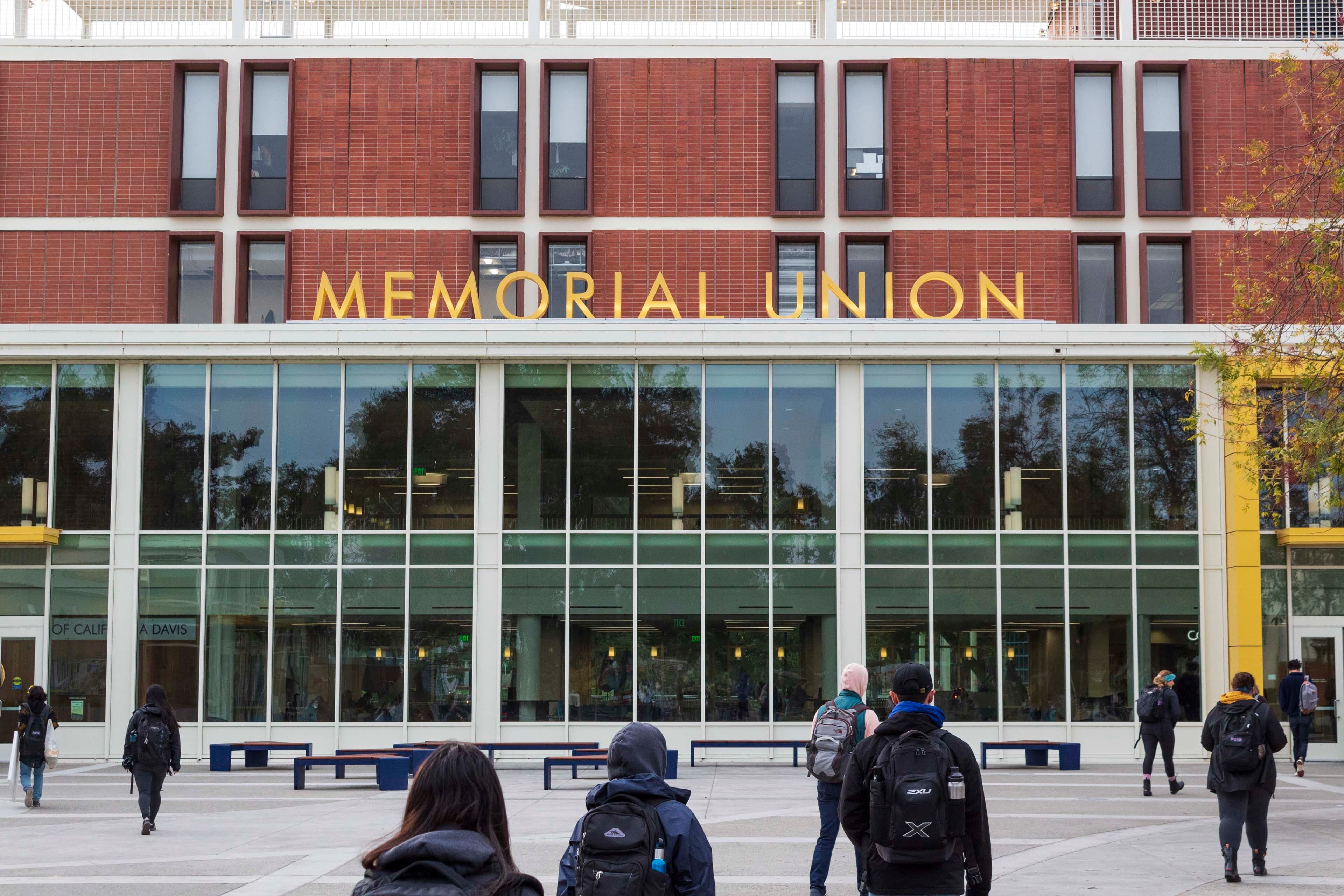
With spring elections around the corner, the table discussed who should and should not be able to endorse candidates
By AALIYAH ESPAÑOL-RIVAS — campus@theaggie.org
With student government elections fast approaching, concern over the next election’s rules became a key topic of discussion at the latest meeting of the ASUCD Senate on March 5.
Namely, the decision to allow units, committees and commissions to endorse ASUCD candidates was debated during consideration of Senate Bill (SB) #74. Authored by Senator Aaron Heth, the bill sought to make multiple reforms to the ASUCD election bylaws, including changes to the timeline, indictment process, social media policies and endorsement rules.
The main point of contention with the table was over proposed changes to endorsement violations.
“With the exception of The California Aggie and KDVS, ASUCD Units shall not endorse any individual candidate but shall have the discretion to endorse ballot measures or fee referendums,” the ASUCD election bylaws read.
ASUCD currently oversees over 30 units that are independently managed and operated by students for the benefit of the undergraduate population. Both The Aggie and KDVS are media units and have greater editorial control and independence than other units.
Heth opposed the current bylaws, stating that either all units should be allowed to endorse or none at all. He also introduced the idea of barring committees and commissions — legislative bodies operating under the Senate — from making endorsements in the future.
“I think it makes more sense to allow individuals to endorse candidates versus entities within [ASUCD],” Heth said. “I think it would be wrong just as much for the entire Senate to make endorsements for candidates, [and] I think it would not be right, necessarily, for a commission or a committee to make endorsements.”
ASUCD currently has six presiding commissions whose chairpersons sit in on Senate meetings, including: External Affairs, Internal Affairs, Academic Affairs, Gender and Sexuality (GASC), Ethnic and Cultural Affairs and Environmental Policy and Planning. Additionally, ASUCD has 20 legislative committees that oversee internal, external, philanthropic and programmatic matters.
Heth continued, arguing in favor of “all-or-nothing” endorsements to make the rules fairer across ASUCD.
“If we do want to keep a committee and commission endorsement, I think it's important to be equitable, and how we do that is [by allowing] for units to also make endorsements as well,” Heth said. “Many units are not commercial, many units are not making money at all, but they still represent important interest groups within the Association, and they don't have the ability to make endorsements.”
Internal Vice President (IVP) Dhilena Wickramasinghe proceeded to question Heth on whether committees or commissions were consulted prior to the bill. Heth responded, stating that he spoke briefly to one commission chair and understood that the proposal was unpopular among commission members.
“I understand that the commissions are not supportive of it, and I can see where that's coming from,” Heth said.
While commission chairs cannot vote on legislation, many of them were caught off guard by SB#74 after not being consulted on the matter.
“I think it's kind of unfair that you’re bringing commissions and committees into this conversation without talking to any other commission and committees besides the people you’re introducing this shit to,” GASC Chairperson Catalina Silva-Oliveira said. “It’s important to recognize that not talking to us [committees and commissions] is a little disrespectful. We’re the ones that educate people, that represent communities, so I think it’s totally fair and within our right to endorse candidates that represent our best interests.”
International Student Representative Robi Castaneda alleged that Heth and Senator Ezra Rubin, a co-author of the bill, are potentially using SB#74 to further their political goals in the spring elections.
“I would also like to point out that [it] is very coincidental that the very time that Senator Heth and Senator Rubin choose to disenfranchise our commissions and committees, it is the same time that we have noticed multiple rumors — and tell me it’s a rumor — but it's clear that maybe you [Heth and Rubin] want to run for elections,” Castaneda said.
Both Rubin and Heth were elected in the 2025 fall election, with their Senate terms lasting through the end of fall quarter 2026. Positions open in spring 2026 include the joint president and IVP ticket, External Affairs vice president and the two student representative positions.
Castaneda continued, comparing SB#74 to gerrymandering.
“We’ve seen many examples of gerrymandering within the United States, where senators on the left and right side choose to alter the elections code in their states in order to gain votes,” Castaneda said. “However, it seems like that is not a pattern just occurring in the U.S. government, but also occurring within the ASUCD Senate. [Heth and Rubin] have consistently failed to attend multiple commission [meetings], and knowing that these commissions might not support them, chose not to repair the relationship but actively chose to disenfranchise their vote.”
Rubin provided a response to Castaneda’s allegations.
“I have no intentions to run for office,” Rubin said. “I will not be running for office in the spring, and I think it is completely inappropriate that you are alleging that of me and suggesting that I’m engaging in corrupt practices. It is completely unacceptable, and it will be clear in week one of spring quarter — so shame on you.”
Several other senators, chairpersons and elected officials spoke out on the matter, noting that it was too close to the election season to possibly change the bylaws. They ultimately opted to table the bill until the following week’s Senate meeting. The authors committed to reexamining which units, if any, should be able to endorse before reconsidering the bill.
Per ASUCD Bylaws, the week 10 Senate meeting is the last time any changes can be made to the election codes before spring elections.
Written by: Aaliyah Español-Rivas — campus@theaggie.org
Legislation Tracker
SB#74 : Establishes an election indictment process and clarifies campaign social media policy. Tabled by one week; scheduled to be revisited at Week 10 Senate meeting
Open Comment
During open comment, multiple public comments were read by Senate Pro Tempore Phoenix List addressing SB#70, which sought to allocate $15,492 to the Office of Senator Garcia for the purchase of Nap Pods. SB#70 was originally on the March 5 agenda to be voted on by the table, but was ultimately withdrawn prior to the meeting and tabled until the April 16 Senate meeting.
“Please no nap pods, goon pods, jerk off pods. Preplanning cleaning supplies is crazy,” read one comment.
“No way they [the Senate] are spending 15k on TWO nap pods bruh,” another reads. “Seems super gross to trust people who leave their trash on CoHo [Coffee House] tables to clean up after themselves. Just not a great idea in my opinion.”
“I will be masturbating in the nap pods lol. thanks for the cleaning supplies,” the last comment read.
Written by: Aaliyah Espanol-Rivas — campus@theaggie.org