






Fighting Instagram addiction with Strava
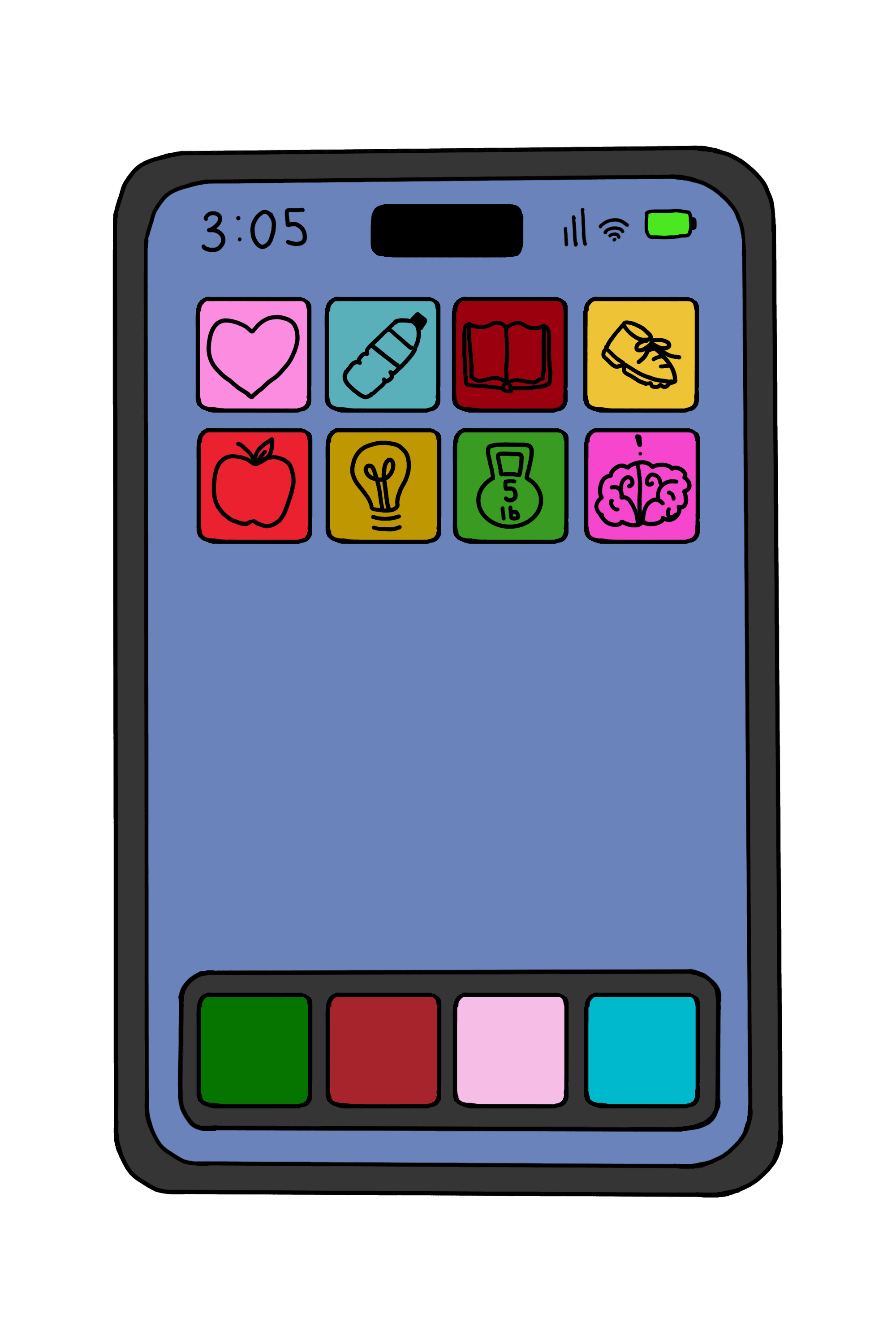
Toxic relationships with social media can work to our advantage, depending on the app itself
By VIOLET ZANZOT— vmzanzot@ucdavis.edu
During my first year at UC Davis, I ran a half marathon. And I did it for this moment right now — so that I can tell you all about it and be able to say that I did it. A mix of my affinity for praise and my love for attention created the perfect mentality for one of the least impressive half marathons ever run.
Flash forward: I graduate this June, but come May, I will be running my second half marathon (which must be shocking to those closest to me, considering that after my last, I vowed to never run again). It’s interesting how my relationship with the sport has changed as my college experience has carried on.
As I logged my run this morning on Strava, my preferred run-tracking app, I thought about this change. Two years ago, I was never one to measure time or distance; I just ran slowly and prayed we were near the end before we even began. Today, I paused my tracker, checked my time, cooked up a caption (it was perfectly witty) and added two very exciting pictures from the run itself.
The post, in-and-of-itself, might speak to my need for social media more than some newfound sense of pride in my (still) terrible running ability. When I deleted TikTok, Snapchat and Instagram, I realized what they had done to my brain: I had become reliant, and that dependency had to shift to something else. This is where the idea of becoming addicted to self-improvement came into play; 2026 has unofficially become the year I learn to crave success. This is, in part, why I started running again, and how I realized that social media has evolved — taking on new forms in a potentially very positive way (gasp).
In the absence of traditional social media, I found myself drawn to alternative forms. I’m no longer overwhelmed that the girls from high school are running faster and having cute date nights (and doing all the other things that make them feel like they’re better than me). On Instagram, those things feel like they’re a person’s whole life. On Strava, it feels different. On Goodreads, it feels different. On Letterboxd, it feels different. They are not meant to encapsulate your entire life.
Ambiguous “lifestyle” media is distinct from dedicated platforms for running, music or reading. When you post a picture of yourself reading on Instagram, you’re being performative to show me that 1) you think you’re better than me, and 2) reading is a part of your life. When you post a book review on Goodreads, you’re telling me you read a book and had nuanced or ridiculous opinions about it, and I’m seeing your post because I’m interested and seeking it out. It is the specificity that removes the jealousy or hurt feelings — I intend to see your mile time or your playlist. As I found joy in curated social media, I discovered that everything I once found toxic could push me to be better.
These apps, using the same features of traditional social media, produce a different effect. They have demonstrated that it’s not necessarily a bad thing to be addicted to social media, as long as it reinforces positive habits. So, maybe it isn’t the healthiest thing to need a run tracking app to exercise, but at least I’m running.
Even the addiction isn’t quite the same. When apps have a buy-in service, you have to engage with the activity, not just the app. The activity forces your mind and body to process something external, by either making you want to participate in an activity for the sake of the app — like watching a movie to post on Letterboxd — or by making the app operational without a user being actively “on” their phone, like Spotify or Strava. Integrating the app into everyday life, rather than making it an escape from reality, allows the focus of the platform (i.e., running or reading) to manifest into your real life. In other words, Instagram works if you become addicted to Instagram, and Strava works if it can get you addicted to running.
Learning how to differentiate between the technology that makes me feel bad and the technology that makes me want to be more athletic, more creative and eat more healthy has been invaluable. I no longer think the problem is social media. I thought I was giving it up for good, but getting it back in these different ways has shown me how it can be a tool; fighting fire with fire, if you will.
Written by: Violet Zanzot— vmzanzot@ucdavis.edu
Disclaimer: The views and opinions expressed by individual columnists belong to the columnists alone and do not necessarily indicate the views and opinions held by The California Aggie.