






Another ‘Wuthering Heights’ think piece?
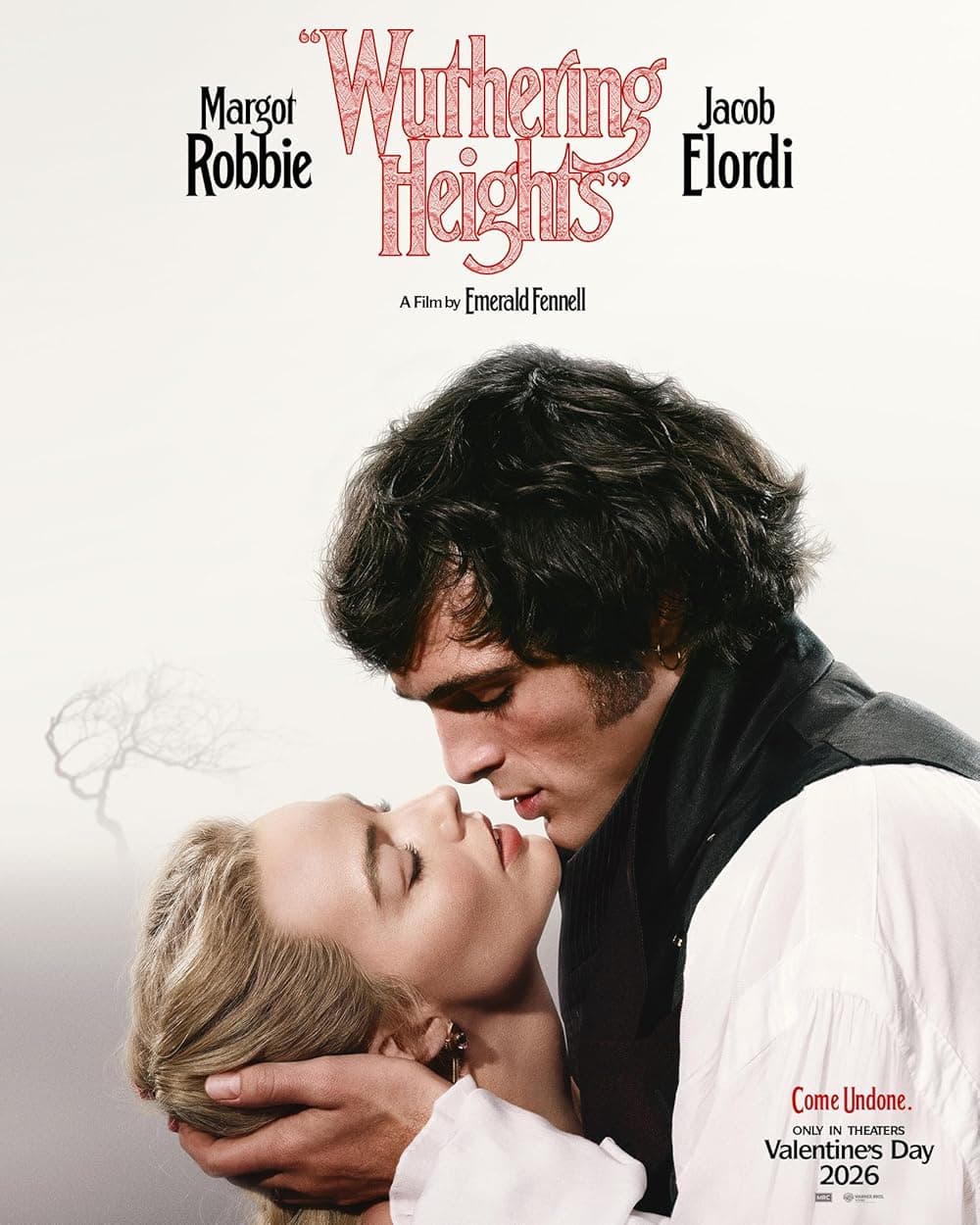
Emerald Fennell’s ‘Wuthering Heights’ has captured the attention of book purists, movie enthusiasts and literary scholars alike
By DOMENICA PELOSO — features@theaggie.org
On the eve of Valentine’s Day, Emerald Fennell joined the likes of several other ambitious filmmakers in releasing a movie adaptation of Emily Brontë's 178-year-old tragedy, “Wuthering Heights.”
Fennell’s adaptation, titled “Wuthering Heights,” sent drafty chills throughout book, film and scholastic communities alike. So, just how different are these communities’ opinions on Fennell’s anachronistic retelling of the so-called “greatest love story of all time?”
Representing the book lover point of view is Georgia Blanc, a fourth-year English major, who stated that “Wuthering Heights” is one of her favorite classic novels and gave the film a rating of 2 out of 5 stars.
Representing the movie buff perspective is Arjun Mitra, a first-year sociology major, who is a member of The Film Enthusiasts at UC Davis club and also gave the film a rating of 2 out of 5 stars.
Finally, representing a more expert, academic viewpoint is the UC Davis Executive Associate Dean of the College of Letters and Science Elizabeth Miller, who taught classes on the Brontë sisters as a professor of English. In contrast to Blanc and Mitra, Miller gave the film a rating of 5 out of 5 stars.
Emily Brontë’s novel takes place between 1771 and 1802, and it is set on the Yorkshire Moors of Northern England. Her story details the tragic intermingling of two families: the earthy, destructive Earnshaws at Wuthering Heights and the opulent, high-society Lindtons at Thrushcross Grange.
What most outsiders do not know is that “Wuthering Heights” is split into two distinct halves: the first half focusing on Catherine and Heathcliff’s intoxicating bond and the second half focusing on the next generation of children.
“One of the things about all of the movie versions of “Wuthering Heights,” including Emerald Fennell’s, is that most of them cut out the second half of the novel,” Miller said. “That’s really revealing, because Brontë’s original novel positions Cathy and Heathcliff within this particular environment and this complex of family relationships — whereas most of the film versions really just make Cathy and Heathcliff’s romance the focus of it all.”
Though most film adaptations do not cover the depth of generational abuse that Brontë originally depicted, the elements of love, romance and intimacy are still integral to her story.
“When I think about the story of Heathcliff and Cathy’s romance, it’s just about how love persists […] in a bad way,” Mitra said. “I think one thing that none of the remakes have ever really gotten right is the fact that most of the story takes place after Cathy dies.”
While Fennell’s film does portray the wild passion and all-consuming obsession between Cathy and Heathcliff, her casting of Margot Robbie and Jacob Elordi sparked controversy online due to the age inaccuracy, among other things. For reference, Catherine and Heathcliff first meet around the ages of 6 to 7, and the height of their romance takes place between the ages of 15 to 18.
“I think the teenage nature of obsessive love is actually important, because teenagers, you know, are going through hormonal changes,” Miller said. “There is a sense that they're at the mercy of drugs coursing through their brains in the form of hormones. So, I did think that changed things a little bit. But nevertheless, I liked Margot Robbie's performance.”
While the ages of Catherine and Heathcliff were one difference in Fennell’s interpretation, another notable aberration from the novel was the hypersexualization of their relationship. It should be noted that the steamiest moment in Brontë's original novel involved a singular kiss between the two protagonists.
“When you read ‘Wuthering Heights,’ there's just so much that is not romance — It's not meant to be a raunchy ‘Fifty Shades of Gray’ thing,” Mitra said. “It was a really painful two hours, and it took me a few sittings to watch. I tried watching it in the dining hall, but obviously it's not exactly a movie you want to watch in the dining hall.”
That being said, perhaps Fennell’s focus on the “sadomasochistic elements” of Brontë's novel indicates progression as opposed to ineptitude, according to Blanc.
“As someone who loves the novel, I kind of have an unexpected opinion on this,” Blanc said. “When writing the novel, Brontë couldn't talk about sex — especially because she was a woman. Even though she wrote under a male name, if someone had found out that she was a woman talking about sex, that’d be horrible. And so, I don’t think adding in sex was a bad thing.”
One of the most jarring of these erotic scenes involved the character Isabella being chained to a wall, on all fours and barking like a dog for Heathcliff. What's more, after the character Nelly urges Isabella to return home, she shamelessly responds, “I am home,” and then winks.
“There is an element of subservience, for sure, in Isabella's character in the novel,” Miller said. “So, Fennell sort of took that and ran with it in a way that was quite unexpected. I mean, I wasn't upset about it or anything. I thought it was obviously a surprising choice, but it was effective in the sense that it really destabilized the audience.”
Furthermore, many critics speculated that Heathcliff was not intended to be a white character. This theory is supported by the fact that Heathcliff was adopted from Liverpool in 1771, where the transatlantic slave trade was actively occuring and where a large population of Romani and Irish individuals resided. In addition, the Brontë sisters’ father was an outspoken abolitionist.
“I think it really does take away from the story, because Heathcliff’s appearance is very much talked about in the text,” Blanc said. “You're not only casting someone who's white, but you're also casting someone who is very conventionally attractive, and it just doesn't make sense why his appearance would be so judged. I’ve heard some people say: ‘Oh, maybe Emerald Fennell didn't want to have such a villainous character be played by a person of color.’ But then, why cast Nelly as a person of color and make her more evil?”
While the casting of Jacob Elordi as Heathcliff has sparked immense public outrage, not everyone shares the same indignation.
“I don't think a Romani actor needed to be shamed for this movie, because it wasn't that serious of a project,” Mitra said. “If it was genuinely going to go into the racism of it, then you should definitely cast the Romani actor [...] At the end of the day, it just felt so disconnected from any real-world theme.”
That being said, Blanc noted that Fennell’s controversial casting should in fact warrant more discussion.
“It's like they're purposely trying to get people to talk about the film by being racist,” Blanc said. “Like, they’re leaning into the controversy of it all by referencing ‘Gone With the Wind' in the cover, which is a very racist movie, or having Margot Robbie wear the Taj Mahal diamond on the red carpet.”
In many ways, the widespread debate surrounding Fennell’s casting highlights some of the inherent difficulties in adapting novels to films.
“A charitable interpretation of Emerald Fennell's casting decisions would be to say that she's really pointing out this central difference between movies and novels, which is that movies are visual and novels are not,” Miller said. “So, you can leave things really unclear in novels in an interesting and provocative way that's perhaps harder to do on film.”
The main consensus between all three participants was that film adaptations should not be strictly beholden to their novels.
“I think in general, I don't mind if movies are inaccurate to the costumes or inaccurate to the book as long as they're doing it for a purpose,” Blanc said. “Like, they're using the medium of film to tell a story that the book couldn't tell, but it's still in line with what the book was trying to do.”
While film adaptations need not be accurate, they should be memorable, according to Mitra.
“It's really hard to judge this as an adaptation, because it's just so disconnected,” Mitra said. “The main point is that a book adaptation should bring editing or effects to a scene. The experience you get from reading a book is in your own head. When you're bringing it out onto a movie, it needs to have some sort of extra oomph. But this was pretty basic to me.”
Whether you’re a “‘Wuthering Heights’” apologist or an unwavering hater, the one thing everyone can agree on is that Fennell certainly got people talking.
“In the end, the whole point of art is to make you feel,” Miller said. “So, if it’s making people feel this much — making them cry, making them laugh, making them argue — then it has incited a lot of feeling. And so, I would say it’s been successful. You have to understand, I'm a Victorian literature professor, so I'm always happy when people are talking about the Brontës. To me, that’s like a gift.”
Written by: Domenica Peloso — features@theaggie.org