






Boots, boobs and booze
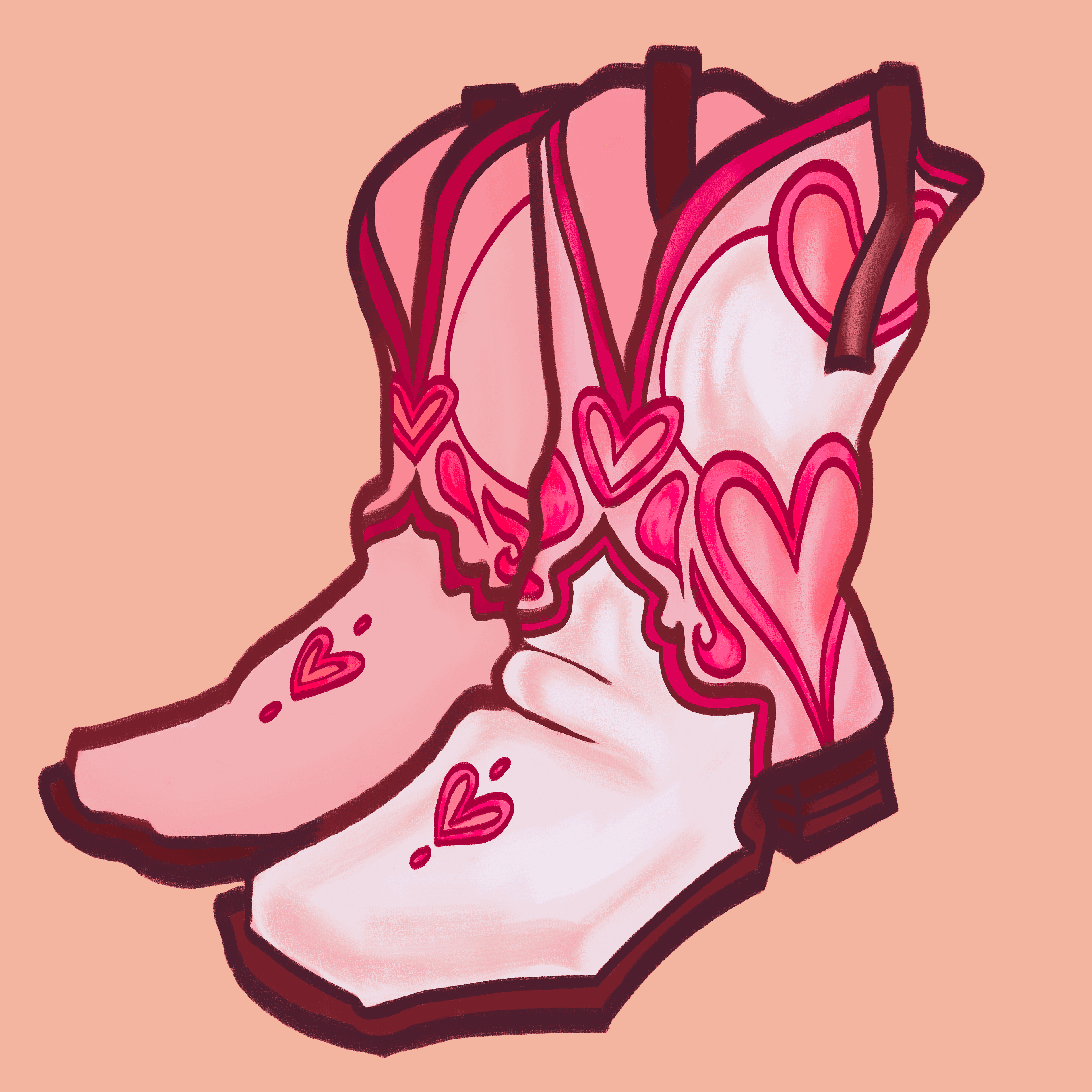
Understanding the gendered imaginings country music produces
By VIOLET ZANZOT— vmzanzot@ucdavis.edu
As the warmer season approaches, so does the inevitable desire to blast country music: the everlasting sounds of the summer. Perhaps the lyrical ease allows the twang to hang more freely in the warm air. Maybe, however, when we put on our cowboy boots and step into the sun, we should don our thinking caps too, to consider the words a little more closely.
When one seeks to author a country song, they may find themselves inclined to one or more of five common topics: boots, boobs, booze, trucks and hometown. These are the themes that make a young cowboy’s heart pitter-patter.
It’s the boobs of the matter — or more aptly, the woman who is necessary for the love story narrative so often told in country music — that requires particular examination. The story relies on set characters. The image of a good country boy shapes a good country girl to be a certain kind of thing — a reproduction of society, and yet imaginary, unrealistic.
In southern, small town or country tradition, a man meets a woman, he courts her and they fall madly in love. Importantly, each fulfils a certain, predetermined role. Morgan Wallen, Zach Bryan, Luke Combs and the many, many other artists describe this process of adoration, ensuring almost no detail goes unnoticed from being “sweet as Tennessee whiskey” to having a “body like a backroad.”
Perhaps the only detail not picked apart or wrapped in the imagery of slow, hot southern nights or fast, drunken bar scenes is that of the girl’s mind. While, of course, almost all music represents women as being not much more than their bodies (with hearts to break and mend), country music is special because it objectifies in a way that feels deeply sincere.
This type of reflection is a portrayal of the southern gentleman. Growing up in the south, it was always clear to me the kind of man a boy thinks he should grow up to be. Whether it was true that these boys would become these men or not, the ideal was to be a man that assumes a provider role for the family and cherishes the woman that he loves in an ideal and “traditional” marriage.
The norm wouldn't exist without women. There is no ideal marriage if every woman starts turning down cowboys with guitars. If you ever go to a country concert, you’ll find them to often be filled with girls and couples — and you can tell the guy is there mostly to see his girlfriend in her jean shorts and boots. So, it’s clear the women are raised to buy into the same standard. Many want to be the imagined girl the boy sings about: the one who drives him crazy, the one he protects.
It makes sense that country music reflects this learned norm — the questions I have fall along the reality of this image. Can a man really love a woman in all of her essence if he believes he ought to provide for her? Why do many women love this image even when it worships them more for their wrapping than their contents?
The dual answer I think lies in a kind of accepted capacity for men to think about women.
If, at the end of the day, you will never understand me, I’d much rather have you recognize it then feign it. If you’re not going to see me as equally whole, you might as well think I’m pretty and treat me right.
Country music obviously demonstrates that men find women to be mesmerizing, and a lot of girls love to feel pretty (can’t blame ‘em). It then builds on that to say a man should use that image to incentivise both deep passion and a controlled care (once again, can’t blame a girl for loving that).
Perhaps this is a cynical take on men in general. The full picture, I think, does begin in the development of an ideal man — strong, sturdy, surly. That ideal man already has an image of a woman. When boys are asked to grow up to be the ideal man, the image follows suit. Then the man sings about it, and the girls swoon because they want to feel pretty. I think it’s relatively simple. It’s a hot summer night, it's July, you’re just a girl, he’s just a boy and the rest you can listen to on Spotify.
Written by: Violet Zanzot— vmzanzot@ucdavis.edu
Disclaimer: The views and opinions expressed by individual columnists belong to the columnists alone and do not necessarily indicate the views and opinions held by The California Aggie.