






The Orion to my Scorpius
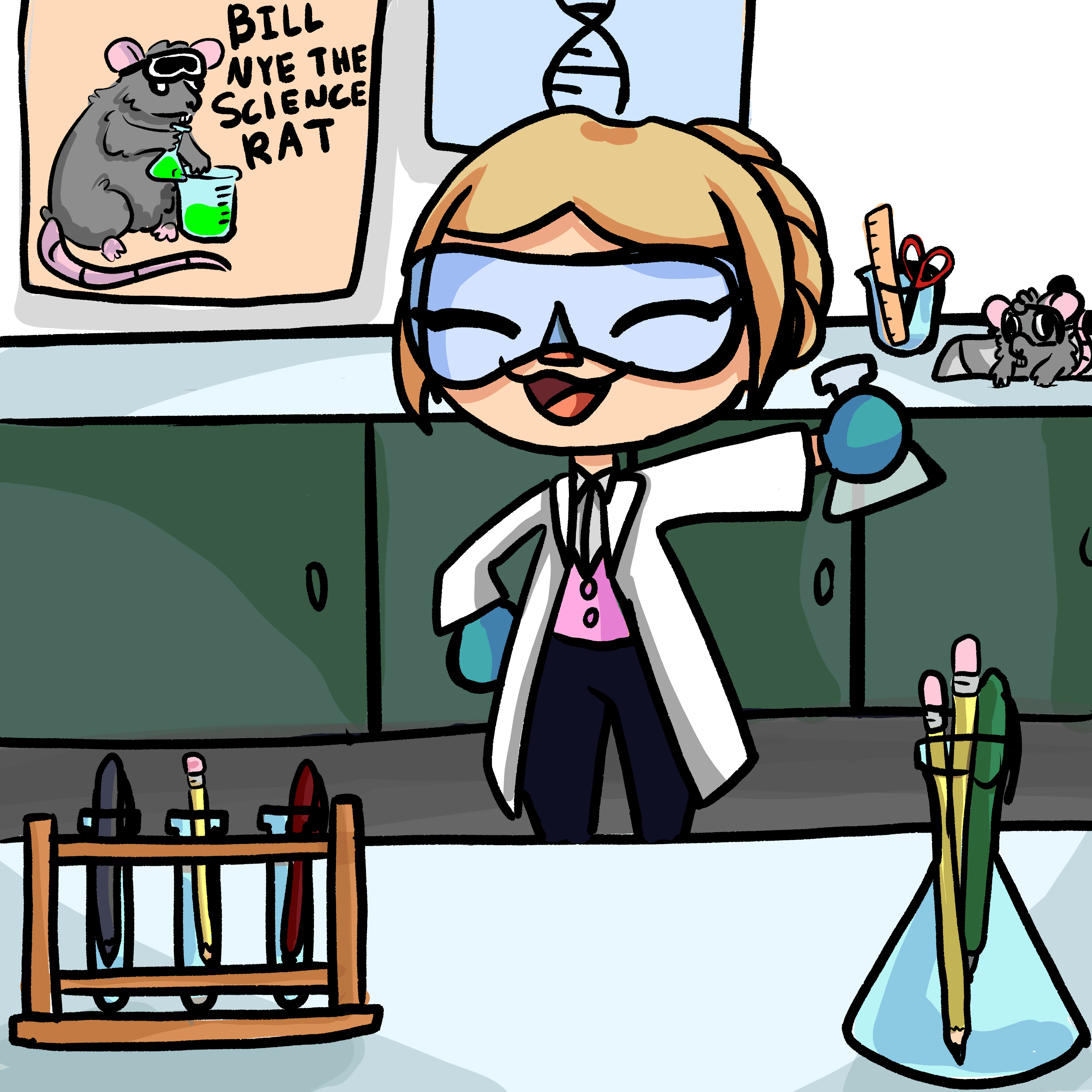
If one cannot be happy, then one must be successful
By NEVAEH KARRAKER — nakarraker@ucdavis.edu
Books collect dust on our desk, open paints dry out and an idle musical instrument falls out of tune; left within sight and within reach to spur a deep hope that one day we will return to them. A yearning for what was — a soul coalesced with art.
There’s a grief in not being able to pursue all our passions at once; some must rot like Sylvia Plath’s figs.
I used to create. Yet my career robbed me of my passions, of my soulful purpose. Because, you can’t be both; you can’t be an artist and an engineer. It used to be Science Technology Engineering Arts Mathematics (STEAM), but the “A” was dropped by higher institutions in favor of STEM — it was a child’s wish to pursue the arts, hence why STEAM only exists in our preliminary school memories.
In the act of pursuing science, we begin to slip into puddles of ego, like intensely blending complementary paints until they dull. Stemming from this is the notion that art is trivial and has no potential for a secure salary. At first, I mentally compartmentalized my experiences in the two worlds — I even created two separate resumes. Engineering employers (my major) won’t care about my creative outlets, and journalism employers (my hobby) might think I’m not dedicated to the arts if I mention my engineering degree. I would seem more professional and impressive if I catered to others in my field.
And yet, it’s these exact thoughts — and accordingly, the actions — that further separate the arts from the sciences. Once you study enough of one medium, you start to fuse with it. The engineering brain is pure problem-solving; thinking in process-flow diagrams, metrics and experiment outlines. Some things that I’ve noticed that most engineers lack, though, are people skills: artistic creativity and literary expertise — abilities that may come more naturally to humanities majors.
And unknowingly, I began to approach job interviews and academics in a rather unconventional way; through storytelling. I wanted to bridge the gap between my hobbies and career for one cosmic passion. Journalism, to my surprise, actually enhanced my capabilities as an engineer, and vice versa. My writing is subjected to flow charts to affix a steady stream of thought, while my research presentations contain that certain newspaper flair — catering to an audience, mind mapping and harnessing words to ensnare crowds.
We need to be honest and openly discuss the things that we love. These commodities should so obviously pour out of us that it inspires others to pick up their passions and to chase their ambitions. And it’s this trait that will make us attractive to employers and enable us to academically thrive.
We limit ourselves when we isolate our identities. That’s where most higher institutions go wrong; universities pigeonhole students into a one-track mindset to create a master of one — the marker of success. There, it’s stigmatized to dabble in more than one path, which is why only those who are close-minded are accepted. Yet, two things can be true at the same time: a human is not either an artist or scientist, but a culmination of experiences and passions.
The arts and science may be two opposites, like protons and electrons, but without them being oppositely charged, they would not be able to form the basis of all matter. It's the contingent dilemma of order versus chaos that pushes creative innovation in all aspects and fields.
Take astronomy: while theoretical physicists have devised countless coordinate systems and calculations that explain the Sun’s trajectory, it originated from our creativity as humans through noticed patterns — art — in the form of illustrated constellations. These stars, both undoubtedly beautiful and mathematical, assisted in navigation for centuries, just like how our desire to create (whether that’s research or a painting) drives us forward. We may only see these constellations when we gaze up at the sky rather than through the ground — a solidified, logical barrier between horizon and sky, between mind and heart — but they reside all around us, both science and art; a full three-dimensional, 360 pathway.
We just have to notice.
Written by: Nevaeh Karraker—nakarraker@ucdavis.edu
Disclaimer: The views and opinions expressed by individual columnists belong to the columnists alone and do not necessarily indicate the views and opinions held by The California Aggie.