






There’s no such thing as bad publicity
‘Love Story’ reminds us that romance sells
By ABHINAYA KASAGANI — akasagani@ucdavis.edu
For the past two months, the Internet has been saturated with edits and scathing op-eds of Ryan Murphy’s limited series “Love Story.” Focused largely on the entanglement between John F. Kennedy Jr. and Carolyn Bessette (rather than their individual professional achievements), the show invokes a rather significant moment in the cultural zeitgeist.
This recent cultural fascination with such a dramatic retelling suggests a larger desire for the nostalgia of the late 1990s. It also marks a renewed and demanding societal inclination for access to public life — the publicization of the spectacle. Tracking the intimate lives of two individuals whose relationship was strained by public scrutiny — remaining unhappy until they met their death in 1999 — is ironic. Yet, audiences gravitated toward displays of power, access and tragedy, despite knowing that it all came at the expense of the public figures themselves.
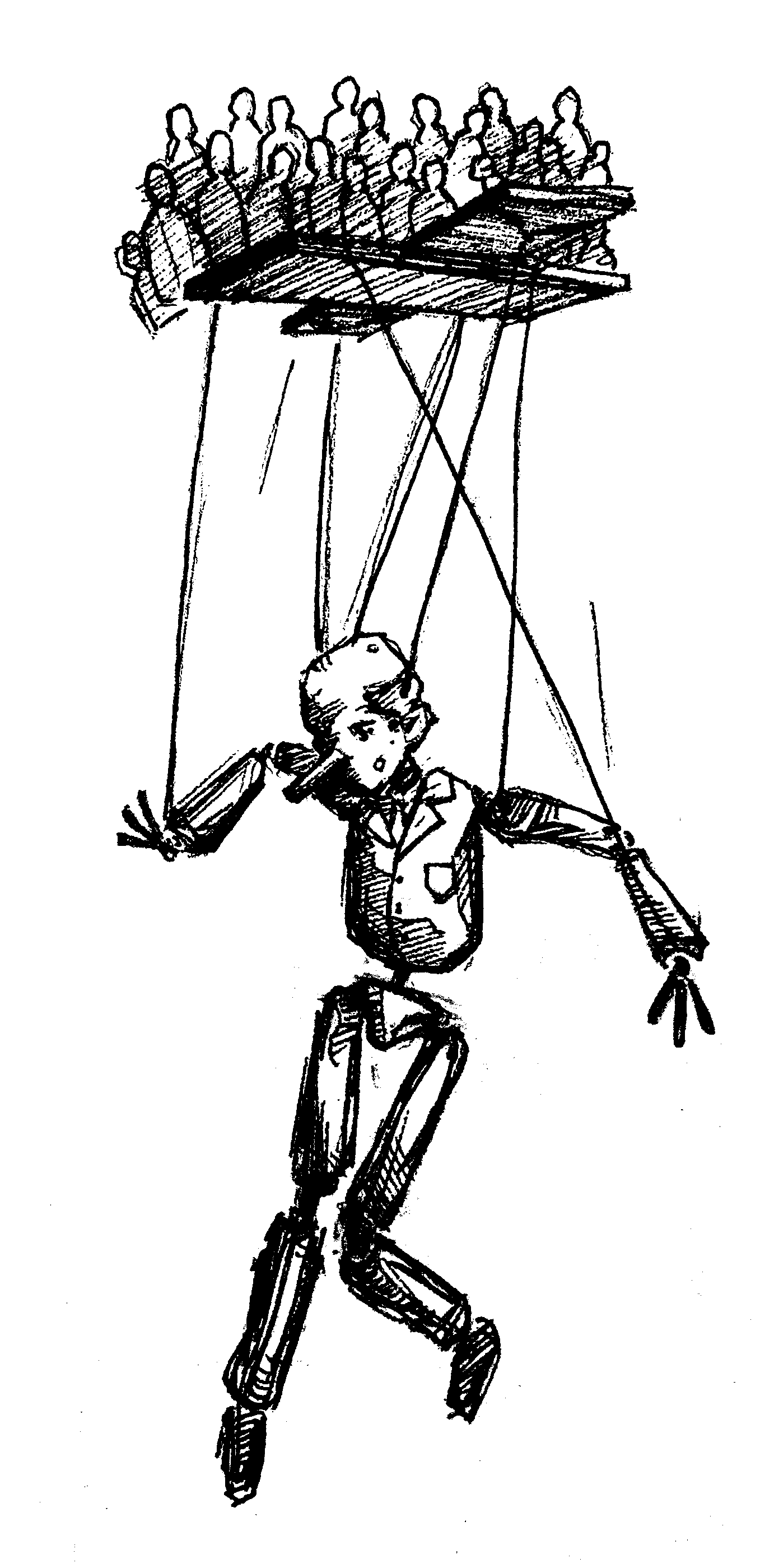
Some audiences go further, claiming a kind of ownership over these figures, misguidedly suggesting that an inclination toward visibility is a choice and is therefore consensual — that any desire for publicity excludes them from all aspects of privacy. In “Love Story,” specifically, the portrayal of Kennedy Jr’s success (or potential for governance) is not what the plot hinges on; rather, the focus is on the celebrity he embodied as 1988’s Sexiest Man Alive. As a collective, we have veered toward the idolization of our political figures, making it so that everyone is consumable. In order to make a name for oneself within history, one is pointed toward the spectacle.
The success of “Love Story” lies in its inflation, regardless of whether the critical response is positive or not. This is emblematic of ways in which the spectacle is becoming increasingly prioritized in modern-day politics. Political figures are largely known not for their policies or political competence, but for their charisma.
Ironically, Bessette worked in public relations before she married Kennedy Jr. She recognized early that the invasion of her life would end in the collapse of their privacy, and their entanglement would be scrutinized to the extent that it would no longer remain hers. The media coverage at the time exacerbated this invasion, uplifting image and narrative first and foremost, favoring visible and public outbursts and conflicts over actionable policy. The public’s enthusiasm for such productions is not curbed by the figures’ disinterest in being part of the production. The idolization of Bessette is exactly the kind of thing she would’ve bemoaned.
Still, times have changed. Maybe the Internet is no longer rife with photographs of Paris Hilton climbing the gate of her private mansion, nor of paparazzi pictures of her driving with Britney Spears and Lindsay Lohan. However, the aesthetics of spectacle have reigned nonetheless.
The public’s reception of “Love Story” only proves this. If we consume our stars as spectacles, attributing to them characteristics of actors on stage, we fail to judge them through the appropriate lens, disregarding political accountability in meaningful ways. Scandals are trivialized not due to ethical failures on the part of their celebrities, but because of their stark lack of charisma.
Our emotional investment in the lives of others limits us from ever investing in our own lives, needs and rights, leading us to develop parasocial relationships with these public figures and complicating our ability to hold them truly accountable. We can go so far as to say that spectacle not only distracts from accountability but actively compromises it — we become unreliable narrators.
The enduring appeal of such spectacle is further amplified by our current relationship with social media. Platforms like these reward virality and influence what news outlets prioritize. News cycles, which are curated by public demand, then become largely interested in incentivizing their audiences by giving them what they outwardly want. While advantageous for political figures and disadvantageous to the long-term interests of the public, this also risks diminishing the efforts of public figures looking to engineer change.
Ultimately, the rising popularity of “Love Story” reflects the extent to which we have fully forsaken responsibility as a collective, shifting toward accommodating those who continue to feed into the spectacle. We become quickly upset by those who limit our access to them, claiming that they are trying to deceive us. Finding our way back to prioritizing power instead of performance would allow us to critically evaluate those who hold office and address their deficiencies with more clarity. Otherwise, we will continue to deceive ourselves, feeding off entertainment until we become a spectacle of ridicule.
Written by: Abhinaya Kasagani— akasagani@ucdavis.edu
Disclaimer: The views and opinions expressed by individual columnists belong to the columnists alone and do not necessarily indicate the views and opinions held by The California Aggie.