






UC Davis celebrates 50th Annual Powwow with Indigenous culture and community
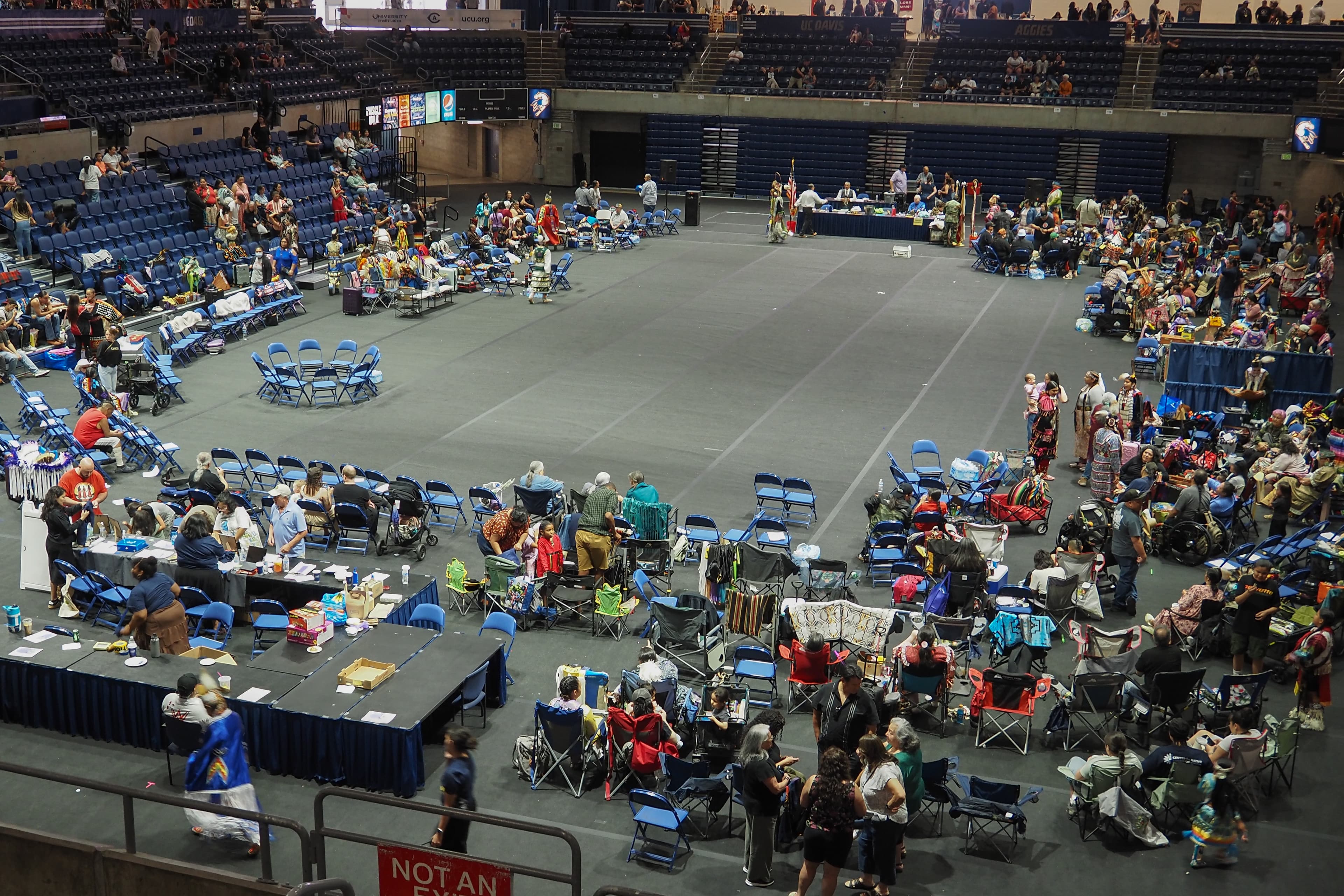
Students, vendors and visitors gathered for a milestone intertribal event
By IQRA AHMAD — arts@theaggie.org
On Apr. 4, UC Davis, through the Cross Cultural Center (CCC) and the Powwow Committee composed of native students, staff and faculty, hosted its 50th Annual UC Davis Powwow. This event marked a significant milestone as one of the longest-running student-organized Powwows in the country. The event was first held in 1969, hosted in collaboration with the Native American Studies Department to celebrate Indigenous cultures and traditions, as well as provide a space for learning and participation.
The event brought together Indigenous students, community members and visitors from across California in a space of cultural celebration, education and connection among attendees. The event occurred a day after the first Inaugural Big Time, which was hosted by the American Indian Recruitment & Retention (AIRR), Native Dads Network, the Nest and the CCC. Head staff gifts were sourced from the Gorman Museum of Native American Art to support the museum and indigenous vendors.
Held at the University Credit Union Center, the Powwow transformed the space into a gathering filled with music, dance, art and ceremony. Attendees of all ages moved through the venue: families with young children, students, elders and vendors.
For many involved in organizing the Powwow, the event represented a collaborative effort among staff and volunteers, rooted in community engagement and care. The Native American Student Union (NASU) tabled at the event to fundraise for senior grad blankets through community-member-donated crafts and food.
“We have a lot of hands on deck, and I was very happy with the volunteer turnout today,” Ruthy McGaffee, a third-year Native American Studies and sociology double major from Lenca de Yucuaiquin, said. “We have a bunch of busy bees hustling and bustling, helping the vendors set up and making sure everything is nice and orderly.”
This sentiment of engagement and community was shared by other attendees.
“It’s great to see the amount of vendors that came and to hear all of the deep personal stories that all of the vendors have shared with me,” Native American Student Union (NASU) Co-President Kaitlyn Deem, a fifth-year psychology major from the Cherokee nation and Choctaw nation, said. “It’s one of my favorite things about Powwow. There’s always growth that happens, you always learn something culturally significant to a tribe and every time you go, you gain community and grow in it.”
Throughout the day, dancers in colorful regalia filled the center, representing a range of Indigenous nationals from across the United States. and Canada. The intertribal nature of Powwow allowed for diverse traditions to be shared in one space.
“Powwow tends to be more intertribal," McGaffee said. “We get to see a lot of that community and the different nations that we have here in the U.S. and Canada. There’s different ceremonial dances which are beautiful. Seeing everyone in their regalia and the young ones running around is so nice to see.”
Youth performances were among the most meaningful moments for many attendees.
“The tiny tots are always great to see,” Deem said. “It’s always wonderful seeing young children who are so immersed in their culture already, seeing that being passed down is vital to the community in many ways. Whenever we have youth performances, it makes me feel really secure.”
Beyond performances, rows of vendors offered handmade items such as earrings, beadwork, leather work, dreamcatchers, blankets and more. Many of these pieces carried personal stories tied to family and tradition.
“My son used to dance when he was younger and I would make his regalia and I would make it for family members,” Desiree Belone, a vendor and owner of Juniper Breeze from the Navajo nation, said. “I just wanted to be able to navigate my own business and show appreciation and show my offer to my community.”
While the Powwow is a celebration, participants emphasized its significance beyond festivity. For many, it represents an active form of cultural recognition and participation on campus.
“When people do land acknowledgements, it becomes a performative thing if you’re not actively going out of your way to acknowledge the people and their presence here,” McGaffee said. “It’s about what more can be done. Having more acknowledgement in the way of activity instead of just verbal is the best way to go about it.”
Deem similarly emphasized the importance of gathering as a form of cultural strength and also resilience.
“We come together into a Powwow as a celebration of active resistance,” Deem said. “To be able to come together and even just say, ‘Yes, we’re going to have a Powwow’ is powerful. Not only are you able to come together, but you’re able to be powerful as a community. We’re celebrating our power.”
For vendors, the event also served as an opportunity for education and visibility. Chantale Doyle, owner of LUZ Collection, a diasporic Cree person raised in coast Salish territory and a descendent of the Cowesses First Nation in Canada, shared that Powwows allow larger audiences to better understand Indigenous communities.
“It’s really important to me personally for non-native people to see that we’re still here, and we’re still thriving and we’re still practicing our culture,” Doyle said.
Powwows today bring people together from many tribal nations, which fosters a shared space for cultural exchange while honoring distinct traditions and practices. Doyle described the sense of community that defines these gatherings.
“You have a Powwow community — everybody’s always welcoming and looking out for each other,” Doyle said. “It’s always nice to see and witness the way different tribes practice their culture, for people to see that the native people of the Americas, that we, are not a monolith.”
For many attendees, the event offered more than just performances or vendors; it also provided a sense of belonging.
“Being in a community in Powwow is more than just celebrating — my experience with Powwow is here, with my community,” Deem said.
As the UC Davis Annual Powwow marked its 50th year, the event stood as a testament to resilience and the continuing importance of Indigenous spaces on campus and beyond.
Written by: Iqra Ahmad — arts@theaggie.org