






Student designer Giang Ta to debut ‘Gin and Giang’ at FADS Picnic Day 2026 fashion show
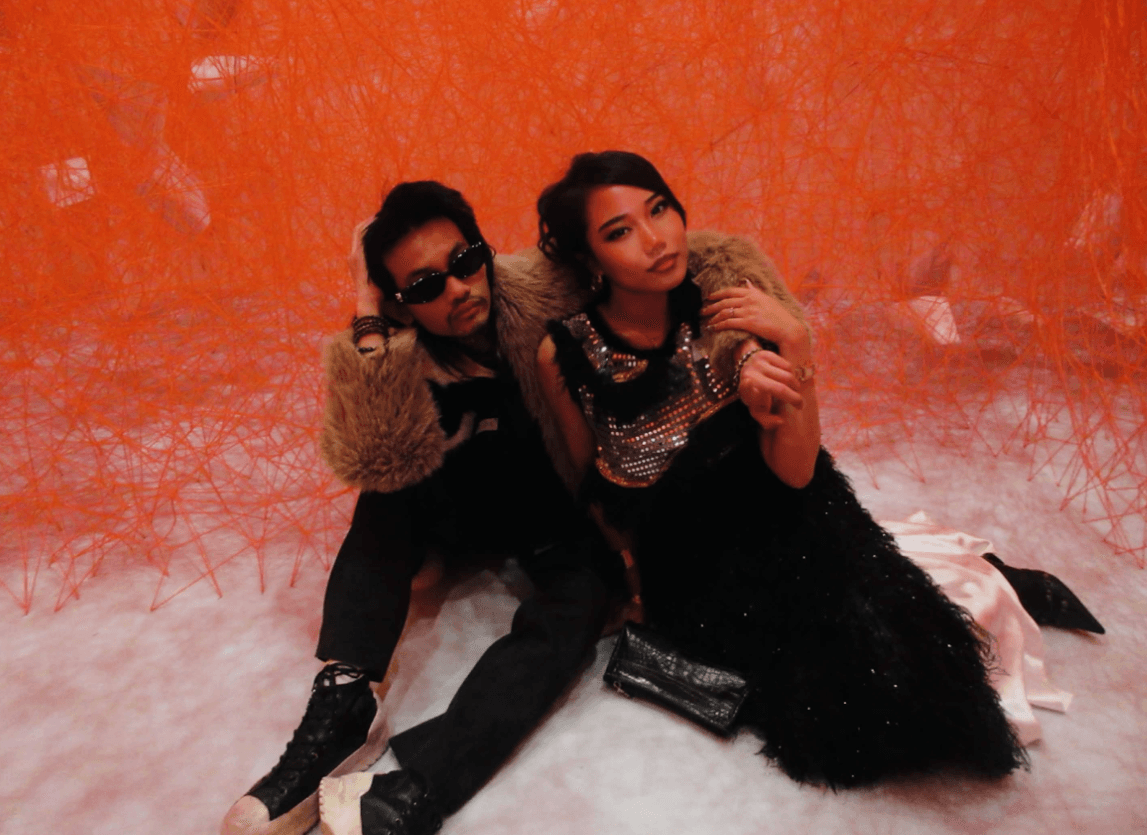
Giang Ta uses fashion to challenge the ‘model minority’ narrative and redefine diasporic Asian American identity
By IQRA AHMAD — arts@theaggie.org
On April 18, at the 112th Picnic Day, a new name in student design will take the stage. At the Cruess Hall Courtyard, the UC Davis Fashion and Design Society (FADS) will present "Laced in Reverie" at its annual fashion show. With two shows taking place at 11 a.m. and 1 p.m., the event will spotlight eight undergraduate students’ signature collections.
Among them is “Gin and Giang,” a brand that, for its co-founder Giang Ta, a fourth-year design major, is far more than fashion: It is a mission. Ta positions “Gin and Giang” as a critique of the “model minority” stereotype, a label he openly rejected.
“In a time when the voices of our marginalized communities are getting increasingly silenced, the calling is upon us,” Ta said. “We, as a community, cannot continue staying submissive and obedient about the injustices happening to our friends and family who live with us in the same dark corners of America. We, the people, must push to bring about the culmination of our cultures into an enlightened union; to become a culture that celebrates not only our lives, but our liberties and the pursuit of our happiness.”
Born out of lived experience, cultural reflection and relentless ambition, the collection challenges what it means to exist as an Asian American creative today, according to Ta.
The origins of “Gin and Giang” are inseparable from Ta’s personal story. He discussed being raised in an environment where expectations were limited and opportunities were scarce, speaking about how survival often took precedence over dreaming. Today, that experience is what fuels Ta’s work.
“Growing up, we [my community] were constantly reinforced with the idea that we would never amount to anything, that we are simply bad apples,” Ta said. “Obviously, we carried a sense of guilt while we did what was necessary to survive. A part of my mission is about proving to my community that we can find the liberty to separate ourselves from the stains in our name, that we are not defined by current perceptions but by our ambitions and ability to grow from it.”
Ta shared that this growth allowed for the development of his brand to flourish beyond his initial expectations.
“If we could flip that narrative, that’s how we’d be able to push past these boundaries,” Ta said. “I wanted to prove to everybody that it was possible — that it is possible. If I could do it, anybody could.”
The brand’s name itself, “Gin and Giang,” reflects its duality and echoes the philosophy of yin and yang. Ta shared that it represents the contrast of tradition and modernity, as well as pain and possibility: themes that run throughout his work. His pieces are primarily black and white, visually embodying this tension.
“I think what I really try to represent is contrast,” Ta said. “Contrast between the norm and what could be, between contemporary and tradition. I’ve always been obsessed with the idea of yin and yang as a general symbol. It teaches me a lot about the ways of life and how I should be channeling my inner self to reflect what I want to be in the world.”
Ta discussed that his interpretation of fashion and design has allowed him to push through and beyond barriers.
“I wanted to apply my understanding of designing fashion and fashion's need to constantly iterate to the idea of this brand; what we represent here at ‘Gin and Giang’ is a break in the cycle,” Ta said.
Throughout the collection, Ta incorporates accents of red: an intentional and symbolic choice.
“Red is definitely a strong push towards that motivation,” Ta said. “I use a lot of red in my work because I want your eyes to be on it right away. Red is the fastest color in the color spectrum, so anywhere you look, you’ll always see the color red first before anything.”
He shared that this element of red is not only important in terms of attracting attention, but also for emphasizing his mission and work.
“Using red as an accent color brings your attention to the world of ‘Gin and Giang.’” Ta said. “It also brings a connotation of pain, life and ambition, all of which are values I find to be prevalent in the making of this collection.”
At its core, “Gin and Giang” seeks to represent Asian American identity as visible and evolving.
“My aim is to redefine diasporic Asian American culture and make the world aware of our creative capabilities,” Ta said.
Ta’s debut collection draws from a recent trip to Vietnam, where he shared how he created one of his signature pieces: a handcrafted lion dance costume.
“I built this lion with a team of artisans, brought it back and deconstructed it to use as fabric for this collection, tying my family’s support to my passion and my life’s mission in starting ‘Gin and Giang,’” Ta said.
His experience inspired the collection’s central motif: the lion dance. The lion became a metaphor for presence and a demand for attention, according to Ta.
“When I came back, I was thinking about the chaos and the beauty of it all and what could represent that in the best way, and I think that the lion dance definitely does,” Ta said. “The lion literally becomes the moment that you can't take your eyes out of because of how flashy it is, how the music is, how much energy there is in the entire performance. That's exactly the moment that I wanted to replicate.”
Ta’s journey into fashion has been anything but conventional. As a first-year student, Ta recalled a professor saying he did not belong in one of his design courses.
"In my first quarter of college, I took Design 077 [Introduction to Structural Design for Fashion],” Ta said. “My professor told me to quit. She said that I was not the person for this class and that I should save myself all the trouble of ever trying to explore this because it would be hell. I passed with a C-minus.”
Despite this discouragement and struggle throughout the course, Ta persevered and learned far more about the course, himself and his vision for the brand.
“That moment gave me a sliver of hope in the dream of being a fashion designer, because I really took nothing and turned it into something,” Ta said. “Such is the power in creativity, and your skill in upholding such a trait should speak to how you are as a designer.”
Now, with his debut collection approaching, Ta said he does not see this as a culmination of his education; rather, he sees it as a starting point.
“I have fundamental flaws as a designer, I think all of us do in our own ways,” Ta said. “Being able to accept that has helped me focus on the mission of building this world; fashion is simply what we use to communicate this idea. Understanding that has helped me flip the narrative to say that this is simply the beginning. It’s not about how all roads lead to Rome, it’s about starting at Rome.”
While the debut at Picnic Day will mark a major milestone for Ta, his ambitions extend far beyond a single show. He envisions “Gin and Giang” becoming a cultural symbol — something recognizable, wearable and meaningful within the Asian American community and beyond.
“I really do want them to feel like they made it out as an Asian American,” Ta said. “The dream for me always was to be able to afford expensive clothes that represent my culture, that are also accessible to Asian Americans. When you buy this ‘Gin and Giang’ piece, you want it to feel like the start of the new you — the you that is ready to explore what it means to be Asian American in modern times, the you that is representative of the ‘Gin and Giang’ symbol and the break of the cycle.”
What began as an idea shaped by identity, struggle and vision is now stepping into public view. If Ta’s words are any indication, this is only the first chapter.
“One day, ‘Gin and Giang’ will be something,” Ta said. “And you read it here first.”
Written by: Iqra Ahmad — arts@theaggie.org