






Are we going backwards (again)?
Gen Z is constantly missing the point
By ABHINAYA KASAGANI — akasagani@ucdavis.edu
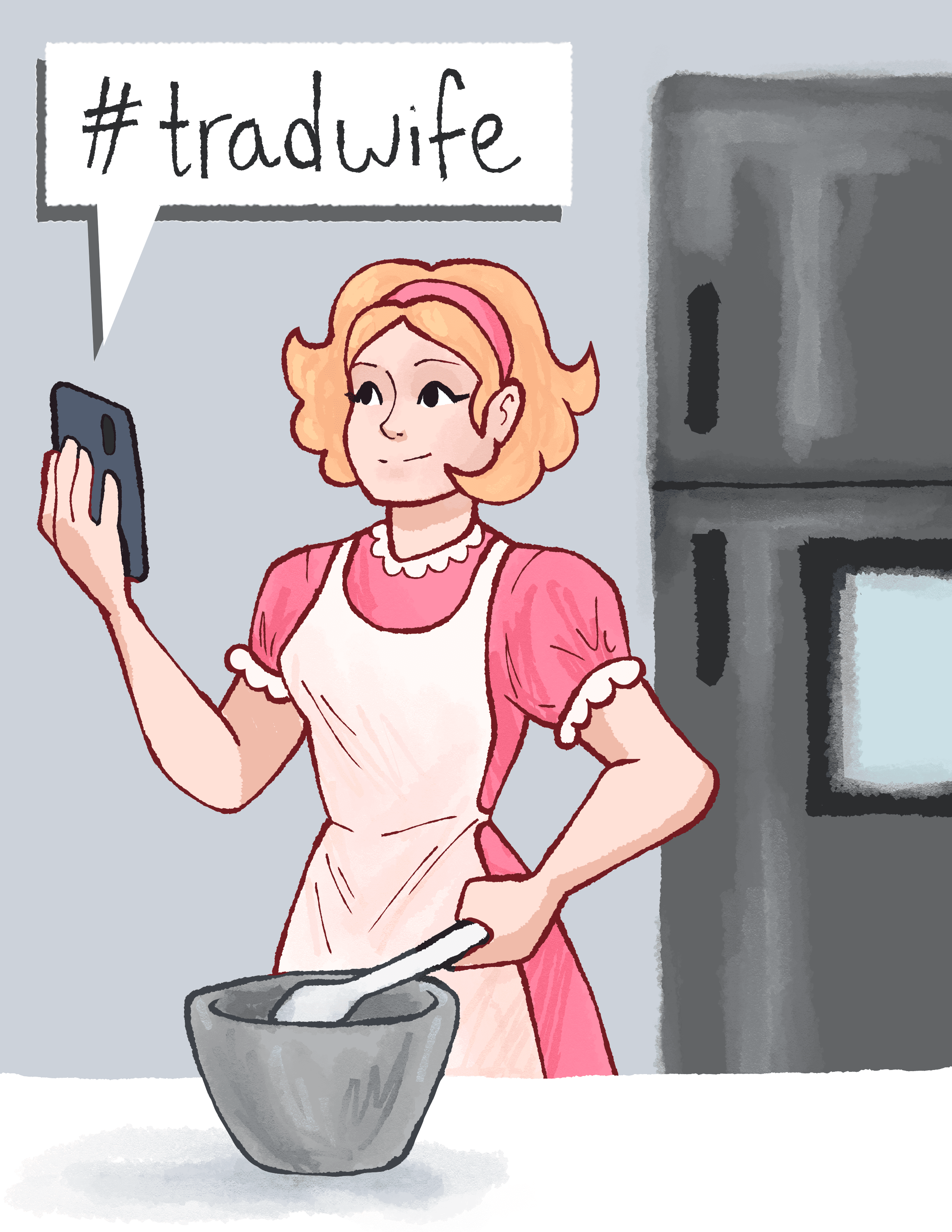
I recently stumbled upon Esquire Today’s article, “Whoa, Gen Z Guys, Are You Okay?” while having a conversation about reproductive regulation in the early 1910s and how women were previously dismissed from having any agency over their bodies. The global survey in the article notes that the way Gen Z men believe women should be treated has alarmingly started to resemble traditional sentiments. While most are under the assumption that Gen Z is inherently more progressive than their predecessors, survey results show that — despite being the most digitally, politically and socially aware generation — the growing divide between men and women has resulted in a complete reversal of progressive gender views.
According to the study — the stats for which are honestly upsetting — most Gen Z men believe that women should be relegated to the household, a proportion which has increased by 10% in recent years. This calls back to previous sentiments on the designation of “Separate Spheres” for men and women (i.e., the idea that while men serve as the breadwinners of the household, women simply serve). The article states that 31% of Gen Z men agree that “a wife should always obey her husband.” On the other hand, 21% of those same men believe that “a real woman should never initiate sex.” The irony of this shift is not simply the generation’s regressive ideologies, but their previous vilification of millennials, Gen X and boomers who shared these sentiments.
Born amidst a broader cultural moment where it has become acceptable to regulate women’s bodies — with the overturning of Roe v. Wade almost 50 years after the Supreme Court recognized abortion as a constitutional right — this divide makes particularly evident the extent to which women’s rights have grown increasingly contested. Influenced by online subcultures that advocate for the valorization of traditional masculinity, we have returned to the original rhetoric which positioned women as subordinate to men and dependent on them; 57% of Gen Z men agree that “women’s rights have gone too far — to the point that men are being discriminated against,” according to the survey.
While it is not shocking that the Internet has nurtured reactionary and regressive ideologies (especially when one considers how Andrew Tate, Candace Owens and Joe Rogan leveraged their podcasts to promote these outdated talking points), algorithms have continually validated male resentment toward women. As women remain able to advocate for themselves in ways they couldn’t previously — gaining visibility in the workforce and other public spheres — some men have begun to feel displaced. The appeal of traditional values is largely found in the opportunity for men to reclaim their supposed status and stability.
Growing up in economic uncertainty has only widened this divide. Most people have jumped on the age-old white-picket-fence bandwagon that prioritizes domesticity structured around public and private demarcations to regulate members of the household. Despite this being an unwanted adjustment for women, men appreciate the sense of order derived from it. Women do not seem to appreciate the nostalgia with which men are operating, and are unaware of how men have begun to claim ownership over women's bodies in largely regressive ways.
This divide cannot simply be chalked up to a difference in opinion; it also reflects several other conversations and anxieties about identity, social status and power.
The implications of catering to such opposite belief systems are many — for one, this requires a shared understanding of social rights and an examination of why we believe what we do. It also necessitates an understanding of how our social and digital environments influence our behaviors. By recognizing how we have been going more backward than forward, we can reevaluate what has motivated this shift toward conservative value systems and address how progress can help redefine them. Otherwise, we will ultimately cater to an inequitable system that attempts to regulate women’s rights and bodies, the center of which will not hold.
Written by: Abhinaya Kasagani— akasagani@ucdavis.edu
Disclaimer: The views and opinions expressed by individual columnists belong to the columnists alone and do not necessarily indicate the views and opinions held by The California Aggie.