






How can you not be romantic about baseball?
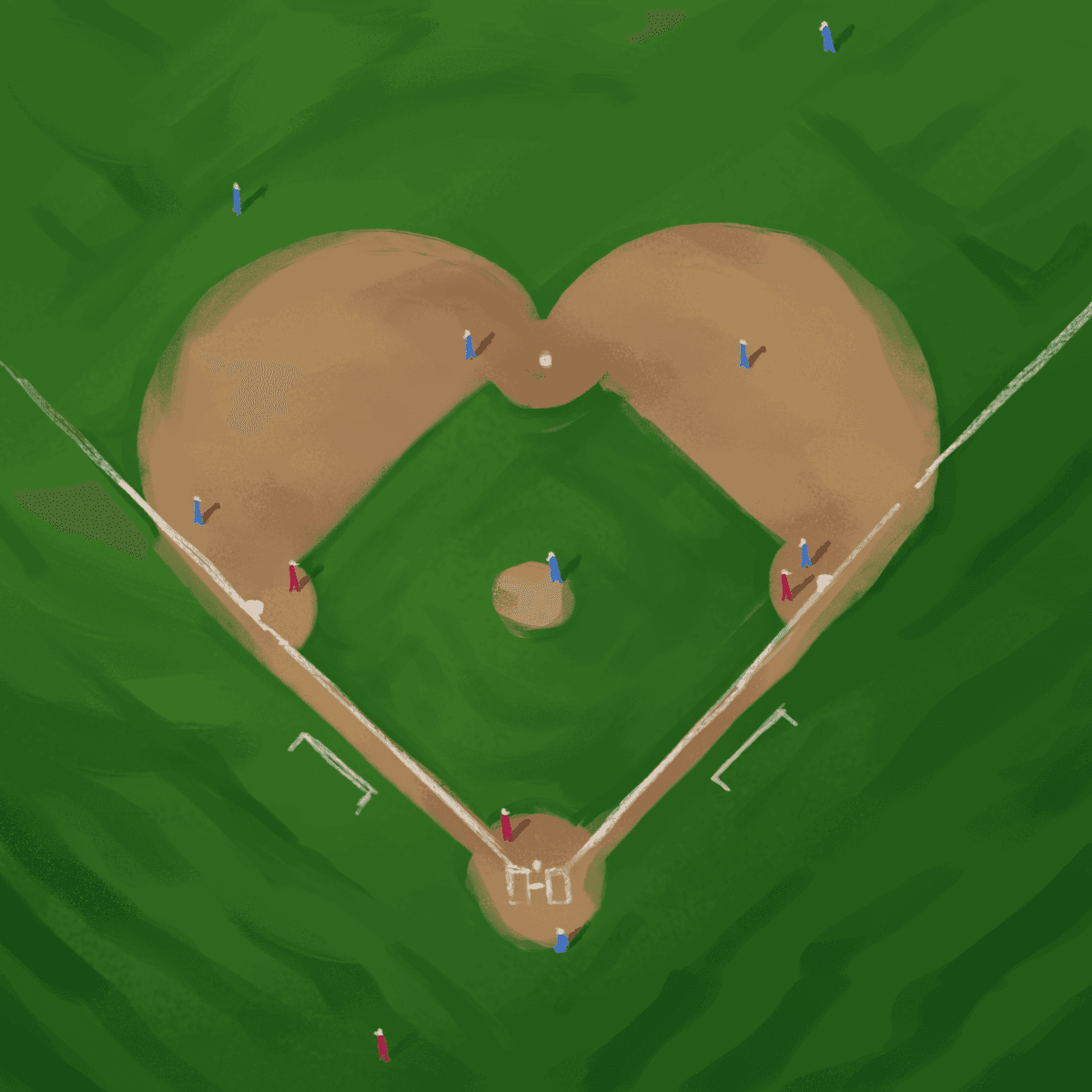
A pitch for skeptics
By MADISON SEEMAN— meseeman@ucdavis.edu
The echoing crack of wood on leather, the drone of a hot dog man who has practiced his call for decades, perfectly manicured green lawns against city skylines; with the end of March came Major League Baseball (MLB)’s Opening Day, a nationwide celebration of the start of a 162-game season.
I spent the day in Seattle, Wash., where I was met with the Seattle Mariners logo on jerseys, T-shirts and storefront windows. I spent the whole day ending interactions with “Go Mariners” (even though I’m a Chicago Cubs fan) and reveling in the joy of a city community so in love with their team.
I think baseball is incredibly romantic. Haters will tell you it's boring. It’s possible neither of us are wrong — there’s a lot that can fit into a game that is often nearly three hours long.
Complaints of boredom often orbit around the game's controversially unhurried pacing — baseball is slow! Even the players aren’t unaffected by an abundance of downtime; it’s built into the culture. Chewing gum, playing pranks, performing rituals: hardcore fans recognize that it’s in these long stretches of downtime that the culture of baseball really blossoms.
That said, baseball is changing. In response to complaints about pacing, MLB introduced pitch clocks to speed up the game. Olivia Avaiusini, a fourth-year science and technology studies major and Mariners fan, believes fans weren’t as pleased as you might expect.
“The pitch clock gets the game going, which is fun. But it takes the romance out of wasting time around the stadium. I miss all of the little games,” Avaiusini said.
Baseball — a sport which thrives in the dog days of summer, full of open time, space and sky for reflection — admittedly struggles in the increasingly fast-paced future we’ve found ourselves in. What was once “America’s Pastime” is now a memorial of past times, but baseball is charmingly sentimental about its rich history.
Baseball’s history is inseparable from great wars, the civil rights movement and more. Boston’s Fenway Park and Chicago’s Wrigley Field are each more than a century old, but you can still sit in (somewhat uncomfortable) seating built before the invention of the cheeseburger and grab a hot dog (with no ketchup, if you’re at Wrigley).
Baseball preserves its history, old parks, uniforms and mascots that have barely aged over the decades. And in the age of digital recordings, there is still a live organ player at each park orchestrating and commiserating with the crowd. Baseball radio, in which the dying medium discusses a sport with dwindling numbers, remains active and delightfully random — there is no end to the creativity announcers use to fill the time.
Baseball players are also comedically religious about pleasing the baseball gods. Rituals involving a lucky necklace, wearing hats wrong or reusing chewing gum are performed without shame, in hopes players can will that pitch just to the right, have an extra slippery glove or that there will be a perfectly placed outfield pigeon.
Fans follow suit. Half the joy of going to a game is sitting in a cathedral of civic pride and listening to fans talk about the game like its magic, wearing their lucky socks in hope it might bring their team closer to winning “The Pennant.”
Really, the most romantic thing about baseball is the fans. Individuals become one organism as the crowd boos and cheers in unison; strangers become friends as they watch their team let them down (again) and anyone brave enough to wear the away team’s jersey knows to expect mostly playful jabs. Mostly.
It’s one of the richest forms of civic pride. The Cincinnati Reds hold an annual Opening Day Parade, and whichever city wins the World Series (usually not the Reds) spends the following week in a state of mass euphoria, throwing parades and honking at passerbys wearing the right merch. Even baseball skeptics will wear the symbols of their city’s team — a sign that they are from the city home to the Cubs, the Pirates, the Dodgers (and then, of course, some posers will wear the merch of other cities).
And baseball is quirky! Pigeons and praying mantises can be just as much outfielders as Shohei Ohtani. You can eat ice cream out of a hat, buy $1 hot dogs or $18 beers. The mascots are goofy and sometimes even married (like New York’s It couple, Mr. & Mrs. Met). And there’s not a rainy game without the side plot of watching the greensmen go down one by one as they roll up the giant weather tarp. Every field has a slightly different build and slightly different rules — the ball game celebrates individualism, the weirdness only a game this leisurely can build up.
Sometimes baseball isn’t really about baseball at all. Mostly, it’s just something I can’t explain — you just have to go to a game. So check out the Athletics or the San Francisco Giants and enjoy a sunset on the water to the soundtrack of America’s past time.
Written by: Madison Seeman— meseeman@ucdavis.edu
Disclaimer: The views and opinions expressed by individual columnists belong to the columnists alone and do not necessarily indicate the views and opinions held by The California Aggie.