






Best general education (GE) course: GSW 050: Introduction to Critical Gender Studies
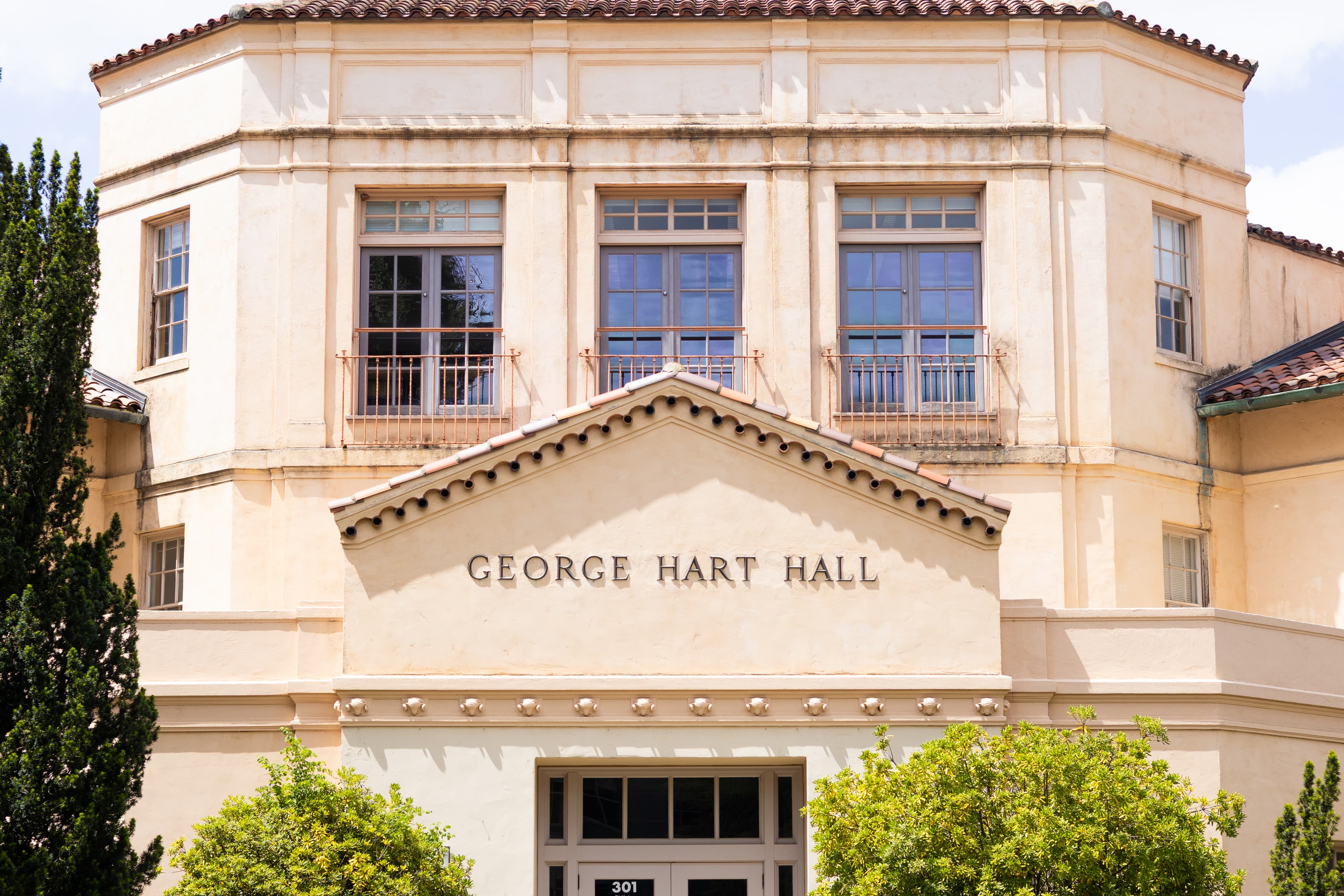
GSW 050 professors discuss the significance of gender studies at UC Davis
By LAILA AZHAR — features@theaggie.org
This year, UC Davis students voted “GSW 050: Introduction to Critical Gender Studies” as the 2026 Best General Education (GE) Course. Professor Julietta Hua, who teaches in the UC Davis Gender, Sexuality and Women’s Studies Department and will be teaching GSW 050 in fall 2026, described the academic field and its importance.
“Gender studies is about understanding how gender and sexuality come to have meaning,” Hua said. “Not just individual meaning, but social, political meaning that is also intersecting with meanings around citizenship, race, religion, ethnicity, ability.”
GSW 050 covers both historical and contemporary issues, according to Hua.
“I would say the main point is to think about how to think outside of the gender binary and then also how to think about gender as something that’s always making meaning alongside race and ability and nationality in the United States,” Hua said. “So it’s a little bit historical, a little bit topical.”
Professor in the Women’s Studies Department Sarah Thompson, who is teaching the class this quarter, echoed this sentiment.
“We look at some stuff from the 1800s and we also look at stuff that was published much more recently,” Thompson said. “We look at things that are really personal pieces — people just speaking about their own experience — and we also look at sociological data that we can point to and bring all together as a way to think about how we live and how we live together.”
Each instructor adds their own flair to the course. Professor Christoph Hanssmann, for example, has taught classes about the “manosphere”: a term referring to a collection of online communities promoting male-supremacist ideologies. Hua has focused on how sex is constructed within sports. Thompson cited disability studies and discussions of sex and sexuality as two of her favorite topics within the course.
“I always love bringing in disability studies in feminism, because for people who don’t experience discrimination based on ability, there’s often a lot of misconceptions,” Thompson said. “I also always really enjoy conversations about sex and sexuality [...] We internalize [cultural ideas] to the degree that we’re taking these [concepts] into intimate situations where just us and one other person are in a room, but so are all of the cultural ideas.”
Other topics the course has covered include labor politics and reproductive justice.
“Right now, we’re in a section of the syllabus I think of as the standpoints section,” Thompson said. “It’s about this idea that all knowledge comes from somewhere, and it’s shaped by who you are, your social existence and how you move through the world — the way you move through the world shapes how you perceive the world. Part of the idea is that nobody has a totally objective view of reality and that in order to have fuller conversations, we need to listen to people who are coming from different places.”
This emphasis on a lack of a single, objective reality is at odds with a common misconception about gender studies. As Hua noted, gender studies and related fields reject the notion that there is one correct objective reality.
“I definitely think there’s a mainstream perception that it’s a space of indoctrination — that we only teach one way of understanding the world — and I would say that’s very not true,” Hua said. “Gender studies, ethnic studies: where they started was the problem of a singular view. And so, it’s really committed to having very nuanced, complex viewpoints on how to understand what’s going on around us.”
Hua continued, emphasizing critical thinking over shared opinions.
“Even if you’re not reading the assigned reading in the way that I would read it, that’s not how I grade,” Hua said. “I think gender studies is really about cultivating critical thinking skills. It’s not about whether we agree or disagree on how we read a text. It’s a very open project, but I think it’s perceived sometimes as a very narrow project.”
Thompson addressed another stereotype surrounding the field — that it exists solely to scold others.
“This is not about, ‘Here’s why you’re bad and you should feel bad, and if you liked this thing, well, that thing’s problematic and you should feel guilty about it,’” Thompson said. “Like, love a problematic fave. That’s fine. But it’s more like, ‘Okay, let’s take a look at what is happening culturally? What is happening socially? Let’s break things down.’”
Notably, GSW 050’s selection as the “Best GE Course” comes in the midst of a national backdrop of increased hostility toward the field of gender and women’s studies.
Earlier this year, Texas A&M University disbanded its women and gender studies program. Tommy Williams, the university’s interim president, cited “the difficulty of bringing the program in compliance with the new system policies” — likely a reference to the Trump administration’s “Defending Women from Gender Ideology Extremism and Restoring Biological Truth to the Federal Government” executive order — as a reason for the department’s closure. This order states, among other provisions, that “Agencies shall take all necessary steps, as permitted by law, to end the Federal funding of gender ideology” and “Federal funds shall not be used to promote gender ideology,” according to the White House.
Terms including “feminism,” “gender,” “female” and “gender-based violence” have been purged from government websites. Research grants for topics related to gender identity, Diversity, Equity and Inclusion (DEI) and women’s health have also been cut.
Hua noted that contemporary attitudes toward gender, particularly in the political sphere, may contribute to increased attention to GSW 050.
“It’s in the news,” Hua said. “If you are just reading about your high school sports team, you might encounter stuff about the ‘threat’ to women athletes, or anything like that. Gender and women are both banned words by the Trump administration, so I feel like there’s a lot of attention being placed on the idea of gender, women as a word and a category. I can see how, then, it would help people notice that we also exist on campus as an intellectual and political project and maybe call people in — people who might not in other times necessarily feel like they need a class on this.”
GSW 050 will be offered as a virtual class taught by Hanssmann this summer, as well as in-person by Hua in fall 2026. Interested students can find more information about taking the course on Schedule Builder.
Written by: Laila Azhar — features@theaggie.org