






The future of cycle syncing: creatine
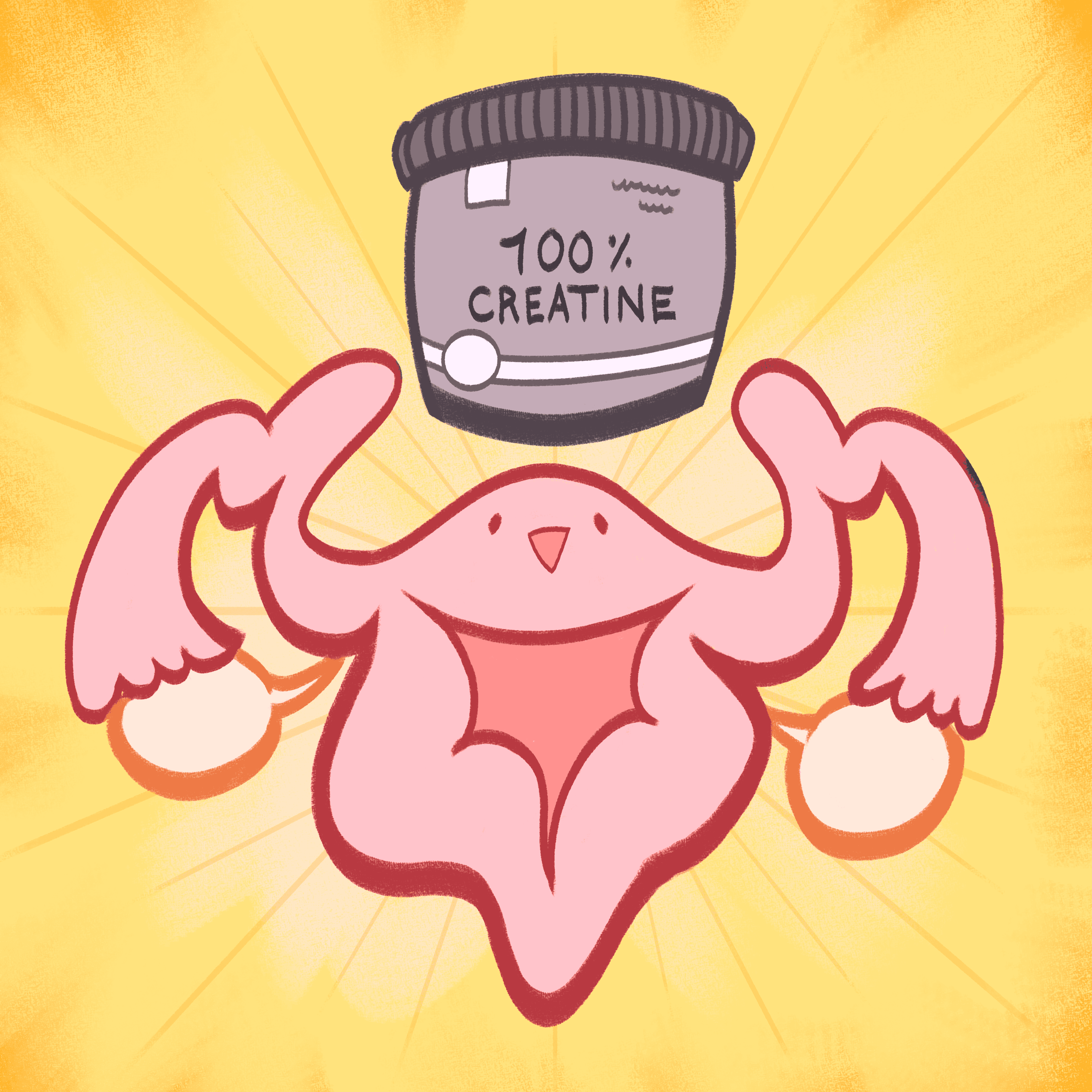
Remember ladies, don’t base your health on men’s objectification of you
By NEVAEH KARRAKER — nakarraker@ucdavis.edu
The narrative of women’s health is acutely misogynistic, severely understudied and practically taboo. From sleep, neurological function, reproductive and dietary needs, the information we base our health habits on is founded on men’s biology.
Worse, this projection of how men want to perceive women has infected women’s approach to physical exercise — being “bulky” is a turn-off, and being underweight is the perfect muse for sexual objectification (as if you weren’t already). Men take pride in the ability to dominate women — especially in the gym, where most information is falsified. For example, besides protein powder, most supplements are grouped into presumed steroids.
Creatine is one of the most misunderstood substances, especially by women. Rumors suggest that side effects include bloating, inflammation and weight gain, which clashes with the popular, flat-stomach physique on Pinterest.
Here’s how creatine really functions: As the body exercises, it uses energy — adenosine triphosphate (ATP) — which creatine monohydrate (a naturally produced amino acid), replenishes via water influx into skeletal muscles. It’s found in animal-based products like red meat, fish and poultry. In other words, creatine is essential to produce energy for neurological and muscle functionality. In the ‘90s, the substance was proven to enhance athletic performance by optimizing ATP production, enlarging muscle — not fat — due to the increased water volume. However, women produce around 75% lower stores compared to men. This, combined with the underrepresentation of women's health in research, raises the question of how creatine supplementation would impact women.
It should be common knowledge that while men maintain a 24-hour hormonal cycle, women have a 28-day one, where estrogen and progesterone oscillate.
First, the menstrual phase: shark week. Hormones like estrogen and progesterone are lowered in order to shed the uterine lining, causing fatigue and a downcast mood.
Next is the follicular phase, which starts with the menstrual phase and continues through. Once your period concludes, you have the only week out of the month (insane!) that feels normal. In this state, estrogen (which boosts energy, mood and metabolism) rises and creatine production increases in order to thicken uterine lining and form a mature egg.
Ovulation: superhero day. The fertilization period where estrogen peaks and you feel stronger, energized and on top of the world — nothing can bring down your mood.
The luteal phase: two hell weeks. As progesterone rises and estrogen drops to prepare the body for pregnancy, the combined effect triggers tiredness, bloating and irritability.
.
This is why cycle syncing — fluctuating routines to cater diet and physical activity according to the current phase — is so important for women to maintain a sense of homeostasis.
Daily creatine supplementation for women has more effects than just enhancing athletic performance; it poses as a way for women to naturally reach a 24/7 balance. Supplementation can provide constant energy and reduces the need to alter workouts when estrogen is low (hence, creatine) in the luteal, menstrual and menopause stages. While creatine will contribute to bloating and weight gain when not paired with exercise (which is where the rumors are created), when active it can redirect the extra water retention during the luteal phase towards the muscles.
Creatine also improves cognitive function and prevents psychiatric illnesses, since the frontal cortex thrives on ATP. Women are more susceptible to depression, so additional ATP allows neurotransmitter production for a better mood.
Estrogen also regulates bone health. During menopause — where the ovaries in middle-aged women cease producing estrogen and progesterone — women can lose up to 20% of their bone density. Creatine increasing muscle mass can stimulate bone growth, effectively preparing you for menopause years before it arrives. Healthy habits we implement now will define our future fitness.
Overall, creatine naturally counteracts the negative effects of the menstrual cycle, including menopause, without altering hormones (like birth control does). This means the body can continue to function normally, but your energy is more balanced without caffeine noxiously suppressing sleep.
While creatine is not a birth control substitute, it poses as a natural, healthy method for cycle syncing for athletic women. And, more importantly, it acts as an impressive advancement toward improving women’s health. Maybe next time when you’re out shopping, consider braving the wellness aisle — like how you retrieve dumbbells from the rack in front of a gym full of men.
Written by: Nevaeh Karraker—nakarraker@ucdavis.edu
Disclaimer: The views and opinions expressed by individual columnists belong to the columnists alone and do not necessarily indicate the views and opinions held by The California Aggie.