






Dr. Robert Norris presents ‘Grand Canyon: River of Light’ to Photography Club of Davis
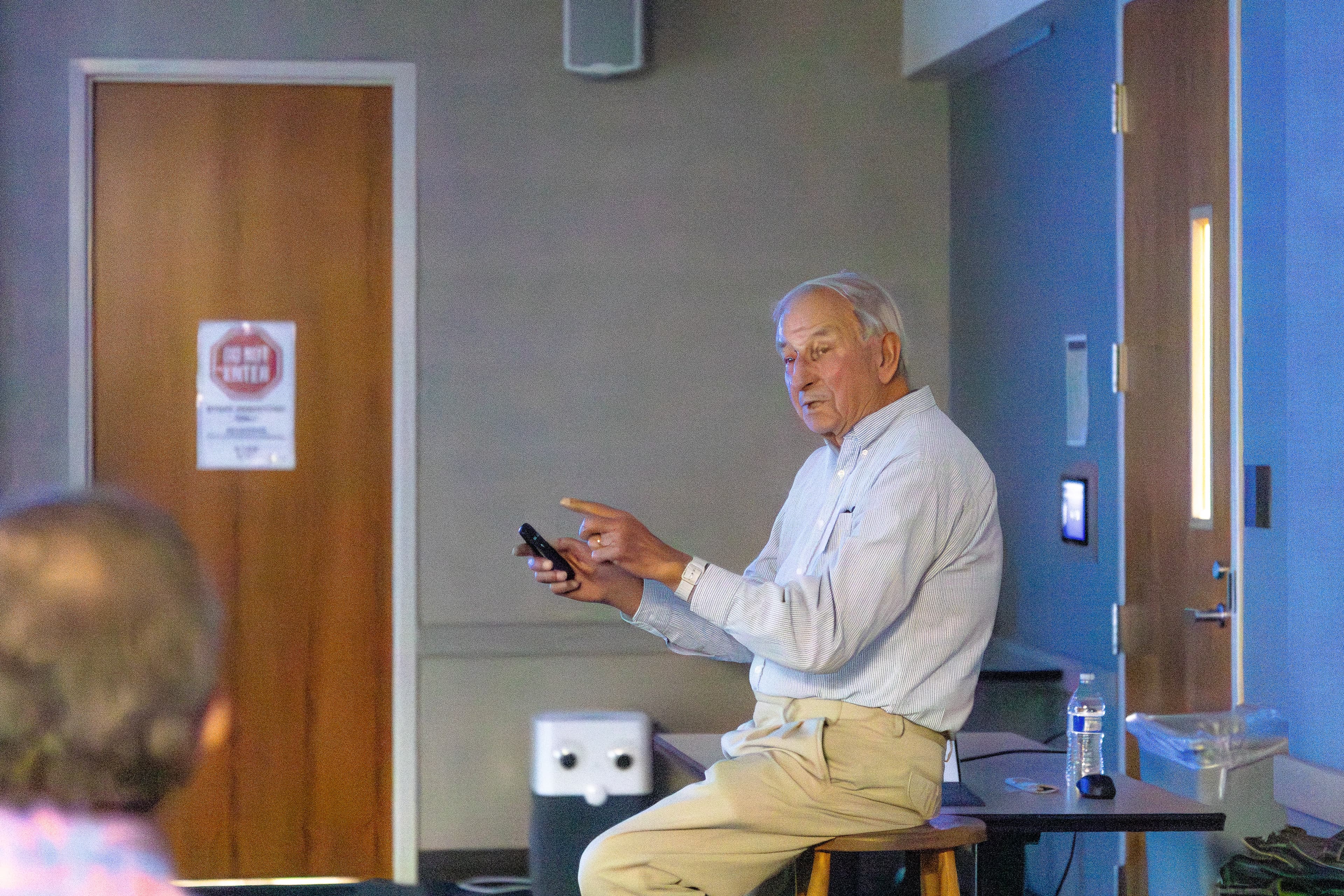
The former UC Davis professor dived into his photographs depicting the iconic site
By JONAH BERMAN – arts@theaggie.org
On April 16, the Photography Club of Davis hosted UC Davis Professor Emeritus of Plant Sciences Robert Norris for his presentation, “Grand Canyon: River of Light.” In the presentation, Norris showed a variety of photographs he took on two oar-powered trips through the Colorado River in the Grand Canyon.
Norris has been a member of the Photography Club for over a decade. In addition to photography, Norris has trained master gardeners for over 40 years and grows 80% of his own household’s fruits and vegetables.
Originally hailing from England, Norris’ passion for photography began in 1959, when he received a camera as a gift.
“I turned 21 in 1959,” Norris said. “There was a 21st birthday present. My father gave me a Leica camera. Once I started using that, I just found that I really liked it.”
For most of his career, his passion took on the form of plant macrophotography, the practice of taking extremely close-up images of botanical subjects to reveal specific details. The process was both aesthetically pleasing and academically useful for Norris. Currently, he has contributed over 400 photos to the CalPhotos database of different plant species.
The two trips depicted in the presentation took place in 2005 and 2012. Norris embarked on them with his wife after a previous visit to the canyon decades before.
“We backpacked the Grand Canyon, my wife and I, in probably the early ‘80s,” Norris said. “And I realized that, you know, it would be neat to go down the river sometime, because you see very little of the river when you do the backpacking.”
Norris employed film photography on the first visit and a digital Nikon D700 the second. During his presentation, Norris emphasized the difficulty of crafting quality images under the raft’s challenging conditions.
“You have a serious problem: you get wet, everything gets wet,” Norris said. “You have no access to power. And there’s sand everywhere.”
Although Norris has traveled to over 40 countries, he opined that the Grand Canyon offers photographic opportunities which would be difficult to replicate elsewhere. The presentation’s title alludes to this, as Norris shared that he especially appreciates the different ways in which the canyon allows light to seep through and structure the image.
“The first trip we did was setting me up for knowing what to do on the second trip, with the light coming through cracks in the rocks or just coming down the canyon,” Norris said. “You can get, I think, phenomenal photographs with the effect of light on the water and on the rocks.”
The Photography Club of Davis was enthusiastic to view the presentation, according to member Beth Brock.
“It was different than a lot of our programs,” Brock said. “A lot of them are focused on the ‘how’ of the photography, but this was more focused on the results under extreme conditions.”
After discussing the challenges he faced and equipment used, Norris then split the talk into different sections, each with different subject matter from the canyon. A significant portion of the photos focused on the Grand Canyon’s unique and ancient geological features.
“We're 3,200 feet below the rim at this point on the river, and you can clearly see different layers and the ages that are given on some of them in terms of millions of years,” Norris said.
The array of images also included flora and fauna of the canyon, such as the California condor, grebes, herons and four o'clock flowers. In accordance with the theme, some selections, such as images of brittle bush, were prioritized for how they interacted with luminosity.
“It's all brittle bush at that time of the year,” Norris said. “I just liked the way the light was coming across the bush, and these layers of rock.”
In addition to nature, other image subjects included abandoned boats and architecture created by communities historically Indigenous to the land.
Norris left another highlight of the collection for the very end of the presentation: images of rafts traveling through the famous rapids of the Colorado River. In some of these images, the water was so chaotic and eruptive that the rafts were almost invisible.
“It tends to be flat and calm until you get to a rapid and then you drop, you know, 10 to15 feet,” Norris said. “If you've got good eyes, you can see there is somebody right there [in a raft], but you can barely even see the raft now [in the image].”
Norris concluded by offering an alternative theme to his collection: “River of Reflections.” He cited the reflective ability of the Colorado River as another favorite aspect of photographing the canyon.
“You only get a few seconds to get the picture before you've moved on,” Norris said. “And often the wind changes a little bit, so the photographs you'll see could never be duplicated. You could get things like it, but the odds of having exactly that reflection is pretty minimal.”
Through the presentation of his work to the Photography Club of Davis, Norris shared his hope of imparting a new sense of adventure in the audience, who may also be able to find creative inspiration and admiration for the natural world around them.
“Go explore,” Norris said.
Written By: Jonah Berman — arts@theaggie.org