






Gen Zero in the bank
Why can’t Generation Z just pay their own bills?
By ABHINAYA KASAGANI — akasagani@ucdavis.edu
The first time I watched an episode of “Girls” on HBO, I grabbed my mother by the arm and pulled her into the room, insisting she witness its opening scene, where Lena Dunham’s Hannah (the main protagonist) is gently financially cut off by her parents after dinner. They claim that she is clinging to internships that might turn into jobs, allocating her finances unwisely. In response, Hannah claims that the reason she remains monetarily dependent on them, despite having graduated from college a few years prior, is the state of the economy. This was in 2012, post-recession, making her feelings largely warranted. Now, in 2026, however, this sentiment still holds; the economy remains our most effective scapegoat.
Growing up, I held this scene close — referencing it whenever my parents asked me how the job search was going or if I had any prospective volunteering opportunities lined up. Quickly, I realized that I couldn’t blame the economy until I magically figured it out, and that the grim job market only meant that I had to actually apply myself (obviously, access to work is inequitably distributed and not a measure of one’s faculties).
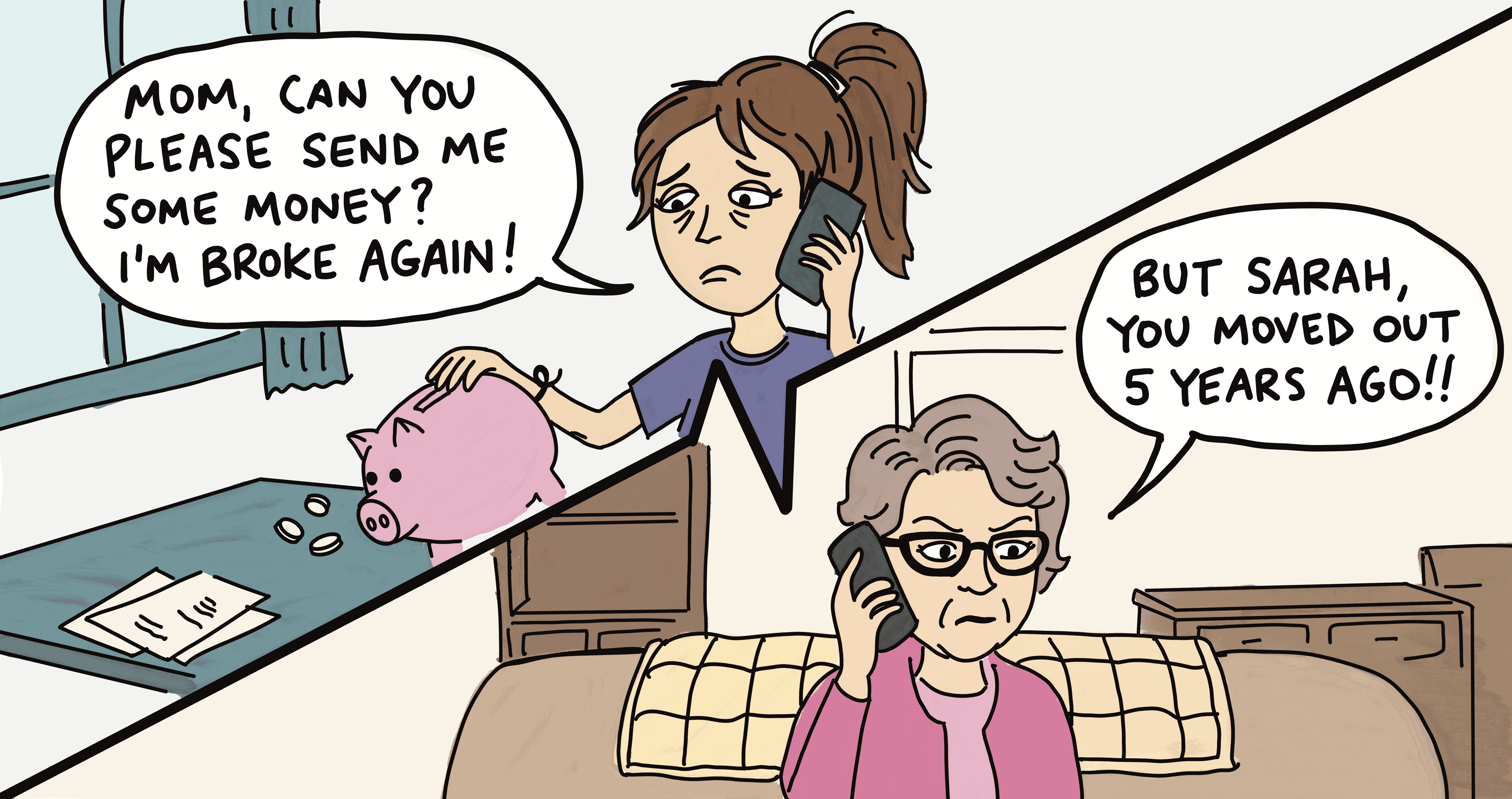
“Two‑thirds, 64%, of parents with Gen Z children ages 18 to 28 say their children rely on them financially, whether for money, housing, or other support,” according to the 2026 Wells Fargo Money Study.
While this makes sense, when considering high rent and wage stagnation amongst other things, close to half of Gen Z feel that their financial situations are messy. It’s not uncommon to see young adults today postponing plans to relocate, earn a degree, get married or change careers because such endeavors are simply too expensive. This can cause strain not only on the individual themselves, but on their families who are supporting them as well.
What is fascinating about this financial reliance is that Gen Z can be considered the most economically aware generation to date, having been raised amid instability and plagued by unemployment day-to-day. We are constantly bombarded with memes about the impending recession, subjecting ourselves to news about inflation and debt — we couldn't ignore it if we tried.
Despite this, our awareness has resulted in a lack of efficacy, leading to the exact opposite effect that financial literacy should beget. This has hampered our ability to make informed decisions, shifting knowledge to feel less like power and more like a burden. Most of us avoid budgeting, remaining reluctant to check our bank account until necessary. Our reliance on our parents is not a result of immaturity; it just happens to be more convenient not to take the risk yourself.
Emily Irwin, head of Private Wealth Planning at Wells Fargo, notes, “It’s not surprising that young adults are leaning on both family and nontraditional sources for support, but these dynamics are also putting pressure on parents. Open communication, clear expectations, and shared planning can help families navigate this stage together.” By collectively navigating this strain, we can come to recognize structural limitations and plan accordingly.
While no one expects an entire generation to instantly gain financial independence, as Hannah in “Girls” was required to do, working in small ways to contribute to the household — building savings and making long-term investments in enterprises that will provide one with stability — can maximize efficacy. It is important to know the terms of your parents’ support, work toward a larger goal and recognize that there is nothing shameful about needing financial help, because that is exactly what will enable you to support yourself in the future.
What strikes me now about the scene from “Girls” is how much (yet how little) has changed — while the show very clearly existed during a period of economic recession, we have fewer words to fully articulate our current socioeconomic moment and its problems. Operating on the brink of a widespread recession, most of us are reframing what the “American Dream” looks like for ourselves; buying a house and having children is largely inconceivable for most.
The economy is so effective as a scapegoat because, in many ways, it’s the easiest answer to come up with. For Gen Z, the problem isn’t so much with understanding finance, but being able to know what to do with that knowledge and with the responsibility that comes with it.
Written by: Abhinaya Kasagani— akasagani@ucdavis.edu
Disclaimer: The views and opinions expressed by individual columnists belong to the columnists alone and do not necessarily indicate the views and opinions held by The California Aggie.