






Industrial wastewater is the new ‘goldmine’
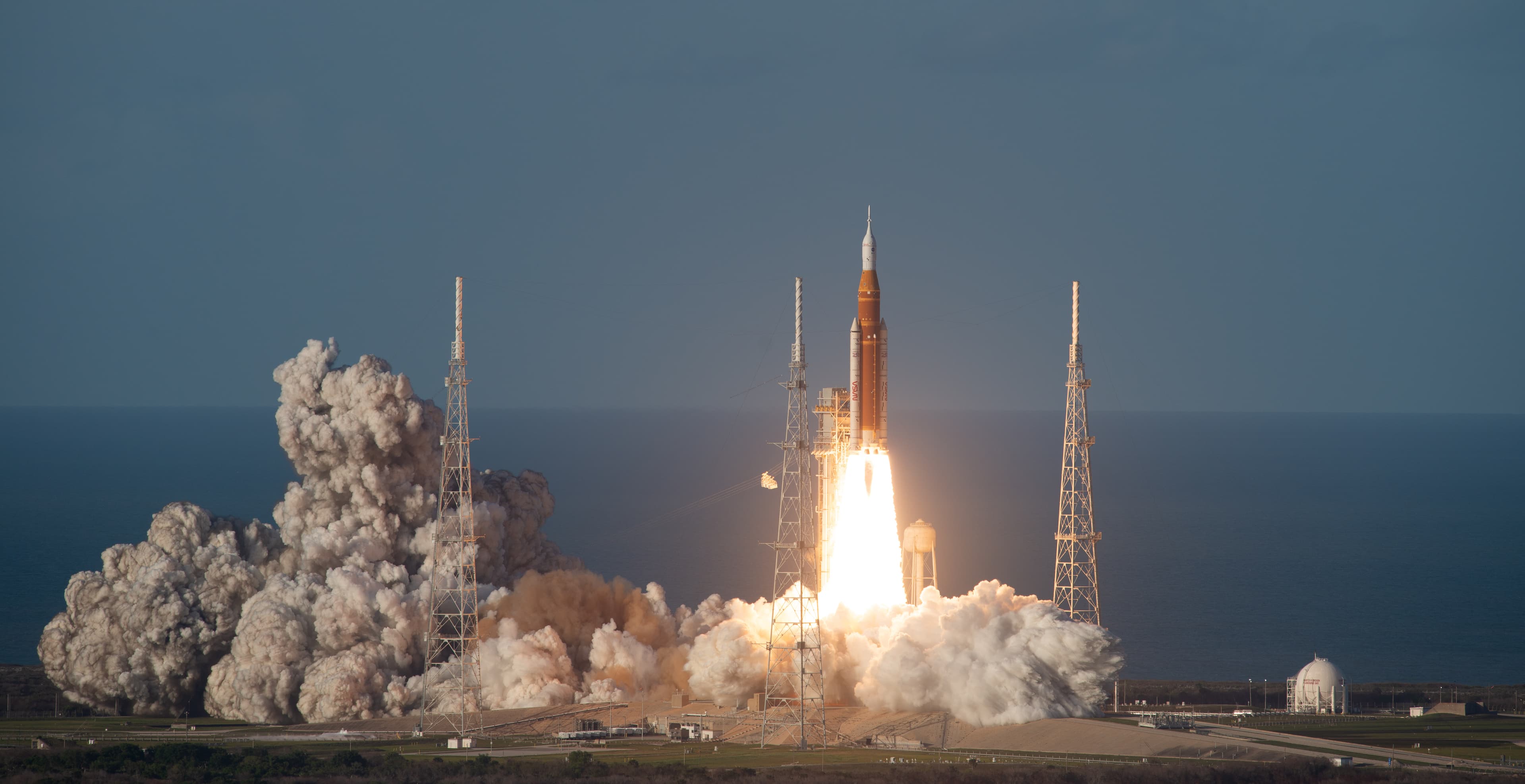
Comparing the goals of the Artemis and Apollo missions
By EMILIA ROSE— science@theaggie.org
With only moments away from liftoff on the lunar module, astronaut Gene Cernan gave a “farewell,” humanity’s final words on the Moon, as the Apollo missions came to a close.
“As I take man’s last step from the surface […] I’d like to just say what I believe history will record,” Cernan said. “That America’s challenge of today has forged man’s destiny of tomorrow. And, as we leave the Moon at Taurus-Littrow, we leave as we came and, God willing, as we shall return: with peace and hope for all mankind.”
But those were not their last words. The crew kept talking as they entered the module. Feeling the force of the thrusters, the upwards ascent and the inevitable return journey back home to Earth, it was actually Harrison Schmitt who uttered humanity’s very last words on the lunar surface during the Apollo 17 mission.
“Three…two…one… ignition,” Schmitt said.
We haven’t been back to the moon since. Despite our technological capabilities allowing us to return, decades passed with a great silence in between — until now.
Launching on April 1, Artemis II began humanity’s journey back to our planetary neighbor, complete with a new crew, new goals and new ideals. On April 6, the crew maneuvered a flyby on the dark side of the moon, passing around the celestial body and then returning home. The astronauts returned on April 10, when the crew performed their final checks and touched down safely on Earth.
Although both Artemis and Apollo had the same destination, the intuitive forces that drew them there remained very different. UC Davis Planetary Scientist Qing-zhu Yin explained those differences in motivations.
“Apollo was a Cold War sprint: a high-stakes, government-only technological demonstration to beat the Soviets, plant flags, collect some samples and declare victory,” Yin said. “Artemis is a campaign for permanent expansion: a deliberate, multi-decade effort to build a sustainable human presence on the Moon […] Apollo proved the capability; Artemis is proving the commitment to stay.”
The Apollo missions were a stress test, answering the question of “can we do it?”
Similarly, Artemis II is meant to wage whether we can continue. But unlike the rush of the 20th century, humanity now has the benefit of time, so the rewards of pushing through the challenges of exploration may show.
Dawn Sumner, a geologist and planetary scientist at UC Davis, explained how these missions tend to lead to discoveries.
“All efforts to [go] to the Moon raise unexpected challenges, and we always discover unexpected, new things,” Sumner said. “The missions are pushing the limits of our technology and knowledge.”
With each new challenge, humanity learns. With each new mission, technology is stressed and improved — all for the possibility of exploration beyond this planet.
“We do it because the unknown gnaws at us,” Yin said. “It’s the same impulse that pulled our ancestors out of Africa, across oceans, to the poles and to the bottom of the Mariana Trench […] It’s not enough to believe we are special; we want to check. Are we alone? Is the universe hospitable? Can life spread? These aren’t luxuries — they’re the questions that define us as a species capable of wonder. Not knowing is intolerable.”
The surface-level force might vary based on the times, but the deeper truth of reward, challenge and the primal desire to know more and see what’s next ties these missions together.
We have come and gone from the Moon with Apollo, leaving our first and last words memorialized in recordings. Now, we’ve returned with Artemis, bringing the hope and peace echoed in Cernan’s farewell. With each expanse upwards, new knowledge is gained, new challenges are addressed and more rewards are reaped. As manned missions to outer celestial bodies continue, perhaps a new set of last words will be spoken into existence.
Written by: Emilia Rose — science@theaggie.org