






The California Democratic Party needs to get their act together
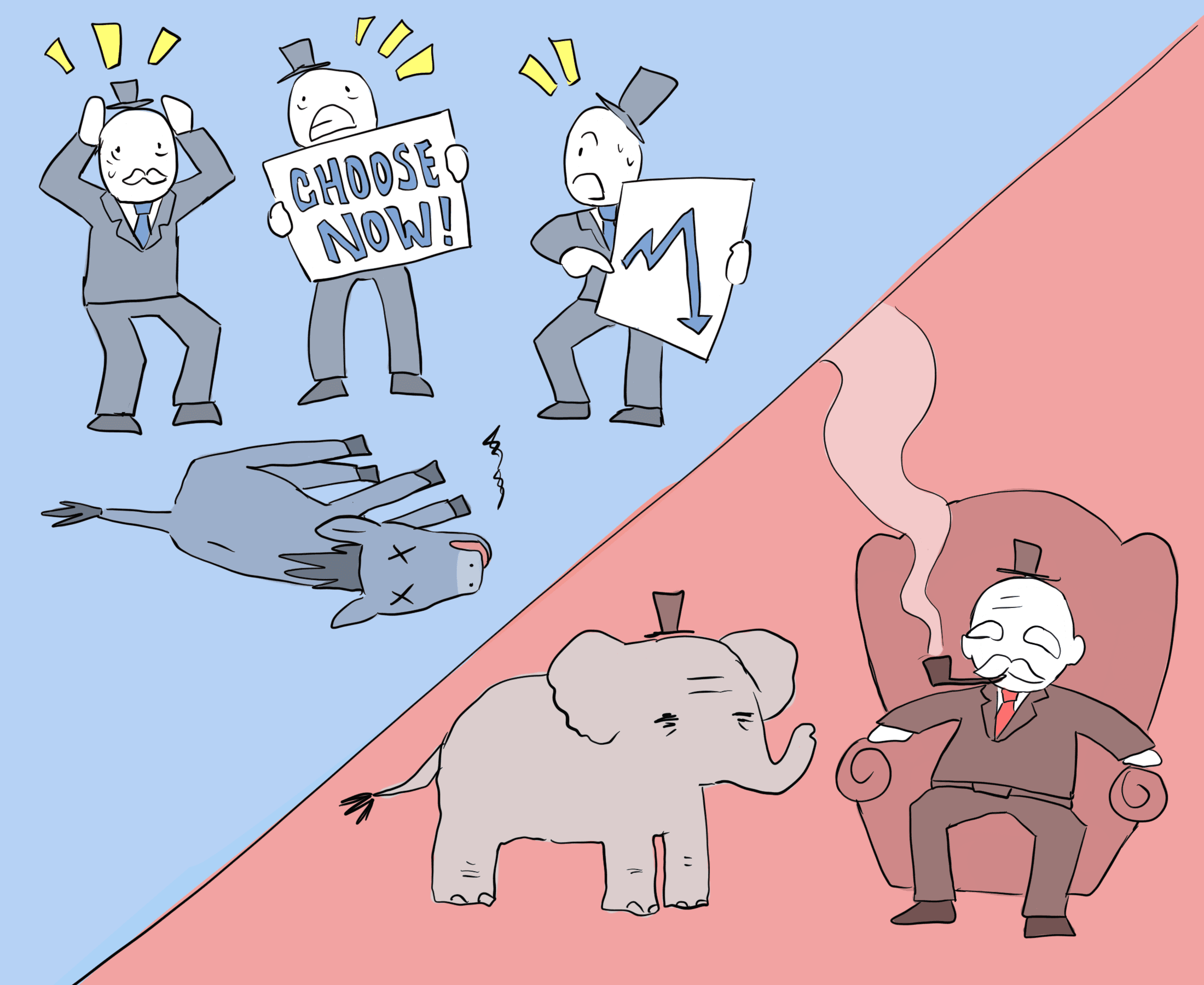
As Eric Swalwell’s campaign suspension shakes up the race, will the large pool of Democratic candidates finally narrow down?
By SABRINA FIGUEROA — sfigueroaavila@ucdavis.edu
I like to check my email first thing in the morning (perhaps a sign I’m getting old?), which may or may not be good for my mental health. This morning I woke up to breaking news that Eric Swalwell — a Democratic candidate running for California Governor — has multiple sexual assault allegations against him. I couldn’t help but begin to think that this race is becoming a complete mess.
Swalwell was the most popular Democratic candidate in the race so far, with Tom Steyer and Katie Porter trailing behind him by only a few points. However, Swalwell suspended his campaign on April 12 in response to the allegations. On top of a rather large Democratic candidate pool, this move has shaken up the race for the Democratic party.
While Swalwell has been ranking high on multiple polls in the past months, he and other Democrats were still polling behind both of the most popular Republican candidates: Steve Hilton and Chad Bianco. The suspension of his campaign may help Democratic voters narrow down their options, but it still might not be enough to get a Democratic candidate onto the November ballot.
If you’re unfamiliar with the California governor election process, there’s a possibility that we could have two Make America Great Again (MAGA) Republicans on the ballot come November because of California’s Top-Two Primary system. This means that the two candidates with the most votes in the primary election on June 2 will advance to the November ballot, regardless of their party.
That being said, Democrats have been scrambling for votes ever since the race began. 10 candidates started off in the running, and seven remain with the vote split between them all. Now, they must also scramble to win over the voters and campaign sponsors that abandoned Swalwell. Even then, his name cannot be removed from the primary ballot, so there may be a few voters who don’t jump off that burning ship at all.
Still, this shake up in the race didn’t stun any of the candidates. In fact, it caused them to act quickly, taking advantage of the situation to further their campaigns. Among the trailing candidates, Porter released an internal poll that showed that about half of Swalwell’s supporters listed her as their second choice while Steyer announced endorsements from lawmakers that called on Swalwell to resign. Other lower polling candidates, like Betty Yee and Matt Mahan, also capitalized on the availability of voters left behind by Swalwell’s campaign suspension — their final rally.
While more votes are up for grabs, these quick actions from candidates show that some may be too stubborn to drop out of the race even as the primary approaches, or even that they may wait until the last second to officially admit defeat. By that point, it might be too late for a withdrawal to be effective because their names are already printed on ballots. What seemed like a shake up that could lead to a narrower candidate pool at first is now an empowering force that only made the election even more uncertain for Democrats.
Even Party Chair of the California Democratic Party Rusty Hicks advised candidates with no viable path to the general election to suspend their campaign and endorse another candidate by April 15. As of April 20, Betty Yee is the only Democratic candidate to have suspended their campaign. In fact, Xavier Becerra — a former, lower polling candidate — is now polling higher.
It's still uncertain whether candidates will eventually take this advice or not; party discipline is not as strong here as it is in other parts of the world or even in the Republican party. If no one follows Hicks’ instruction, it’ll signal to voters that the California Democratic Party has weak leadership and is divided — if that’s not already being signaled by the large number of candidates still in the race.
Sure, this uncertainty is simply the nature of politics, but the California Democratic Party’s scrambling to find their major candidate could’ve been avoided if the most unpopular candidates dropped out of the race earlier. The stakes are high here, and the pride of ambitious politicians have cost us so much in the past couple of years — at what point will the people matter more than personal plans or political agendas?
Messaging their solutions for real issues that Californians care about — housing, affordability, the environment — instead of basing their campaigns on their opposition to President Donald Trump could’ve also helped their case. While branding yourself as a fighting actor against the Trump administration is favorable to Californians, our needs cannot be summed up to just that. Actions and plans will always speak louder than flashy promises that cannot be kept.
While the possibility of two Republicans making it to the general election is low, it’s not impossible. And although a Republican governor may be immediately recalled if they are elected, it’s unproductive. Democrats must act fast to prevent this: More candidates must drop out. Right now, none of these candidates are mobilizing voters even as alarms ring. Will Democrats finally swallow their pride and listen?
Written by: Sabrina Figueroa — sfigueroaavila@ucdavis.edu
Disclaimer: The views and opinions expressed by individual columnists belong to the columnists alone and do not necessarily indicate the views and opinions held by The California Aggie.