






Snow days are a thing of the past
Global warming stole our childhoods
By SAGE KAMOCSAY— skamocsay@ucdavis.edu
Snow days were an integral part of my childhood in eastern Massachusetts. Whenever there was a storm in the forecast, the entire town held its breath — children waited eagerly to hear their parents announce from the kitchen that they had just gotten a call (or eventually, an email) that school was cancelled the next day. We ritualistically checked the Snow Day Calculator website (which looks exactly the same now as it did when I was a kid) every hour or so to see if the chance of a snow day had gone up. If we heard nothing the night before, we would go to bed hoping that our parents would wake us up at 6 a.m. to tell us we could sleep in that day.
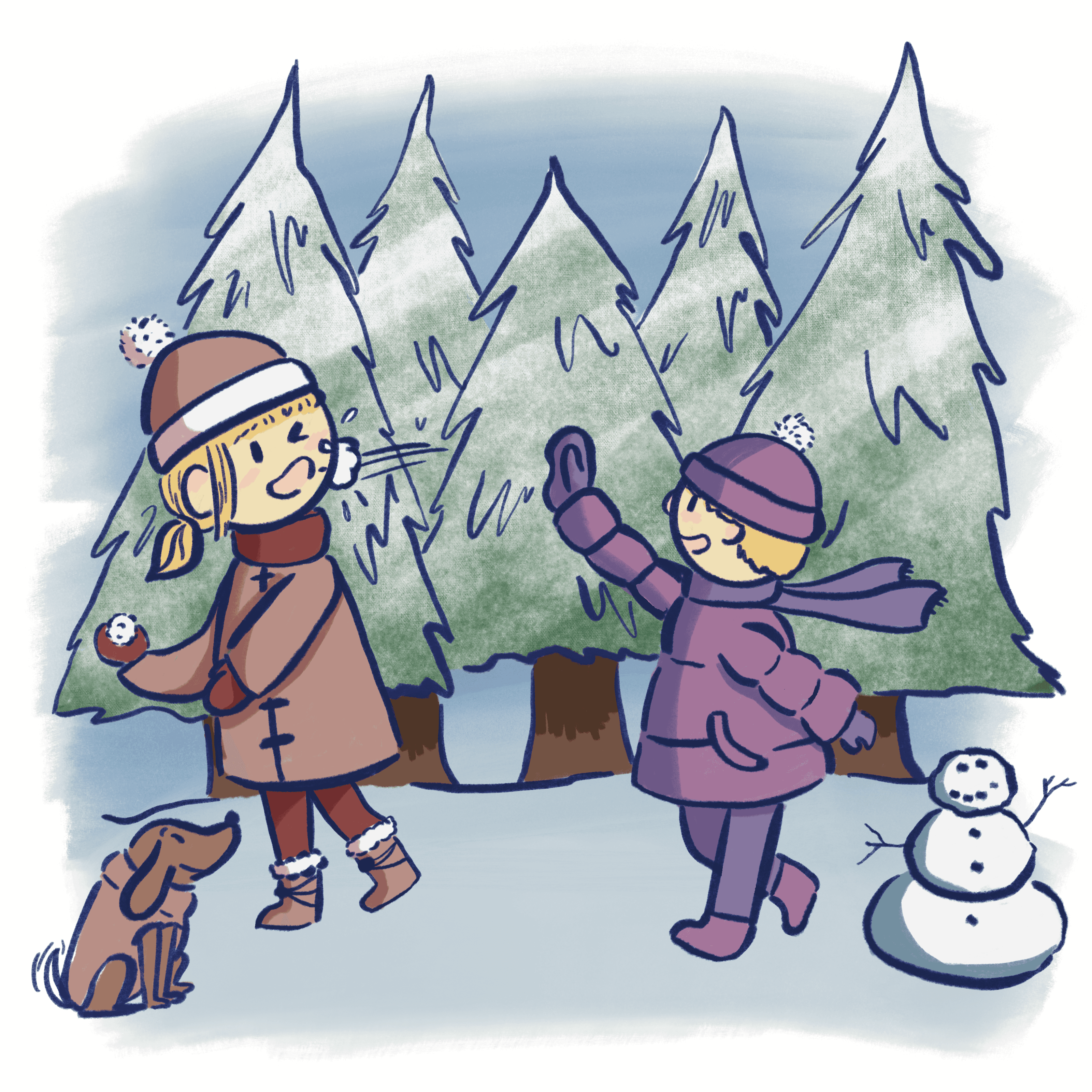
A snow day meant sledding on the hill right off the main road. A procession of elementary school children pulling their sleds behind them would form in the morning, and the same group of kids would trek back up the same sidewalk once the sun started to set. It meant trying (unsuccessfully) to make an igloo with not nearly enough snow — though we always thought we would be triumphant when we started (we had two feet of powder! That had to be enough). It meant watching the sun set with Swiss Miss hot chocolate warming our hands while our bulky snow gear defrosted on the radiator in the basement. It meant a very specific kind of free, childlike excitement that I haven’t been able to find in any other context.
I can’t remember seeing more than a few inches of snow fall in my hometown since before the pandemic. I can’t remember getting more than a snow day or two in a year since middle school — and the ones that we got were out of pity.
This experience is very specific to the cold, northern part of the United States. But climate change has had a similar effect worldwide, as our summers get hotter and more unbearable, and our winters become more toothless and lukewarm. We have all lost a part of ourselves in the weather of the past; we all pity the current generation of kids for not getting to experience what we did.
Global warming hasn’t just ravaged our planet — it has also left a permanent mark on our collective psyche. We all yearn for the world of our youth, and every changing of seasons is a reminder that we will never even get close to it. There is a collective grief for the weather of our past and the cultural practices associated with it. No snow means no sledding, no igloos, no snowball fights.
If you ever ask a New England native if we remember the huge blizzard of October 2011, our eyes will light up with the memory before we have the sobering realization that we probably won’t ever see our towns blanketed in the same beautiful snowfall we saw that month — it's a painful memory now. Every region has its own version of this loss.
As a generation, we are now faced with a collective process of accepting the loss of this aspect of our past in a way that, I would argue, is much more visceral than that of older adults. We got the unique combination of the ubiquitous human feeling of “loss of innocence” and the actual permanent loss of our childhood cultural markers simultaneously. The world of our childhood is no longer — it feels less pure, less awe-inspiring.
We, as a collective, need to stop the horrific process of global warming. We have already lost so much, and we are certain to lose even more in the future — but we can mitigate the damage. Spread awareness of the catastrophic effects of fossil fuel corporations and the systems of our government that support them. Make sure everyone knows that it’s the fault of huge mining and fracking conglomerates. Knowledge is power — and right now, we need a lot of power.
Written by: Sage Kamocsay— skamocsay@ucdavis.edu
Disclaimer: The views and opinions expressed by individual columnists belong to the columnists alone and do not necessarily indicate the views and opinions held by The California Aggie.