






‘KnitTok’ and the preservation of tradition
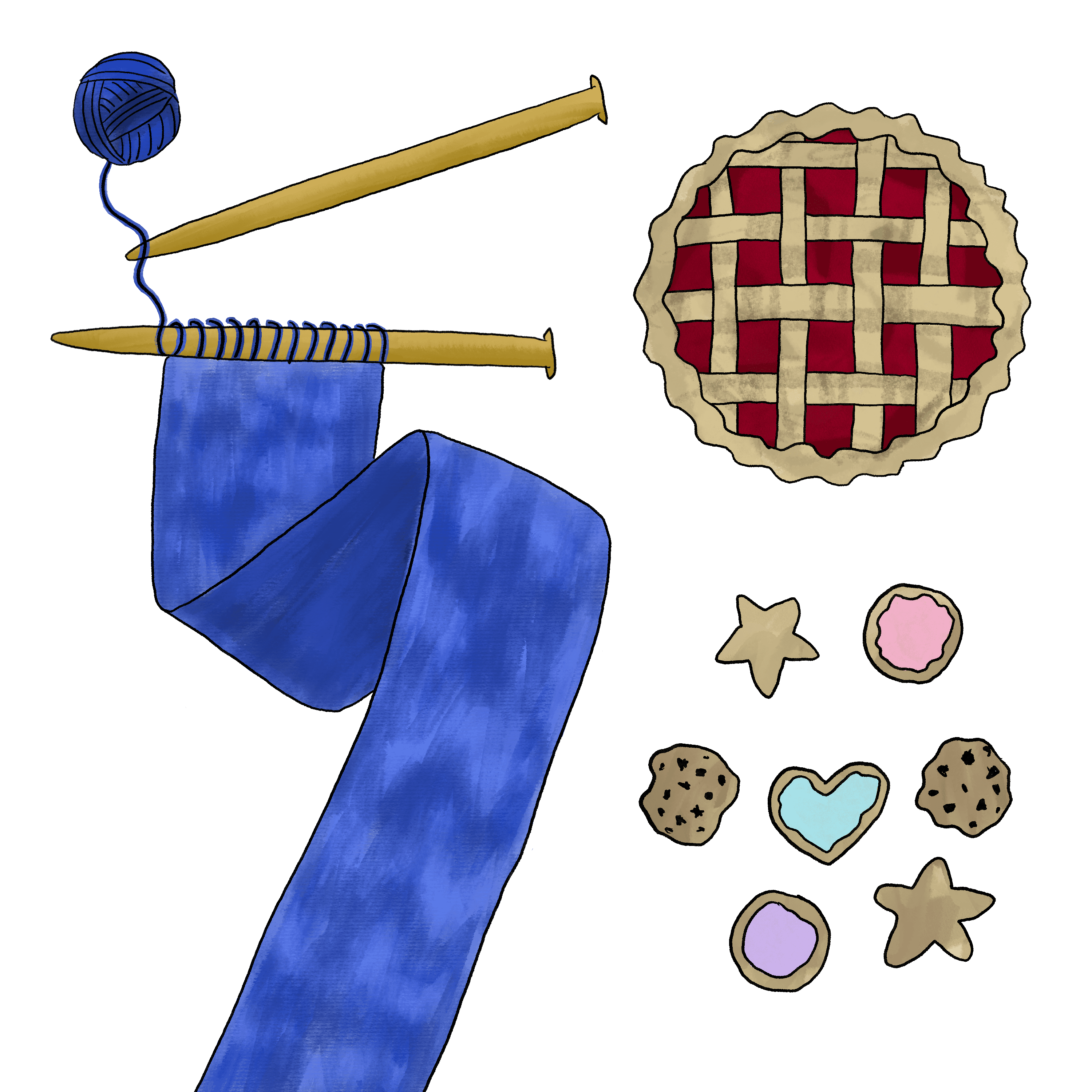
In an increasingly digital world, young people are reconnecting with generations-old crafts
By SAGE KAMOCSAY— skamocsay@ucdavis.edu
Knitting isn’t exactly what you would associate with a generation-and-a-half of screenagers: neither is crochet, embroidery or sewing. And yet, fiber arts are more popular now than they have been in decades. Now, more than ever, young people are choosing to pick up a ball of yarn and struggle through their first knitting project, probably ending up with a ragged, hole-filled mess. But that’s okay, because those abominations of first scarves give way to beautiful and complex shawls, sweaters, cardigans, hats and (my personal favorite) socks.
It should come as no surprise that the COVID-19 pandemic is largely to blame for the popularity of these crafts. When almost everyone was forced inside, the Internet became the primary window to the world. It was only natural that many would try to disconnect from their personal lives as a brief respite from the online hellscape we have all collectively created. And thus, low-tech hobbies experienced a major resurgence all over the world. Pandemic baking is a prime example of this — I’m sure we all know someone who has (or had) a sourdough starter from 2020.
Of course, it wouldn’t be a 2020 trend without it taking over TikTok, Instagram, YouTube and Reddit. There’s even a fiber arts-specific social media site called Ravelry that allows users to share patterns, yarns and discuss their craft. This modern form of community-building has given new life to what some previously considered to be dying arts. Young people have brought back crafts that may have died with our grandparents, preserving generations of techniques, patterns and history that we may otherwise have lost.
This isn’t to say that our grandparents (primarily, grandmothers) play no part in this process. Aside from the passing down of craft within individual families, older women have been pillars of their communities since the early 2000s. Most of my favorite online knitting and crochet tutorials are made by women who are probably grandmothers at this point. With few exceptions, they are in-depth, well-paced and imbued with incredible patience and kindness. Watching them feels like sitting down with your grandma as a young child, as she guides you through the often discouraging phase of learning a craft.
The dissemination of craft has been incredibly important in preserving cultural traditions. The popularity of fiber arts has invited people to reconnect with their roots and keep their practices alive. As it becomes increasingly difficult to preserve physical cultural traditions in a digital world, the online fiber arts community can offer a shield from cultural colonialism — by engaging in these older crafts, we are resisting the domination of more modern cultural norms. It, for the most part, is a community of people who understand the importance and beauty of connecting with past generations.
There is also a feminist element to the resurgence of fiber arts. The fiber arts space is primarily female, meaning that traditionally marginalized voices are supported, respected and amplified. It is a community of women supporting women, building solidarity and friendship in the absence of patriarchal hegemony. This is doubly true for older women, who are often treated as absentminded old biddies by broader society. Here, instead, they are elevated to the position of matriarchs, guiding and supporting younger generations of artists. Women, especially older women, are given the respect they are denied by the rest of the world.
Participating in fiber arts is a deeply personal experience. It is an opportunity to learn about your family, your culture and yourself. I learned how to knit and crochet from my father, who learned from his mother, who probably learned from generations of mothers before her. I know I will continue this cycle as well, teaching future generations this beautiful act of creation and imparting the craft I love onto people I love.
Knitting and crocheting provide a break in the day to reflect on my life and myself without outside distractions. I put parts of my soul in everything I make through this process of reflection and art. I invite you to participate in this art, this introspection and all that comes with it — whether you learn from your grandmother, a friend or a stranger on the Internet, you won’t regret it.
Written by: Sage Kamocsay— skamocsay@ucdavis.edu
Disclaimer: The views and opinions expressed by individual columnists belong to the columnists alone and do not necessarily indicate the views and opinions held by The California Aggie.